
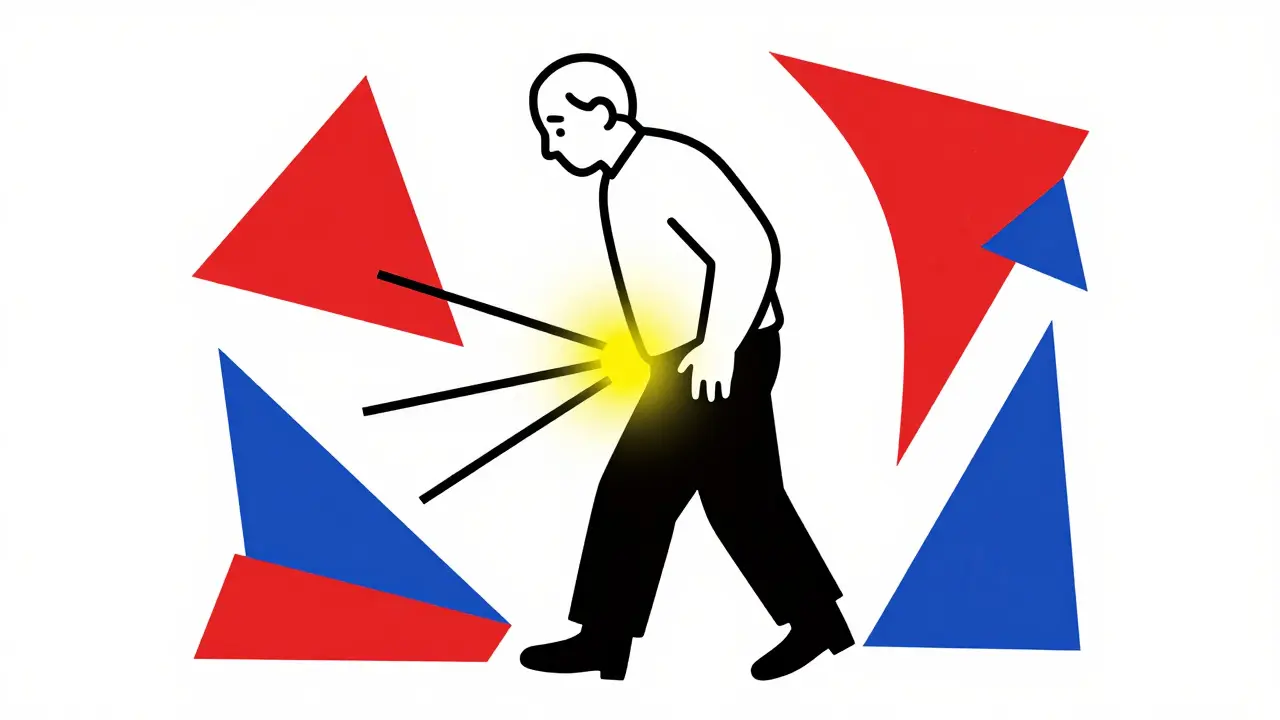
When your hip starts to ache with every step, it’s not just discomfort-it’s your life slowing down. Getting out of bed, walking to the mailbox, even standing in line at the grocery store becomes a challenge. For many people over 50, especially those carrying extra weight, this isn’t just aging-it’s osteoarthritis of the hip. And while surgery is often the last resort, the most powerful tool you have right now isn’t a pill or a needle-it’s your body weight.
Why Losing Weight Matters More Than You Think
It’s easy to think of hip osteoarthritis as just "wear and tear." But it’s more than that. The cartilage in your hip joint breaks down, bones rub against each other, inflammation flares up, and your body starts to compensate by changing how you move. That’s when pain spreads, stiffness sets in, and mobility drops.
Here’s the hard truth: every extra pound adds pressure. For every pound of body weight, your hip joint carries 3 to 6 times that load during walking. If you’re 30 pounds overweight, that’s up to 180 extra pounds of force on your hip with every step. Over years, that’s not just strain-it’s accelerated damage.
But here’s what most people don’t realize: weight loss doesn’t just reduce pressure. It changes your body’s chemistry. Fat tissue isn’t just storage-it’s active. It releases inflammatory chemicals that worsen joint damage. Losing fat means lowering those chemicals. That’s why people who lose weight often feel less pain even before their joints look better on an X-ray.
The Evidence: Does Weight Loss Actually Help Hip OA?
There’s a big debate in the medical world. For knee osteoarthritis, the link between weight loss and pain relief is clear. For the hip? Not so much. Some studies say yes. Others say no.
A major 2024 study in Nature followed 65-year-olds with hip OA and obesity. Those who lost more than 10% of their body weight saw dramatic improvements-not just in pain, but in quality of life, ability to move, and even sleep. The biggest jump? A 31% improvement in how they felt about their daily life. That’s not a minor change. That’s life-altering.
But then there’s a 2023 study published in NEJM Journal Watch that claimed, bluntly, "Osteoarthritis of the Hips Is Unaffected by Weight Loss." Why the contradiction?
The answer lies in timing and intensity. The study that found no benefit only looked at 6 months. The one that showed big results tracked people for a full year. Weight loss doesn’t fix your hip overnight. It takes time for inflammation to calm down, muscles to strengthen, and joints to adapt. If you give up after a few months, you’re not giving your body a chance.
Another key difference: knee OA responds quickly to even small weight loss. For hip OA, you need to lose more. Studies suggest 5% weight loss helps a little-but 10% or more is where you start seeing real, measurable gains in function and pain relief.
How Much Weight Should You Aim to Lose?
Forget the scale. Think in percentages. If you weigh 200 pounds, losing 10% means 20 pounds. That’s not impossible. It’s doable.
Research from Australia’s Osteoarthritis Healthy Weight For Life (OAHWFL) program shows that losing 7-10% of body weight over 18 weeks leads to meaningful improvement in hip OA symptoms. Participants didn’t just feel better-they walked farther, climbed stairs easier, and needed less pain medication.
Here’s what works:
- 10% weight loss = clinically meaningful improvement in pain and function
- 15-20% weight loss = even better outcomes, with some people reporting near-normal mobility
- Less than 5% = minimal to no change in symptoms
And here’s the kicker: losing 20% doesn’t give you twice the benefit of losing 10%. The biggest jump happens between 5% and 10%. After that, gains still happen-but they level off. That means you don’t need to become a different person. You just need to lose enough to make a difference.
What’s the Best Way to Lose Weight with Hip OA?
Crash diets don’t work. They make you tired, hungry, and more likely to regain the weight. And if you’re already in pain, extreme calorie restriction can make movement even harder.
The best approach combines two things: food changes and gentle movement.
For food:
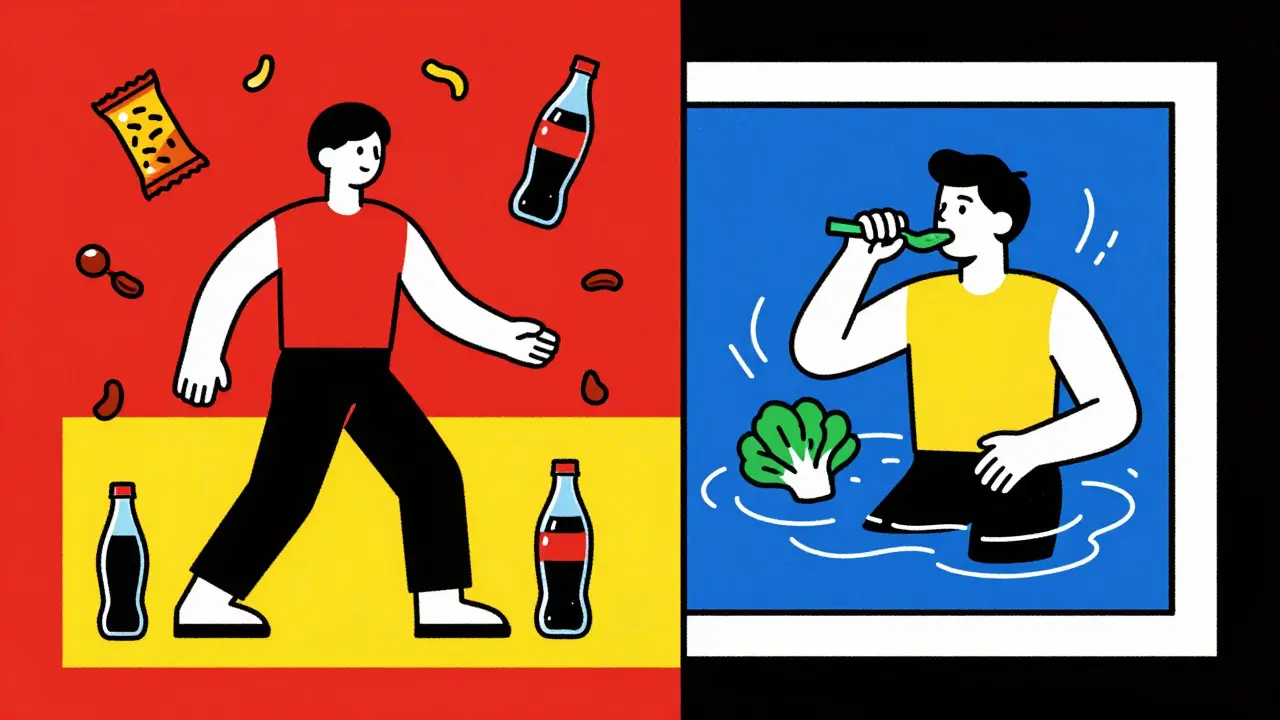
- Focus on whole foods: vegetables, lean proteins, legumes, whole grains
- Cut out sugary drinks, processed snacks, and refined carbs
- Portion control matters more than strict dieting
A low-carb approach has shown strong results in studies, especially when paired with exercise. But you don’t need to go keto. Just reduce bread, pasta, and sweets. Swap them for beans, lentils, and extra veggies.
For movement:
- Swimming or water aerobics-zero impact, full range of motion
- Cycling on a stationary bike-low stress, great for endurance
- Strength training for hips and core-glutes, quads, and abdominals support the joint
- Walking-even 20 minutes a day helps
One study with 35 people with hip OA showed that after 8 months of combining diet and exercise, participants improved their physical function by 32.6%. That’s not magic. That’s consistency.
Why Exercise Is Non-Negotiable
You might think, "If my hip hurts, why move it?" But staying still makes things worse. Muscles around the hip weaken. The joint becomes stiffer. You start relying on your back or knees to compensate-and that creates new pain.
Exercise isn’t about pushing through pain. It’s about moving in ways that protect your joint while rebuilding strength.
Start slow. Use a pool if you can. Try seated leg lifts. Use resistance bands. A physical therapist can design a plan that fits your pain level. The goal isn’t to run a marathon. It’s to walk to the bus stop without wincing.
And here’s the hidden benefit: exercise boosts your mood. Chronic pain drains your energy. Movement releases endorphins. That’s why people who stick with it often say they feel more in control-not just of their weight, but of their life.
What About Medications or Surgery?
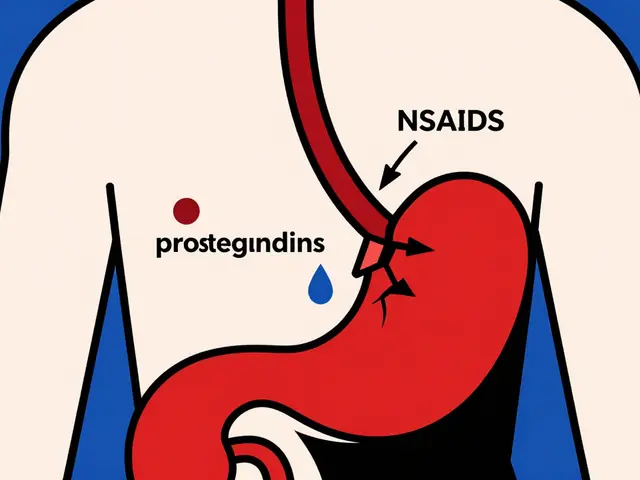
Medications like NSAIDs can help with pain, but they don’t stop the joint from breaking down. Long-term use can hurt your stomach, kidneys, or heart.
Weight loss drugs like semaglutide (Wegovy) or tirzepatide (Zepbound) are approved for people with BMI over 30. But they’re not a quick fix. They work best when paired with lifestyle changes. And they’re expensive. Most insurance won’t cover them unless you’ve tried diet and exercise first.
Surgery-hip replacement-is highly effective. But it’s major. Recovery takes months. You can’t run or jump the same way afterward. And implants don’t last forever. If you’re 55 and get a replacement, you might need another one in 15-20 years.
Weight loss buys you time. It reduces pain now. It delays surgery. It keeps your body stronger so if you do need surgery later, you recover faster.
Real People, Real Results
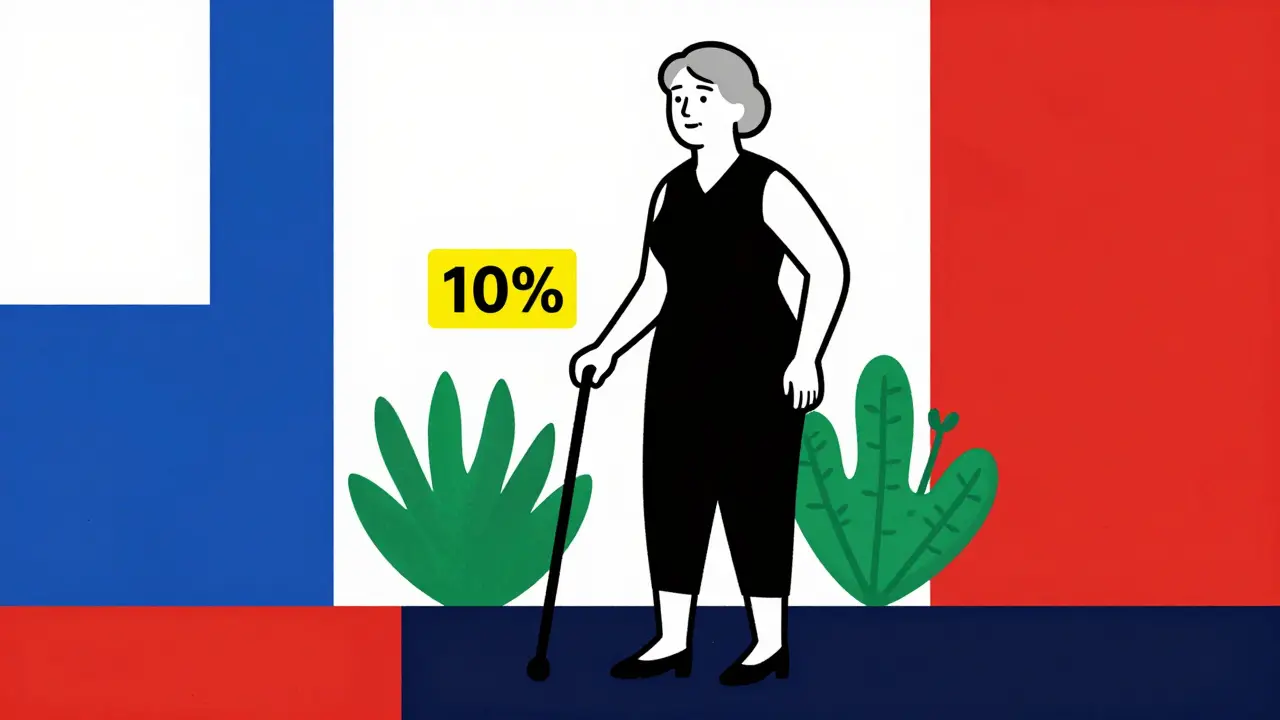
Take Margaret, 62, from Brisbane. She weighed 210 pounds and could barely walk to her car without gripping the doorframe. Her doctor told her to lose weight. She thought it was impossible.
She started with 15 minutes of water aerobics three times a week. She swapped soda for sparkling water. Cut out dessert. Ate more eggs and broccoli. In 6 months, she lost 23 pounds-11% of her body weight.
Her HOOS score (a measure of hip function) jumped from 42 to 78. She started gardening again. Took a trip to the coast. Didn’t need her cane anymore.
She didn’t "cure" her arthritis. But she took back her life.
What If You Can’t Lose Weight?
Some people try everything. Diet. Exercise. Support groups. Still no results. That’s frustrating. And it’s not your fault.
Metabolism slows with age. Hormones change. Medications can cause weight gain. Mental health plays a role. Depression and chronic pain feed each other.
If you’re stuck, talk to a specialist. A dietitian who understands arthritis. A physiotherapist who knows how to adapt exercises. A psychologist who helps with emotional eating.
Even losing 3-5% can help. It’s not all or nothing. Small wins build momentum. One less painkiller. One more step. One better night’s sleep.
Bottom Line: It’s Not About Perfection
You don’t need to be thin to have a healthy hip. You just need to be healthier than you were yesterday.
Weight loss for hip osteoarthritis isn’t a magic cure. But it’s the most proven, safest, and most powerful non-surgical tool we have. It reduces pain. It improves movement. It delays surgery. It gives you back your independence.
Start where you are. Move a little more. Eat a little better. Give it 6 months. Don’t look at the scale every day. Look at how you feel. Can you get up from a chair without using your hands? Can you walk to the corner store? Can you play with your grandkids without pain?
If the answer is yes-then you’re already winning.

Betty Bomber
January 27, 2026 AT 14:04Been there. My hips screamed every morning until I started walking my dog twice a day and swapped soda for sparkling water. No magic, just consistency. Now I can garden without crying. Took 8 months. Worth it.
Also, stop listening to people who say "just lose weight" like it’s easy. It’s not. But it’s possible.
Small wins matter.
Simran Kaur
January 28, 2026 AT 02:53OMG I’m from India and my auntie had hip OA and she lost 15kg by eating dal, roti, and walking in the park at dawn-no fancy diets, no gym, just her chai and determination.
They told her it was "too late"-but she danced at her granddaughter’s wedding last year. No cane. No painkillers. Just joy.
Weight loss isn’t about being thin. It’s about being free.
My mom says: "The body remembers kindness. Even if you forget to feed it right, it still tries to heal."
Jessica Knuteson
January 28, 2026 AT 16:17The 2023 NEJM study was methodologically superior. 6 months is the industry standard for clinical trials. You can’t cherry-pick 12-month outliers and call it evidence. Also, correlation isn’t causation. Maybe people who lost weight were also taking better care of themselves in other ways.
And let’s be real-most people can’t lose 10% without surgical intervention or extreme deprivation. This article is dangerously optimistic.
Also, hip OA progression is largely genetic. Weight is a modifier, not a cure.
Stop selling false hope.
Also, the HOOS score? Questionable metric. No control group. Small sample size. Weak study design.
Also, I’m tired of wellness influencers pretending this is simple.
Also, this is a scam.
Also, I’m not mad. I’m just disappointed.
Geoff Miskinis
January 30, 2026 AT 00:34How quaint. An American article telling people to lose weight as if obesity is a moral failing and not a systemic consequence of food deserts, sedentary jobs, and corporate sugar lobbying.
Meanwhile, in the UK, we have NHS physiotherapists who prescribe swimming and dietary counseling-not guilt trips.
Also, the idea that losing 10% of body weight is "doable" for someone on disability benefits or with chronic pain is laughable. You clearly haven’t met anyone who actually lives this.
And why is everyone pretending this is new? We’ve known this since the 80s. The real issue? No one funds accessible care.
So no, this isn’t empowering. It’s victim-blaming dressed as advice.
Also, the author didn’t mention socioeconomic status once. Typical.
Also, I’m not even mad. Just exhausted.
Curtis Younker
January 30, 2026 AT 23:07Y’all, I was 260 pounds and could barely stand up from the couch without groaning. My hip felt like someone was grinding glass inside it. I didn’t go keto. I didn’t join a gym. I just started eating one more vegetable a day and walking 10 minutes after dinner. Then 15. Then 20. Then I got a stationary bike for Christmas because my wife said "you’re not dying on that couch."
Lost 32 pounds in 10 months. Not because I was strong. Because I was stubborn.
Now I can pick up my niece. I can play with my dog without wincing. I can sit on the floor and not need a ladder to get up.
It’s not about being thin. It’s about being able to live. And if you think you can’t do it? Start with one step. One bite. One minute. That’s all it takes.
You got this. I believe in you. And I’m cheering you on right now.
Also, water aerobics saved my life. Try it. It’s like floating in a hug.
Shawn Raja
February 1, 2026 AT 22:20Oh wow. Another article telling people to lose weight like it’s the only thing that matters.
Meanwhile, in the real world, people are on SSI, on antidepressants, on meds that make them gain weight, and their joints are already shredded from 30 years of factory work.
And here’s the irony: the people who need this advice the most? They’re the ones who can’t afford the organic veggies, the personal trainer, the pool membership, or the 6-month time buffer to wait for results.
So yeah, weight loss helps. But only if you’re already privileged enough to have the luxury of time, money, and mental bandwidth.
Also, the author didn’t mention that hip replacements are now covered by Medicaid in 47 states. Maybe we should be talking about access to care, not guilt.
Also, I’m not saying don’t lose weight. I’m saying stop pretending this is a personal failure.
Also, capitalism made this problem. Don’t blame the patient.
Also, I’m not mad. I’m just… done.
Ryan W
February 3, 2026 AT 08:21According to the OARSI guidelines, weight loss >5% is classified as "moderate symptomatic benefit" for hip OA, not "clinically meaningful." The OAHWFL study was a single-arm trial with no placebo control. HOOS is a patient-reported outcome-subject to recall and reporting bias.
Also, the 31% improvement cited? That’s relative improvement from baseline. Absolute improvement was 14.2 points on a 100-point scale. Not statistically significant by conventional thresholds.
Furthermore, the Nature paper excluded patients with BMI <30. Selection bias. Also, no adjustment for physical activity covariates.
Meanwhile, a 2022 meta-analysis in The Lancet Rheumatology found no significant difference in structural progression between obese and non-obese hip OA patients over 5 years.
So yes, weight loss may improve pain perception. But it doesn’t halt degeneration. And that’s what matters long-term.
Also, the author conflates symptom relief with disease modification. That’s a fundamental error.
Also, I’m not here to cheerlead. I’m here to correct misinformation.
Also, this article is misleading. And dangerous.
Also, I’m not being toxic. I’m being accurate.
Henry Jenkins
February 3, 2026 AT 09:14I’ve read every single one of these comments and I’m sitting here wondering if we’re talking about the same article.
The original post didn’t say weight loss is a cure. It said it’s the most powerful non-surgical tool we have. And that’s true. It doesn’t fix everything, but it helps. A lot. For a lot of people.
But I also see the frustration. The people who say "it’s not that simple"? They’re right. The people who say "it’s not fair"? Also right.
So here’s what I think: maybe the conversation shouldn’t be about whether weight loss works. It should be about how we make it possible for everyone to try.
What if we had free water aerobics classes at community centers? What if insurance covered nutrition counseling for OA? What if we stopped shaming people and started building systems that support them?
Because the truth is, the science is clear. The delivery system? Broken.
So yes, lose weight if you can. But let’s also demand better. For everyone.
Not instead of. Not instead of. But alongside.
And maybe that’s the real bottom line.