
Torsades de Pointes: Causes, Risks, and Medications That Trigger It
When your heart’s electrical system gets messed up, it can lead to torsades de pointes, a life-threatening type of irregular heartbeat that looks like twisting peaks on an ECG. Also known as polymorphic ventricular tachycardia, it doesn’t just happen out of nowhere—it’s often sparked by something you’re taking, something missing in your blood, or a genetic quirk. This isn’t just a technical term for cardiologists. If you’re on any heart medication, antidepressant, or even an antibiotic, you need to know the signs.
QT prolongation, a delay in the heart’s electrical recovery phase, is the main red flag for torsades de pointes. It’s not a disease on its own—it’s a warning sign on your ECG. Many common drugs can stretch out that QT interval: antibiotics like azithromycin, antipsychotics like haloperidol, and even some nausea meds like ondansetron. You don’t need to be sick to be at risk. Older adults, women, and people with kidney or liver problems are more vulnerable. Low potassium or low magnesium? That’s like pouring gasoline on the fire. A simple blood test can catch that before things go south.
Antiarrhythmics, medications meant to fix heart rhythms, are ironically one of the biggest culprits. Drugs like sotalol, dofetilide, and amiodarone are designed to stabilize your heart—but they can flip the switch and make it worse. That’s why doctors don’t just prescribe them and walk away. They check your electrolytes, monitor your ECG, and often start you on a low dose. If you’ve been told to avoid certain meds because of a past heart issue, don’t ignore it. Even over-the-counter cold pills can contain ingredients that push your QT interval too far.
It’s not just about pills. Some people have inherited long QT syndrome—a hidden genetic risk that shows up only when something triggers it. A sudden loud noise, intense stress, or even swimming can set off torsades in those cases. But for most people, it’s medication-related. The good news? If caught early, it’s often preventable. A quick ECG, checking your potassium levels, and reviewing your meds with your doctor can stop it before it starts.
Below, you’ll find real-world guides on drugs that affect heart rhythm, how to spot hidden risks in your medication list, and what to ask your pharmacist before filling a new prescription. These aren’t theory pages—they’re practical checks you can use right now to protect your heart.
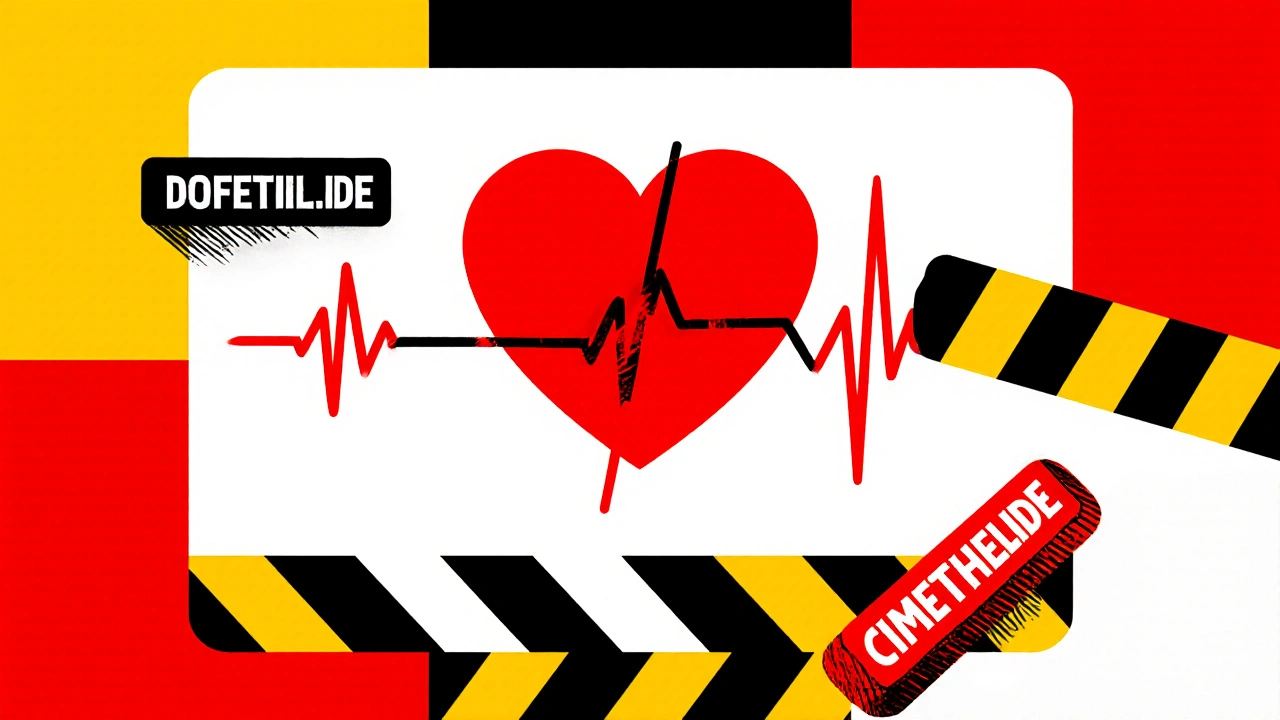
Dofetilide and Cimetidine: Why This Drug Pair Can Trigger Life-Threatening Arrhythmias
Nov 19 2025 / MedicationsDofetilide and cimetidine together can cause life-threatening heart rhythms due to a dangerous drug interaction that spikes dofetilide levels. Learn why this combo is strictly contraindicated and what safer alternatives exist.
VIEW MORE