
Antihistamine & Alcohol Safety Calculator
How Safe Is Your Combination?
Enter your antihistamine type and alcohol intake to see the estimated drowsiness risk based on medical research.
1 standard drink = 12 oz beer, 5 oz wine, or 1.5 oz spirits
Risk Assessment
Your combination is considered low risk based on medical guidelines
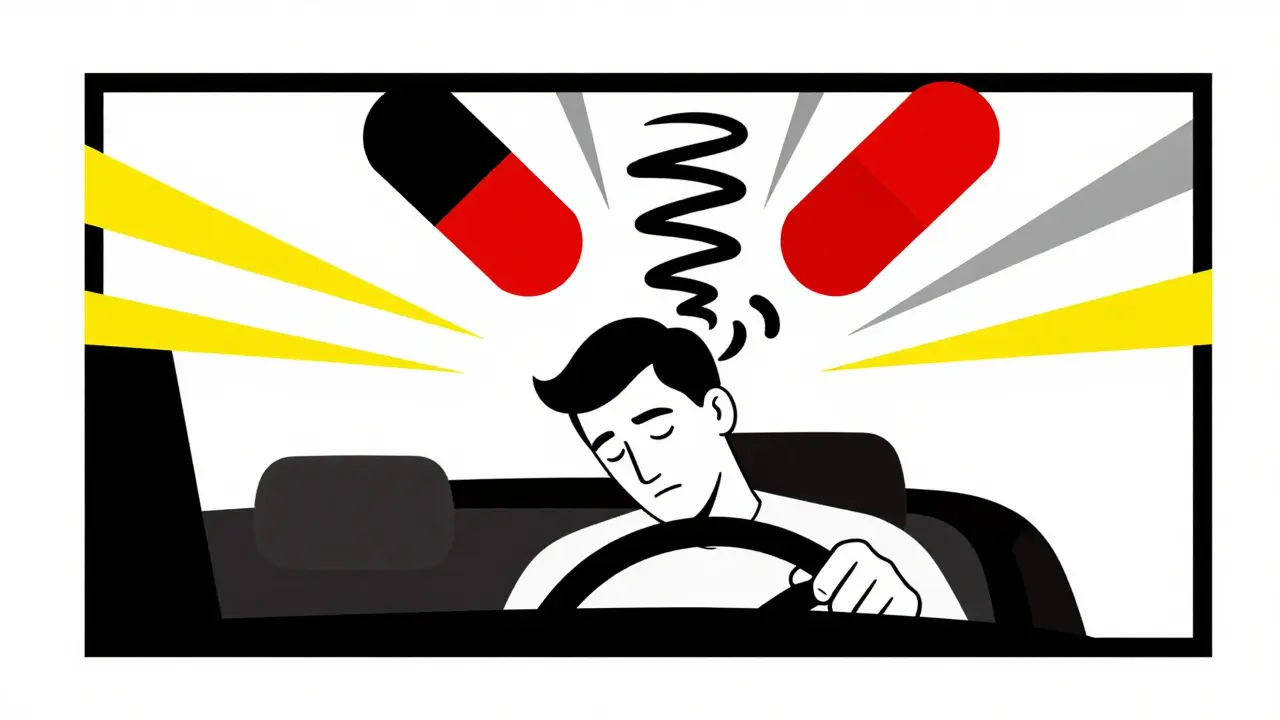
When you take an antihistamine for allergies or a cold, you expect to feel a little sleepy. That’s normal. But what happens when you add alcohol to the mix? Suddenly, that mild drowsiness can turn into something far more dangerous - like falling asleep behind the wheel, stumbling into furniture, or not waking up when you should. This isn’t just a myth. It’s a real, well-documented risk that affects millions of people every year.
Why Drowsiness Gets Worse
Both alcohol and antihistamines slow down your central nervous system. Alcohol does it by boosting GABA, a chemical that calms brain activity, and blocking NMDA, which keeps you alert. First-generation antihistamines like diphenhydramine (found in Benadryl) do something similar - they block histamine in your brain, which naturally keeps you awake. When you combine them, the effects don’t just add up. They multiply.
Studies show that mixing alcohol with first-generation antihistamines can increase drowsiness by up to 300% compared to using either one alone. In one clinical test, people who took diphenhydramine and drank alcohol had a 47% greater drop in reaction time than those who only drank alcohol. That’s the difference between reacting fast enough to brake and missing the moment entirely.
Not All Antihistamines Are the Same
There are two main types of antihistamines: first-generation and second-generation. The difference isn’t just in marketing. It’s in chemistry.
First-generation antihistamines - like diphenhydramine (Benadryl), chlorpheniramine (Chlor-Trimeton), and doxylamine (Unisom) - easily cross into your brain. That’s why they make you sleepy. About 50% of people who take them feel drowsy, even without alcohol. Add even one drink, and that number jumps to 60% or higher.
Second-generation antihistamines - like loratadine (Claritin), cetirizine (Zyrtec), and fexofenadine (Allegra) - were designed to avoid the brain. They’re labeled “non-drowsy” for a reason. Alone, they cause drowsiness in only 6-15% of users. But alcohol changes that. When you drink while taking Claritin, drowsiness rates jump to 30-35%. With Zyrtec, it goes up to 40-45%. So even “non-drowsy” options aren’t safe with alcohol.
How Alcohol Changes Your Body’s Handling of Antihistamines
Your liver doesn’t treat alcohol and antihistamines as separate. It uses the same enzymes - mainly CYP3A4 and CYP2D6 - to break them down. When alcohol is in your system, it clogs those enzymes. That means your antihistamine doesn’t get processed as fast. Its levels stay higher in your blood for longer.
According to data from BuzzRx, alcohol can keep antihistamine concentrations elevated by 25-40% longer than normal. That’s not just a delay. It’s an overdose waiting to happen. You might take your normal dose, have one beer, and end up with the same blood level as someone who took double the medication. No wonder so many people report passing out unexpectedly.
Real-Life Consequences
People don’t always realize how serious this is until it’s too late.
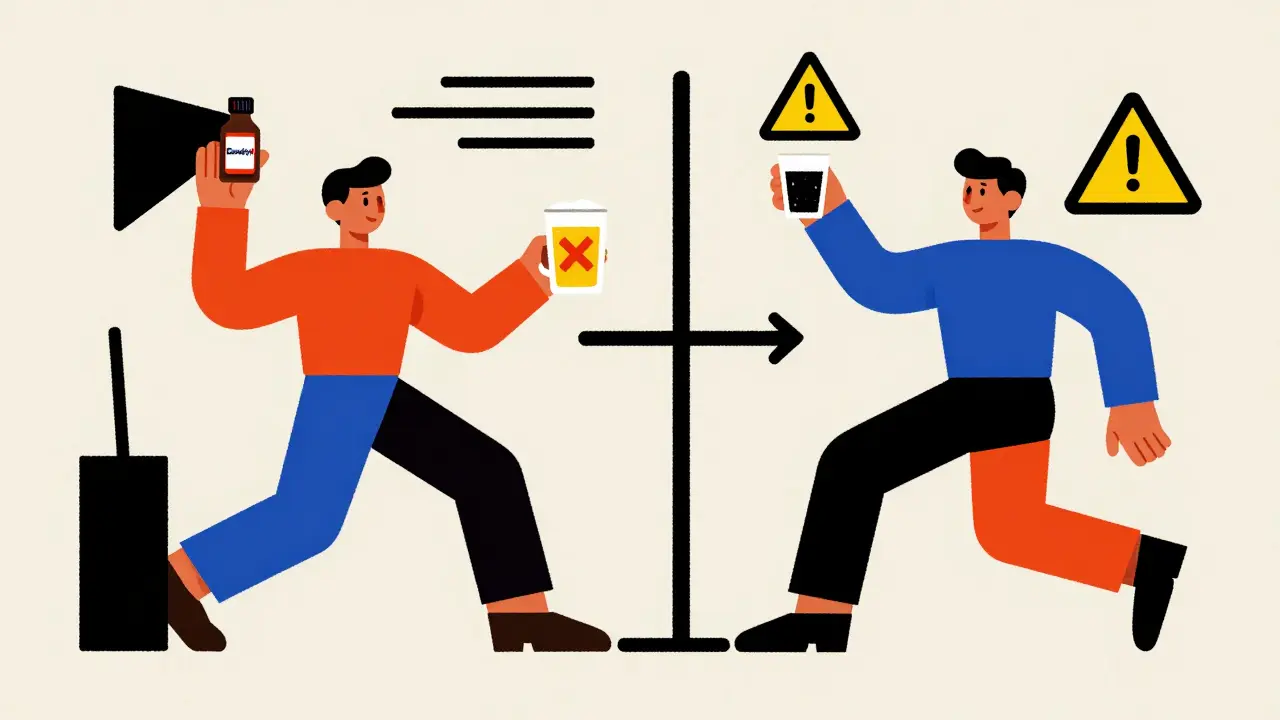
On Reddit’s r/Allergies community, 78% of users who mixed antihistamines and alcohol said they felt far sleepier than expected. Over a third reported nearly falling asleep while driving. One user wrote: “Took Benadryl for a rash, had two beers. Woke up in my driveway with no memory of how I got there.”
Review sites like Drugs.com and BuzzRx show similar patterns. Among negative reviews for Benadryl, 65% mentioned alcohol interactions. Phrases like “couldn’t wake up the next morning” and “passed out on the couch for 10 hours” appear again and again.
Older adults are especially vulnerable. The FDA says people over 65 experience 2.3 times more CNS depression from this combo than younger adults. That’s why falls, fractures, and confusion spike after mixing these substances. A 2022 study found that seniors who combined even small amounts of alcohol with antihistamines had a 75% higher risk of hip fractures.
It’s Not Just Allergy Pills
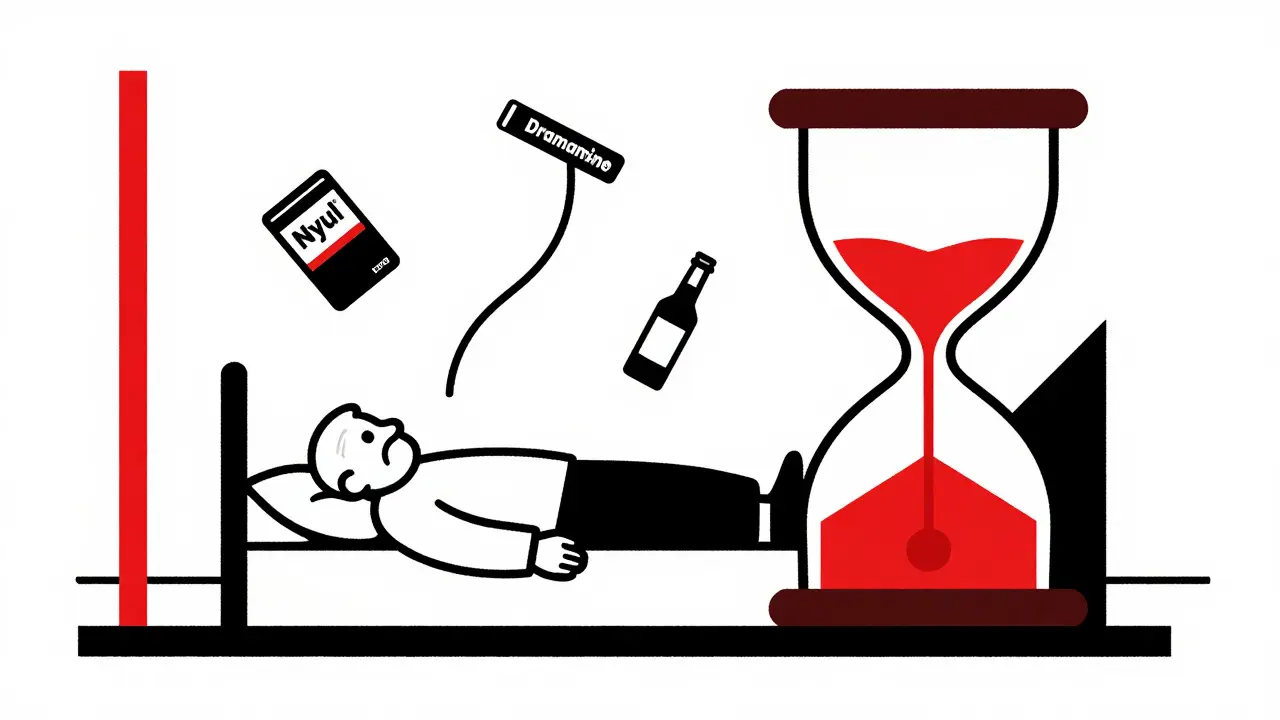
Many people don’t realize how many products contain diphenhydramine. It’s in sleep aids, cold medicines, motion sickness pills, and even some pain relievers. If you take Nyquil, Tylenol PM, or Dramamine, you’re already getting diphenhydramine. Add alcohol to any of those, and you’re setting yourself up for trouble.
GoodRx found that 72 different over-the-counter products contain this drug. Most don’t have strong warnings about alcohol. The label might say “may cause drowsiness,” but it won’t tell you: “Don’t drink. You could pass out.” That’s why so many people think they’re safe.
What About Emergency Situations?
There’s one exception: severe allergic reactions. If you’re having anaphylaxis - trouble breathing, swelling, a drop in blood pressure - you need epinephrine immediately. But if you’ve been drinking and don’t have epinephrine, taking Benadryl is still better than doing nothing. That doesn’t mean it’s safe. It means it’s necessary. In those cases, call 911 right away. Don’t wait. Don’t assume the antihistamine will fix it. It won’t.
How to Stay Safe
If you take antihistamines regularly, here’s what you need to do:
- Avoid alcohol entirely if you’re using first-generation antihistamines like Benadryl or Unisom.
- If you take Claritin or Zyrtec, wait at least 8-12 hours after your dose before drinking. Even then, stick to one drink. Two or more can still push you into dangerous drowsiness.
- Check every medicine label. If it says “diphenhydramine,” “doxylamine,” or “PM,” assume it’s a sedating antihistamine.
- If you need allergy relief and plan to drink, ask your doctor about alternatives like nasal sprays (Flonase) or pills like Singulair. These don’t interact with alcohol - though they take days to work, so plan ahead.
There’s no magic number for how much alcohol is “safe.” The risk isn’t linear. One drink with a second-generation antihistamine might be fine for some. For others, it’s enough to crash. Your body, your metabolism, your age - all of it matters.
The Bigger Picture
Over 61 million Americans used antihistamines in 2022. A Consumer Reports survey found that 63% of them drank alcohol within 12 hours of taking their medication. Only 28% knew this was risky. Emergency visits for this combination have risen 37% since 2018. And it’s not slowing down.
Pharmaceutical companies are working on third-generation antihistamines - like bilastine - that show almost zero brain penetration, even with alcohol. But they’re not available in the U.S. yet. For now, the safest choice is simple: don’t mix them.
That’s not about being overly cautious. It’s about survival. Drowsiness doesn’t just make you clumsy. It makes you vulnerable. And in the wrong situation - behind the wheel, on stairs, or alone at night - that vulnerability can be deadly.
Dominic Punch
February 26, 2026 AT 09:25Valerie Letourneau
February 28, 2026 AT 02:20Khaya Street
February 28, 2026 AT 13:33Christina VanOsdol
March 1, 2026 AT 04:12Brooke Exley
March 2, 2026 AT 21:15Alfred Noble
March 3, 2026 AT 03:42Matthew Brooker
March 4, 2026 AT 10:07Emily Wolff
March 4, 2026 AT 23:44Lou Suito
March 5, 2026 AT 00:31Joseph Cantu
March 5, 2026 AT 11:19Jacob Carthy
March 5, 2026 AT 15:53Lisandra Lautert
March 6, 2026 AT 15:16Anil bhardwaj
March 7, 2026 AT 20:53lela izzani
March 8, 2026 AT 03:20