
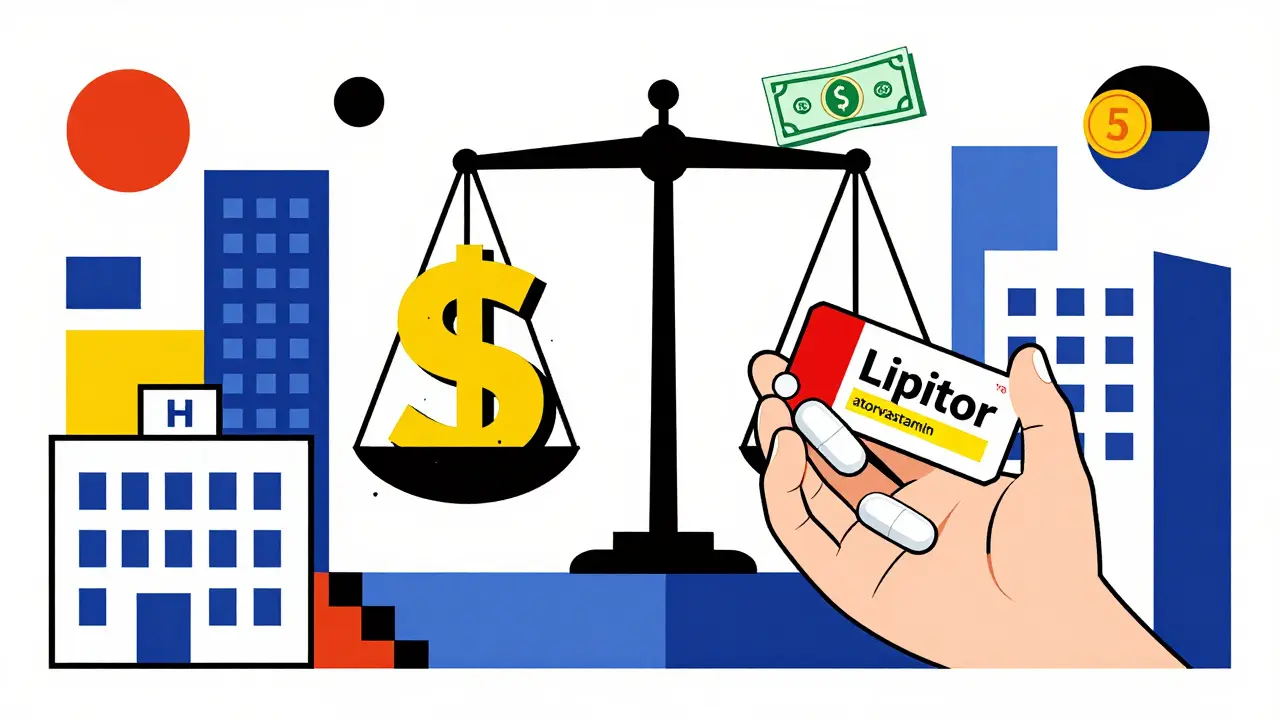
Every year, millions of people in the U.S. skip doses, split pills, or go without their prescriptions because they can’t afford them. The price of brand-name drugs can be staggering - sometimes over $150 for a 30-day supply. But what if you could get the exact same medicine for less than $5? That’s not a fantasy. It’s what generic medications do every single day.
What Exactly Are Generic Medications?
Generic medications are not knockoffs. They’re not cheaper versions with less active stuff. They’re exact copies of brand-name drugs in every way that matters: same active ingredient, same strength, same way of working in your body. The FDA requires them to be bioequivalent - meaning they deliver the same amount of medicine into your bloodstream at the same speed as the brand-name version. That’s not a guess. It’s science.Here’s how it works: When a brand-name drug’s patent expires, other companies can make the same medicine. They don’t have to run expensive clinical trials again because the original drug already proved it’s safe and effective. All they need to show is that their version behaves the same way in your body. The FDA inspects their factories just like they do for brand-name makers. Same standards. Same rules.
The only differences? The color, shape, or filler ingredients. Those don’t affect how the drug works. You might notice your pill looks different, or the name on the bottle changed from “Lipitor” to “atorvastatin.” That’s normal. It’s still the same medicine.
How Much Money Can You Really Save?
The savings aren’t small. They’re massive.The FDA says generic drugs cost, on average, 85% less than their brand-name counterparts. That’s not a rounded number - it’s based on real data from millions of prescriptions. Over the last decade, generics have saved U.S. patients more than $2.2 trillion. Think about that: over two trillion dollars. That’s enough to cover the annual healthcare costs of a country the size of Australia.
Here are real examples from 2022:
- A drug that cost $47 per dose dropped to under $2 - a 96% price cut.
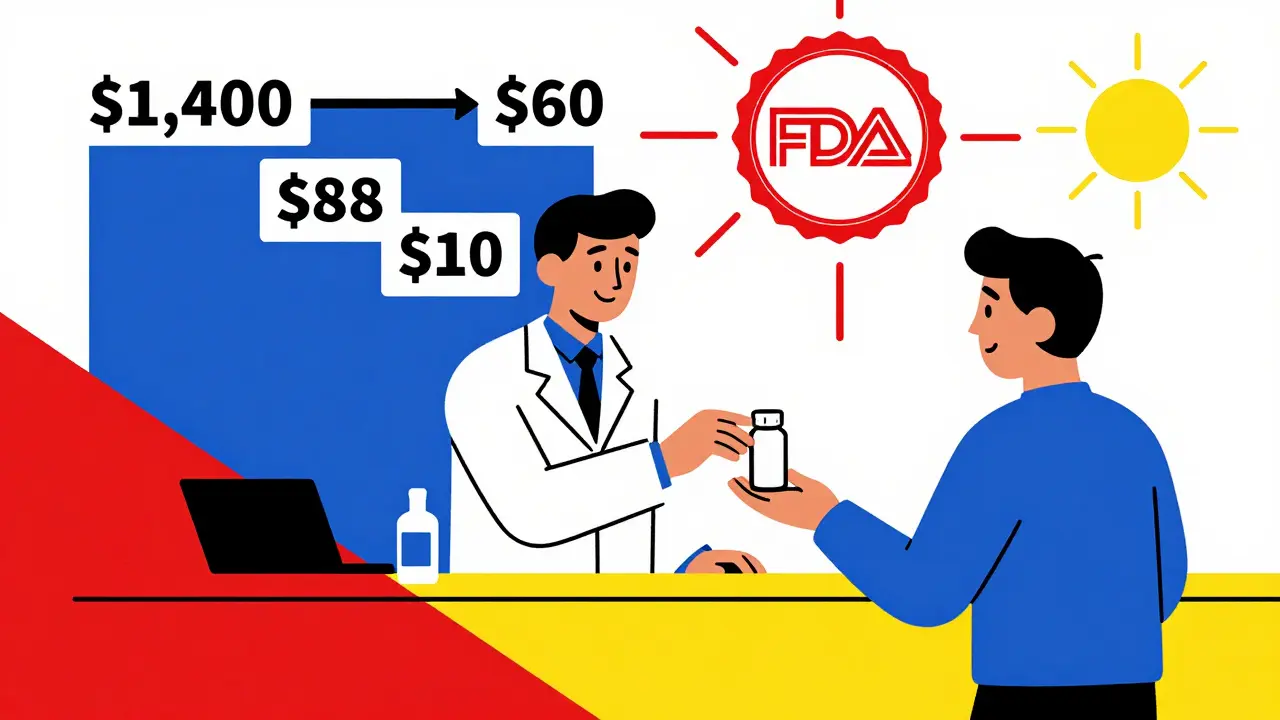
- A 30-day prescription that used to cost $1,400 fell to under $60.
- Another medication went from $88 per milliliter to under $10 - cutting the monthly cost from $3,800 to $500.
These aren’t rare cases. They’re standard. When a generic hits the market, prices don’t just dip - they crash. And it’s not just uninsured people who benefit. Even those with insurance save big. Between 2010 and 2020, out-of-pocket costs for generics dropped by about 50%. Total spending - including what insurers paid - fell by nearly 80%.
At Costco, 90% of the 184 most commonly prescribed generic drugs in 2018 cost less than $20 for a 30-day supply. That’s cheaper than most coffee shops charge for a latte.
Why Do People Still Hesitate?
Despite the evidence, some patients still worry. “Will it work the same?” “Is it weaker?” “I used to feel better on the brand name.”These concerns are understandable, but they’re rarely about the medicine itself. The FDA and independent studies have found no meaningful difference in effectiveness between generics and brand-name drugs. When people report feeling worse on a generic, it’s usually because of:
- Placebo effect - they expect the brand to work better, so they feel like it does.
- Differences in inactive ingredients - like dyes or fillers - which can cause minor side effects in sensitive people, but don’t change how the drug works.
- Switching from one generic to another - different manufacturers use different fillers, which can cause temporary adjustments in how your body responds.
There are exceptions. For drugs with a narrow therapeutic index - like levothyroxine (for thyroid), warfarin (a blood thinner), or some seizure meds - doctors may recommend sticking with one brand or generic to avoid tiny variations in absorption. Even then, switching between generics is usually safe with proper monitoring.
Dr. Aaron Kesselheim from Harvard Medical School calls generics “one of the most successful public health interventions in modern history.” He’s right. Without them, millions of people with diabetes, high blood pressure, or depression would be forced to choose between medicine and groceries.
How to Get Generic Medications - And Save Even More
Getting a generic is easier than you think. Your doctor can write the prescription for the generic version. Your pharmacist will automatically substitute it unless the doctor says “dispense as written.” You don’t need to ask - but you should.Here’s how to maximize your savings:
- Ask your doctor: “Is there a generic version of this?” If they say no, ask why. Sometimes it’s just habit.
- Check your pharmacy’s cash price. Many generics cost less at the register than your insurance copay. At Walmart, Target, and Costco, common generics like metformin, lisinopril, or atorvastatin are often under $10 for a month’s supply.
- Try the Mark Cuban Cost Plus Drug Company (MCCPDC). Launched in 2022, it sells generics at transparent prices - no insurance needed. Median savings? $4.96 per prescription. Uninsured patients saved even more - up to $6.08 on average.
- Use mail-order pharmacies. Many offer 90-day supplies of generics at lower rates than 30-day fills.
- Check if your Medicare Part D plan has a preferred generic list. Some plans offer $0 copays for certain generics.
Don’t assume your insurance will save you money. Sometimes, paying cash for a generic is cheaper than using your coverage. Always ask your pharmacist: “What’s the cash price?”
What About Biosimilars? The Next Frontier
Not all drugs can be copied easily. Biologics - complex medicines made from living cells, like insulin, rheumatoid arthritis drugs, or cancer treatments - can’t be replicated exactly. But their close cousins, called biosimilars, are coming online. These aren’t generics, but they’re similar: same active ingredient, same effect, and often 15-35% cheaper than the brand.The FDA has approved dozens of biosimilars since 2015, and more are on the way. As more biologics lose patent protection, we’ll see the same price drops we’ve seen with traditional generics. The potential savings? Billions more for patients.
What’s Holding Back Wider Use?
Despite the clear benefits, barriers still exist:- Pharmaceutical companies sometimes pay generic makers to delay entering the market - a practice called “pay-for-delay.” The FTC is cracking down, but it still happens.
- The FDA has a backlog of generic applications. More approvals mean more competition, which means lower prices. Pushing the FDA to clear that backlog is key.
- Some doctors still default to prescribing brand names out of habit or because they’re unfamiliar with the generic options.
- Insurance formularies sometimes make it harder to get certain generics unless you get prior authorization.
Patients can help by speaking up. If your pharmacist offers a generic, say yes. If your doctor prescribes a brand without mentioning the generic, ask why. Your voice matters.
Real Stories, Real Savings
Andrew Tighe from Phoenix switched his daughter’s medications to generics and saved hundreds a year. A Reddit user reported cutting their monthly drug bill from $150 to $4. Another shared that their blood pressure medication used to cost $120 - now it’s $8. These aren’t outliers. They’re routine.One of the biggest benefits? Adherence. When drugs are affordable, people take them. And that’s the whole point. A pill that costs $150 might as well not exist if you can’t pay for it. A pill that costs $5? That’s a lifeline.
Bottom Line: Generics Work. And They Save Lives.
Generic medications aren’t a compromise. They’re the smartest, most proven way to cut drug costs without cutting care. They’re backed by science, approved by the FDA, and used by millions every day. The savings are real. The results are the same. And the impact? Life-changing.If you’re paying more than $20 a month for a common prescription, you’re likely overpaying. Ask your doctor. Ask your pharmacist. Check the cash price. Switch if you can. It’s not just about saving money. It’s about being able to stay healthy - without going broke.
Are generic medications as effective as brand-name drugs?
Yes. The FDA requires generic drugs to be bioequivalent to their brand-name counterparts, meaning they deliver the same amount of active ingredient into your bloodstream at the same rate. Thousands of studies and decades of real-world use confirm they work the same way. Differences in color, shape, or fillers don’t affect effectiveness.
Why do generic pills look different from brand-name ones?
By law, generic drugs can’t look exactly like the brand-name version. That’s to avoid trademark infringement. So manufacturers change the color, shape, or size. The active ingredient is identical, but the inactive ingredients (like dyes or binders) may differ. These don’t affect how the drug works - only how it looks or feels.
Can I switch from a brand-name drug to a generic without my doctor’s approval?
In most cases, yes. Pharmacists are allowed to substitute a generic unless the prescription says “dispense as written.” But it’s always smart to talk to your doctor first - especially if you’re taking a drug with a narrow therapeutic index, like warfarin or levothyroxine. For most medications, switching is safe and common.
Is it cheaper to buy generics with insurance or cash?
Sometimes cash is cheaper. Many generics at pharmacies like Walmart, Costco, or Target cost less than $10 for a 30-day supply - often lower than your insurance copay. Always ask your pharmacist for the cash price before using your insurance. It’s free to check, and it could save you money.
What’s the difference between a generic and a biosimilar?
Generics are exact copies of simple chemical drugs. Biosimilars are highly similar versions of complex biologic drugs made from living cells - like insulin or cancer treatments. They’re not identical, but they work the same way and are significantly cheaper. Biosimilars are the next wave of cost-saving drugs, and more are expected to hit the market in the coming years.
Why do some people say generics don’t work as well?
Most often, it’s because of placebo effects or changes in inactive ingredients. Some people feel different when switching - but studies show it’s rarely due to the active drug. For drugs with narrow therapeutic windows (like thyroid meds), switching between different generic brands can cause small changes in absorption. In those cases, sticking with one brand or generic helps. But for the vast majority of medications, generics work just as well.
Erica Vest
December 18, 2025 AT 04:31Generics are scientifically identical to brand-name drugs in active ingredients, bioavailability, and therapeutic effect. The FDA requires rigorous testing before approval. Millions of patients use them safely every day. The savings aren't just real-they're life-saving.
Laura Hamill
December 19, 2025 AT 15:55they’re just putting the same poison in a different bottle and calling it cheap 🤡 big pharma and the fda are in bed together. you think they want you healthy? nah. they want you hooked on $150 pills. generics are a trap. they’re testing us. i know what’s going on.
Chris Davidson
December 21, 2025 AT 11:53the data is clear generics work. the only reason people complain is because they’re used to being told they need the expensive one. stop being lazy and ask your pharmacist
Connie Zehner
December 23, 2025 AT 02:39i switched to generic lisinopril last year and my anxiety spiked so bad i had to go to the er. they said it was fine but i KNOW it was the pill. they changed the dye. i can feel it in my bones. why won’t anyone listen to me??
Elaine Douglass
December 24, 2025 AT 13:22i used to pay $90 for my metformin now it’s $7 at walmart. i cry every time i pick it up. thank god for generics
Alana Koerts
December 25, 2025 AT 05:59generic manufacturers cut corners on fillers and binders. you think that doesn’t affect absorption? please. the fda lets them slide on quality control. it’s all about profit
jessica .
December 26, 2025 AT 19:40they’re using generics to track us. the fillers have microchips. the fda and big pharma are building a database of every american on meds. you think they care if you live? they want to control you. i switched to herbal tea. safer. trust me
Dev Sawner
December 27, 2025 AT 18:13the bioequivalence standards for generics are statistically robust and empirically validated across multiple clinical cohorts. the assertion that efficacy is compromised is not supported by peer-reviewed literature. the perception of inferiority is largely attributable to cognitive bias and marketing-driven conditioning.
mark shortus
December 29, 2025 AT 10:10my uncle died because they gave him a generic version of his heart med. the pill looked different. he thought it was fake. he stopped taking it. he didn’t even make it to the hospital. this isn’t just about money. it’s about trust. and someone’s been lying to us for decades
Ashley Bliss
December 30, 2025 AT 15:04we live in a world where a pill that costs $150 is seen as a moral obligation, while a $5 version is dismissed as ‘inferior.’ how did we become a society that values corporate profits over human survival? we are not just patients-we are commodities. and generics? they’re the only rebellion left.
Moses Odumbe
January 1, 2026 AT 00:55generics = 90% of my prescriptions 😎 $2 for atorvastatin? yes please 🤑 my insurance copay was $35. i’m not stupid. i pay cash. you should too. #genericlife #savemoney
Emily P
January 2, 2026 AT 23:57do biosimilars have the same approval process as generics? i’ve read conflicting things. is it true they’re not as tightly regulated?
Erica Vest
January 3, 2026 AT 21:48No, biosimilars go through a different but equally rigorous pathway. They’re not exact copies because biologics are made from living cells, so tiny variations are expected. But they must demonstrate no clinically meaningful difference in safety or effectiveness. The FDA’s standards are strict-just different from small-molecule generics.
Vicki Belcher
January 5, 2026 AT 19:32thank you for saying that 🙏 i was so scared to switch my insulin to a biosimilar but now i feel better. you’re a lifesaver 💖
Aboobakar Muhammedali
January 7, 2026 AT 17:56i live in india. generics here cost less than a cup of chai. we have no choice. but they work. my father takes generic metformin for 15 years. no complications. america is broken. the system is designed to keep you sick and paying