
Why Insulin Storage Matters
Insulin isn’t like other medications. If it gets too hot, too cold, or sits out too long, it stops working the way it should. People who rely on insulin to manage their diabetes can’t afford mistakes. A single dose of degraded insulin can send blood sugar levels soaring, leading to exhaustion, confusion, or worse-diabetic ketoacidosis. The FDA, American Diabetes Association, and major insulin makers all agree: storing insulin right isn’t optional. It’s life-saving.
Insulin is a protein. That means it’s delicate. Heat, freezing, and even prolonged exposure to light can break down its structure. When that happens, your body doesn’t get the right amount of insulin when you inject it. You might think your blood sugar is under control, but it’s not. And you won’t know until it’s too late.
Unopened Insulin: Keep It Cold
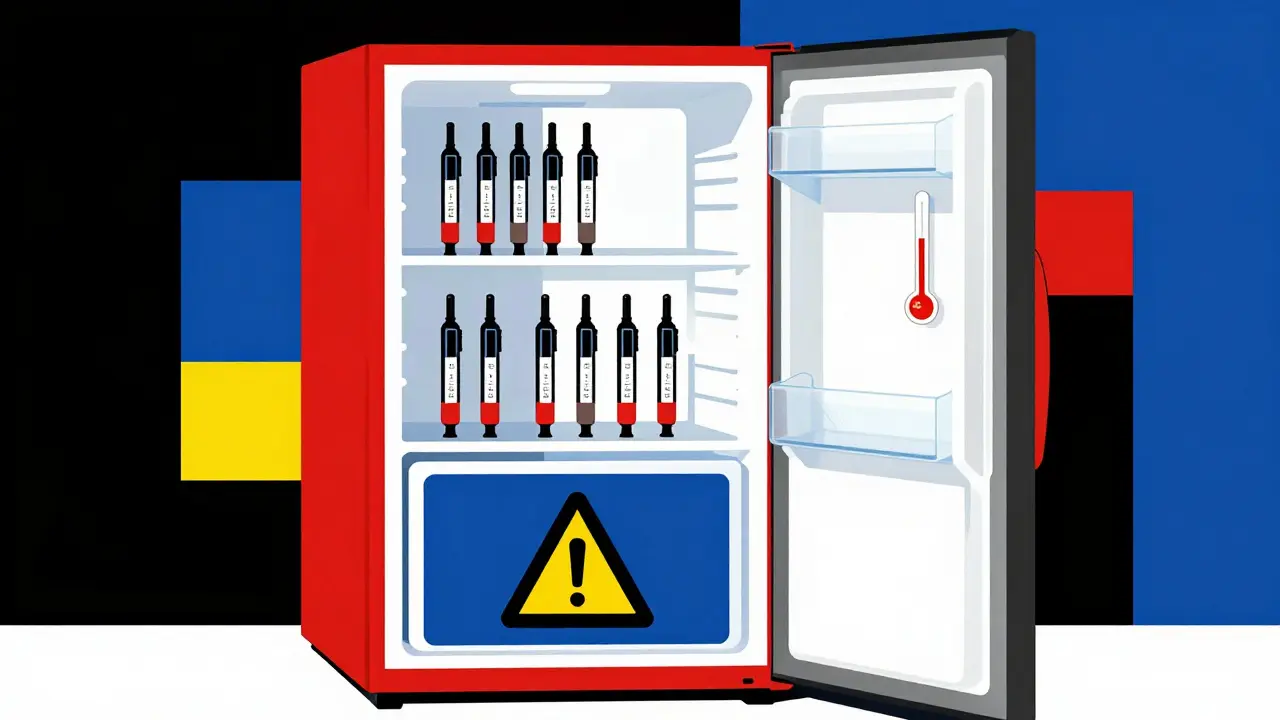
Before you open a new insulin vial, pen, or cartridge, it needs to stay refrigerated. The ideal temperature is between 36°F and 46°F (2°C to 8°C). That’s your fridge’s main compartment-not the door, not the freezer drawer. Many fridges have spots that dip below freezing, especially near the back wall or ice maker. Store insulin on a middle shelf, away from those cold zones.
Unopened insulin lasts until the expiration date printed on the box-as long as it’s kept cold. If you leave it on the counter or in a hot car, even for a few hours, you risk ruining it. One study found that 12% of home refrigerators have areas that freeze insulin without the user realizing it. That’s why checking your fridge’s temperature with a simple thermometer is a smart habit.
Opened Insulin: Room Temperature Is Fine-For a While
Once you start using insulin, you don’t need to keep it cold. In fact, injecting cold insulin can hurt. Most people find it more comfortable to let it warm up for 30 minutes before use. After opening, insulin can be kept at room temperature-between 59°F and 86°F (15°C to 30°C)-for a limited time.
Here’s the catch: not all insulins last the same amount of time after opening.
- Most insulin pens and vials: 28 days at room temperature
- Isophane insulin (NPH): 14 days at room temperature
- Insulin Degludec (Tresiba): 8 weeks at room temperature
- Insulin Glargine U300 (Toujeo): 56 days at room temperature (FDA-approved in 2023)
Always check the package insert or ask your pharmacist. If you’re unsure, assume it’s 28 days. When in doubt, throw it out.
What Happens If Insulin Gets Too Hot?
Heat is the biggest enemy. Temperatures above 86°F (30°C) start breaking down insulin. At 98.6°F (37°C) and higher, degradation speeds up dramatically. The FDA says insulin loses about 1.3% of its potency per hour above 86°F. At 104°F (40°C), it can become useless within 48 hours.
Here’s a real-world example: On a 75°F day, the inside of a parked car can hit 120°F in under 30 minutes. That’s why so many people accidentally ruin insulin by leaving it in the glove compartment, purse, or backpack on a sunny day. One user on Reddit lost $380 worth of insulin after their fridge broke and stayed at 50°F for two days. Their blood sugar went wild for days before they figured out why.
If your insulin looks cloudy when it should be clear, or if it has clumps or particles, do not use it. That’s a sign of damage. Even if it’s still within the 28-day window, it’s unsafe.
Insulin Pumps: A Different Rule
If you use an insulin pump, your rules change. Once insulin is drawn into the pump’s reservoir, it must be replaced every 72 hours-even if you haven’t used it all. That’s because the insulin is exposed to air and body heat, which speeds up breakdown. The same goes for the infusion set and tubing.
Also, if the insulin in your pump gets too hot (above 98.6°F), discard it immediately. No exceptions. Unlike pens or vials, pump insulin doesn’t get a 28-day grace period. The risk of failure is too high.
Traveling With Insulin: Keep It Safe
Traveling doesn’t mean giving up on proper storage. Airplanes, road trips, and hot climates are all risky. Here’s how to handle it:
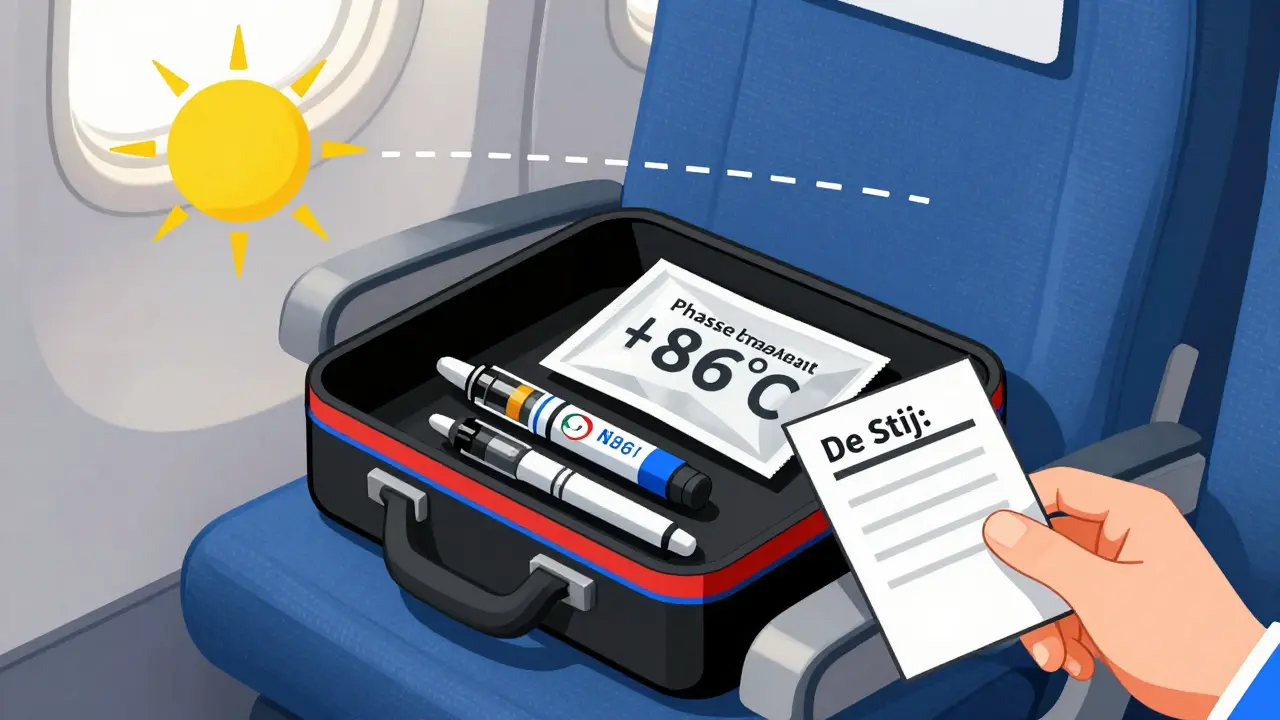
- Use an insulated travel case with a phase-change gel pack. Brands like Frio Wallet or CoolerKeg keep insulin between 59°F and 86°F for up to 45 hours without refrigeration.
- Never check insulin in luggage. Always carry it with you in your pocket, purse, or carry-on.
- If flying, ask for a letter from your doctor explaining you’re carrying insulin. TSA allows it, but having documentation helps.
- When staying in a hotel, ask for a mini-fridge. If they don’t have one, ask if you can store it in the front desk’s refrigerator.
Many travelers swear by cooling cases. Amazon reviews for the Frio Wallet show a 4.3-star average from over 2,800 users. They work. But they’re not magic. Still, don’t leave them in direct sunlight or a hot car-even these cases have limits.
Mark It, Track It, Don’t Guess
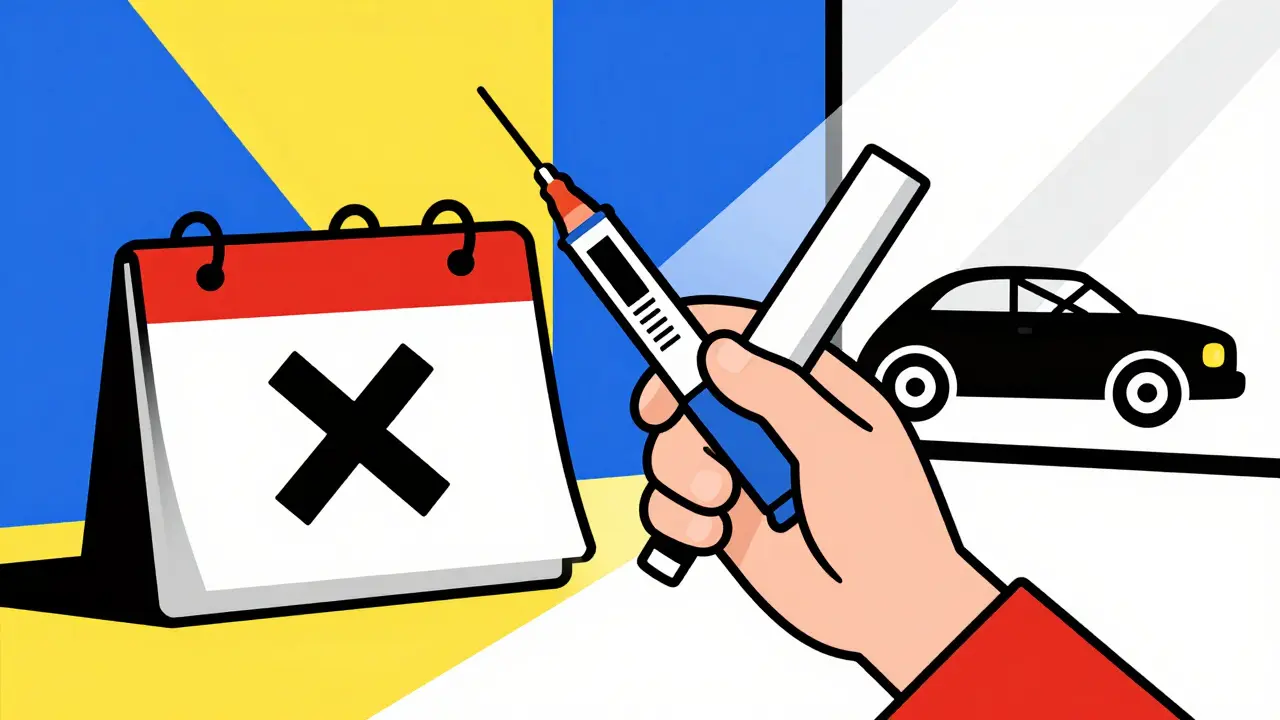
The biggest mistake people make? Forgetting when they opened their insulin. That’s why marking the date on the pen or vial with a permanent marker is one of the most effective habits you can adopt.
A University of Michigan study found that people who wrote the opening date on their insulin reduced the chance of using expired product by 68%. That’s huge. You don’t need an app. You don’t need a fancy tracker. Just a pen and a little discipline.
Write the date clearly. Use a waterproof marker. Do it the moment you first use it. Then, when the 28 days are up, toss it-even if there’s insulin left. It’s not worth the risk.
What About Freezing?
Never freeze insulin. Ever. Freezing creates crystals inside the liquid. Those crystals don’t dissolve. Even if you thaw it, the insulin won’t work right. You might inject it, feel nothing, and then crash into high blood sugar hours later.
Some people accidentally freeze insulin by storing it in the freezer compartment or too close to the back wall of the fridge. If you see ice in the vial or pen, throw it away. No second chances.
What to Do in an Emergency
Power outages, natural disasters, or travel mishaps can leave you without refrigeration. The FDA’s 2023 emergency guidance says this: if you can’t keep insulin cold, most types will still work for up to 28 days at temperatures up to 86°F. That’s a lifeline.
But here’s the catch: after 7 days at 95°F, insulin loses 35% of its strength. That’s not safe. If you’re stuck in a heatwave with no AC, try this:
- Wrap the insulin in a damp towel and put it in a cool, shaded spot.
- Keep it away from direct sunlight.
- Use it as soon as possible.
- Monitor your blood sugar extra closely.
Don’t wait until you’re in crisis to learn this. Have a plan. Keep a backup insulin supply in a cooling case if you live in a hot climate or travel often.
Waste and Cost: It’s More Than Just Money
Improper storage costs the U.S. healthcare system about $1.2 billion a year in wasted insulin and related hospital visits. But for you, it’s personal. Losing a $300 insulin pen isn’t just expensive-it’s stressful. It’s fear. It’s guilt. It’s wondering if you could’ve done better.
That’s why knowing how to store insulin isn’t just about following rules. It’s about taking control. It’s about protecting your health, your money, and your peace of mind.
Common Mistakes to Avoid
- Storing insulin in the fridge door (temperature swings too much)
- Leaving it in a hot car, purse, or gym bag
- Using insulin past 28 days without checking the label
- Ignoring cloudy or clumpy insulin
- Not marking the opening date
- Assuming all insulins last the same amount of time
If you’ve made any of these mistakes before, you’re not alone. But now you know better. Start today. Mark your pens. Check your fridge. Keep a travel case handy.
What’s Next for Insulin Storage?
The future is getting better. New insulin formulations are being designed to handle heat better. By 2027, experts predict 60% of new insulins will last 35+ days at room temperature. That’s a game-changer for people without reliable refrigeration.
But until then, the rules still apply. Don’t wait for better insulin. Master the storage you have now.
Can I store insulin in the freezer?
No. Freezing insulin causes permanent damage. Crystals form inside the liquid, and even after thawing, the insulin won’t work properly. Always store unopened insulin in the refrigerator, not the freezer.
How long can I keep insulin out of the fridge after opening?
Most insulin lasts 28 days at room temperature (59°F-86°F). But some types, like Tresiba, last up to 8 weeks, and Toujeo lasts 56 days. Always check the manufacturer’s label. If you’re unsure, assume 28 days.
What if my insulin looks cloudy?
If your insulin is supposed to be clear (like rapid- or long-acting types) and it looks cloudy, has clumps, or has particles, throw it away. That’s a sign it’s degraded and no longer safe to use.
Can I use insulin that was left in a hot car?
If the temperature inside the car went above 86°F, especially for more than an hour, it’s not safe. At 98.6°F or higher, insulin degrades quickly. When in doubt, replace it. Your blood sugar is worth more than the cost of a new pen.
Should I let insulin warm up before injecting?
Yes. Injecting cold insulin can be painful. Let it sit at room temperature for 30 minutes before use. Just make sure you still use it within the 28-day window after opening.
Do insulin pens need special storage compared to vials?
No. The same rules apply: unopened = refrigerated, opened = room temperature for 28 days (unless labeled otherwise). The only difference is pens are more convenient for travel and daily use.
What’s the best way to track when I opened my insulin?
Use a permanent marker to write the opening date directly on the pen or vial. It’s simple, reliable, and cuts down on accidental use of expired insulin by 68%, according to a University of Michigan study.
Can I reuse insulin that’s been exposed to high heat?
No. Once insulin has been exposed to temperatures above 86°F for more than a few hours, its effectiveness drops. Even if it looks normal, it may not work properly. Always replace it. Safety comes before saving money.



kate jones
January 30, 2026 AT 12:23Just a quick heads-up: I always mark my pens with a Sharpie the second I open them. No apps, no reminders-just the date right on the barrel. Saved me from a scary spike last summer when I almost used a 40-day-old pen. Don’t overthink it. Pen + date = peace of mind.
Eliana Botelho
January 31, 2026 AT 04:12Okay but like… why are we treating insulin like it’s a fragile orchid? I’ve had mine sit in my glovebox for hours on 90-degree days and my A1C’s been stable for years. Maybe the ‘28-day rule’ is just pharma’s way of selling more pens? I mean, my grandma used to keep hers in a drawer since the 70s and she lived to 94. Are we overmedicalizing something that’s been around since the 1920s?
Diksha Srivastava
February 2, 2026 AT 00:55This is such a helpful guide! 💪 I’m from India and we don’t always have reliable fridges, especially in small towns. But now I know to use a damp towel and shade-so simple! Thank you for reminding us that we can still manage this with care, even without perfect conditions. You’re not alone out there, everyone!
Adarsh Uttral
February 3, 2026 AT 22:30lol i used to leave my insulin in my bike bag on the way to work. 30 mins in the sun and boom-cloudy. learned the hard way. now i just keep it in my shirt pocket. warm but safe. also i write the date on the pen with a marker. dumb but works.
April Allen
February 3, 2026 AT 23:49Insulin’s instability isn’t just a pharmacological quirk-it’s a biophysical inevitability. Proteins denature under thermal stress, and insulin’s tertiary structure is particularly vulnerable to hydrophobic collapse above 30°C. The 1.3% potency loss per hour isn’t arbitrary; it’s empirically derived from accelerated degradation studies using HPLC and bioassays. What we’re seeing here isn’t ‘storage advice’-it’s molecular integrity management. The FDA guidelines reflect thermodynamic reality, not bureaucratic overreach.
Sheila Garfield
February 5, 2026 AT 17:23I really appreciate how thorough this is. I’ve been using insulin for 12 years and still learned a few things-like Toujeo lasting 56 days. I always assumed 28 was universal. Also, the damp towel trick for heatwaves? Genius. I’m going to keep a spare one in my emergency kit now. Small changes, big impact.
Shawn Peck
February 7, 2026 AT 13:37You people are overcomplicating this. If your insulin gets warm, just use it faster. It’s not magic. It’s a medicine. You don’t need a PhD to store a pen. I’ve had mine in my pocket for months and never had a problem. Stop being scared of your own blood sugar. Just live.
Holly Robin
February 8, 2026 AT 06:17EVERYTHING in this post is a lie. The FDA doesn’t care about you. They’re paid by Big Insulin. Your fridge isn’t cold enough? That’s because they want you to buy new pens every month. I’ve been keeping mine in my bathroom cabinet for 4 months. My A1C is 5.8. They don’t want you to know this. They profit from fear. Watch the documentary ‘Insulin Inc.’ on Netflix. It’s all a scam.
Shubham Dixit
February 10, 2026 AT 06:08In India, we don’t have the luxury of refrigerators in every home. We’ve been managing diabetes for generations without these fancy rules. My uncle used to keep his insulin in a clay pot filled with water-it stays cool naturally. Why are we copying American guidelines that don’t fit our reality? We need solutions that work for the Global South, not just Silicon Valley tech bros with smart fridges.
KATHRYN JOHNSON
February 10, 2026 AT 22:21While I commend the intention of this article, the implicit assumption that all patients have access to refrigeration, insulated carriers, or even permanent markers is profoundly classist. The $380 insulin pen is a luxury. Many are choosing between insulin and groceries. Framing this as a personal responsibility issue ignores systemic failures in healthcare infrastructure. This is not about discipline-it’s about equity.
Jodi Olson
February 12, 2026 AT 06:22Insulin is a protein. Proteins denature. Heat breaks bonds. Cold forms crystals. The science is simple. The human tendency to ignore it? That’s the tragedy. We are not designed to manage chronic illness in a world that treats our survival as optional. Marking the date isn’t a habit. It’s an act of resistance against neglect.
Carolyn Whitehead
February 12, 2026 AT 06:33so i started using the frío wallet after reading this and holy cow it’s a game changer. i travel for work and used to stress every time i flew. now i just toss it in my purse and forget about it. also i write the date on the pen with a sticker from my planner. silly but i love it. thanks for the reminder to be kind to myself about this stuff.
Amy Insalaco
February 12, 2026 AT 14:39It’s fascinating how the cultural capital of biomedical authority is so thoroughly internalized here. The fetishization of the 28-day window, the ritualistic marking of dates, the fetishization of the Frio Wallet as a status symbol-it’s all part of the neoliberal biopolitical project that transforms patient care into consumer compliance. Why not interrogate why insulin is so fragile in the first place? Why not ask why the pharmaceutical industry hasn’t engineered heat-stable analogs decades ago? This isn’t about storage-it’s about systemic abandonment disguised as personal responsibility.
Beth Beltway
February 13, 2026 AT 14:46Let’s be real. If you’re using insulin past 28 days, you’re gambling with your life. And if you’re not marking your pens? You’re negligent. I’ve seen people end up in DKA because they ‘thought it was fine.’ It’s not fine. It’s not a suggestion. It’s a biological fact. Stop making excuses. Your life isn’t a suggestion. Your insulin isn’t a suggestion. Your negligence is not okay.
Marc Bains
February 15, 2026 AT 03:06Thank you for writing this. I’m a diabetes educator and I see people struggle with this every day. One thing I always say: you don’t need perfection. You need awareness. If you forgot to mark the date once? Just start today. If your fridge broke? Use the damp towel trick. If you’re in a heatwave? Check your blood sugar more often. You’re not failing-you’re adapting. And that’s brave.