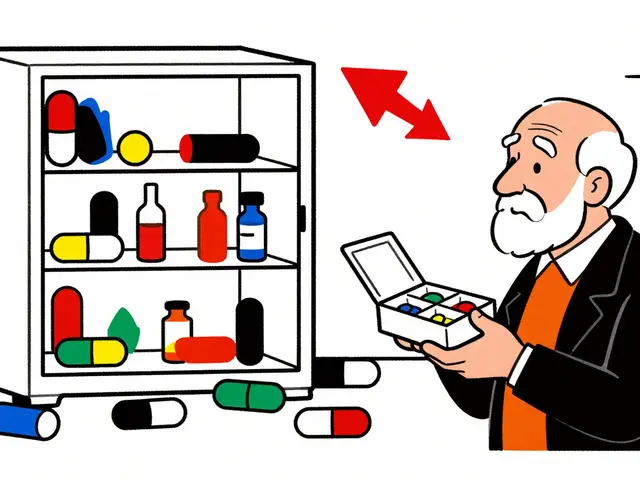
You might be taking a few different pills every day, but have you ever wondered if the order or timing matters? Most people assume that as long as they take their meds, they're good. But for many, the clock is just as important as the dose. If you take two certain medications at the exact same time, one might block the other from working, or they might react in a way that makes you feel sick. This isn't about the drugs fighting each other in your bloodstream, but rather how they behave in your stomach and gut before they even reach your system.
| Interaction Type | What Happens? | Can Timing Fix It? | Example |
|---|---|---|---|
| Absorption-based | One drug blocks another from entering the blood | Yes (Usually 2-4 hours) | Antacids and Antibiotics |
| Metabolic | One drug changes how the liver processes another | No | Warfarin and Metronidazole |
| Pharmacodynamic | Two drugs amplify the same effect (e.g., bleeding) | No | Warfarin and NSAIDs |
Understanding Time-Dependent Drug Interactions
Not all drug interactions are created equal. Some are dangerous and require you to stop a medication entirely, but many are what experts call drug interactions is a situation where the coadministration of two or more drugs results in a decreased therapeutic effect or an adverse reaction. Specifically, time-dependent drug interactions (TDDIs) happen when drugs interfere with each other's pharmacokinetics-which is just a fancy way of saying how your body absorbs, distributes, and gets rid of the medicine.
Think of your stomach like a narrow doorway. If two drugs arrive at the same time, they might clump together or change the acidity of your stomach, meaning only one (or neither) actually gets through the door into your bloodstream. For example, if you take an antacid containing magnesium or aluminum at the same time as a fluoroquinolone antibiotic like ciprofloxacin, the antacid can block up to 90% of the antibiotic from being absorbed. You're taking the medicine, but it's not actually doing its job. However, if you wait two hours between the two, the "doorway" clears, and both drugs work as intended.
Common Medications That Require Precise Timing
Certain classes of drugs are notorious for being "picky" about when they are taken. If you're on any of these, you should double-check your schedule with a pharmacist.
- Levothyroxine is a synthetic thyroid hormone used to treat hypothyroidism: This drug is incredibly sensitive. To keep its absorption efficacy around 95%, it typically needs a 4-hour gap before you take iron supplements.
- Bisphosphonates (like Alendronate) are medications used to treat osteoporosis by strengthening bones: These have a very narrow absorption window. They usually need to be taken at least 30 minutes before any other food or medication.
- Tetracycline antibiotics: These often need to be separated by 2 to 3 hours from anything containing calcium, as the calcium binds to the antibiotic and stops it from working.
- Colchicine and Clarithromycin: The FDA suggests a 2-hour separation for these two to reduce the risk of toxicity by about 60%.
When Timing Isn't Enough
It's a common mistake to think that spacing out all your meds will solve every problem. Unfortunately, timing only helps with absorption issues in the gut. It does nothing for interactions that happen in the Liver or the blood.
For instance, the Cytochrome P450 enzyme system in your liver is responsible for breaking down many drugs. If one drug (like metronidazole) inhibits an enzyme that another drug (like warfarin) needs to be cleared from your body, the second drug will build up to dangerous levels in your blood. No matter if you take them 10 hours apart, the inhibitor is already in your system affecting your liver. In these cases, a doctor must either lower the dose or find a different medication entirely.
Real-World Challenges for People on Multiple Meds
If you're managing five or more medications-a situation known as polypharmacy-the math gets hard quickly. It's not just about one pair of drugs; it's about how a whole cocktail of pills interacts. Many seniors struggle with this, often forgetting which pill needs the 2-hour gap and which one can be taken with breakfast.
Clinical data shows that about 40% of patients struggle to adhere to complex timing schedules when they are just given a written list. The most successful way to manage this isn't by relying on memory, but by using tools. Digital apps like Medisafe or even a simple color-coded pill organizer can reduce timing errors by over 40%. Instead of trying to remember "four hours after X," a programmed alert tells you exactly when the window is open for your next dose.
How to Build a Safe Medication Schedule
If you're worried about your current routine, don't guess. Use a structured approach to clear the air with your healthcare provider.
- Perform a Medication Reconciliation: Make a master list of every single thing you take. This includes prescriptions, over-the-counter meds, vitamins, and herbal supplements. Many people forget that a "natural" calcium supplement can block an antibiotic.
- Consult the Experts: Ask your pharmacist to check for TDDIs. They have access to databases like Lexicomp that provide the exact number of hours needed for separation.
- Create a Visual Map: Don't just write "morning" and "night." Use a clock-based schedule. For example: 7:00 AM (Thyroid med) $\rightarrow$ 11:00 AM (Iron supplement) $\rightarrow$ 1:00 PM (Antibiotic).
- Set Digital Reminders: Use a phone alarm or a medication app. This removes the mental load of calculating time gaps while you're busy with your day.
Does taking a pill with water vs. juice affect the timing?
Yes, it can. Some juices, like grapefruit juice, can interfere with the enzymes that break down medications, regardless of the timing. Additionally, some medications require a full glass of water to move them quickly through the esophagus and into the stomach to avoid irritation or ensure proper absorption timing.
What should I do if I miss a timing window?
If you accidentally take two interacting meds at the same time, don't panic. Contact your pharmacist immediately. In many cases, a single instance won't cause a crisis, but they can tell you if you need to monitor for specific side effects or if you should adjust your next dose.
Can I just take all my meds at once if I use a lot of water?
No. Water helps swallow the pill, but it doesn't stop chemical binding in the gut. If an antacid binds to an antibiotic, they will stay bound regardless of how much water you drink. The only way to prevent this is the physical separation of time.
Are vitamins considered "medications" for timing purposes?
Absolutely. Vitamins and minerals-especially calcium, magnesium, and iron-are among the most common causes of time-dependent interactions. They often act as "chelators," meaning they grab onto other drugs and prevent them from being absorbed.
How do I know if my medication isn't working because of timing?
Look for a return of symptoms. For example, if your thyroid levels start dropping despite taking your medication every day, or if an infection isn't clearing up despite an antibiotic course, it could be a timing issue. Always tell your doctor exactly when you take your meds, not just that you "take them daily."
Troubleshooting Your Schedule
Managing a complex regimen can feel like a full-time job. If you find that your schedule is too difficult to follow, you have a few options. First, ask your doctor if there is an alternative version of the drug. For example, some medications come in extended-release forms or different chemical classes that might not have the same timing restrictions.
If you're a caregiver, the best move is to implement an electronic medication administration record (eMAR) or a shared digital calendar. Coordination is where most timing strategies fail. When one doctor prescribes a new med without knowing the timing of a drug prescribed by another specialist, that's when errors happen. Be the advocate for your own health by insisting on a single, unified timing chart that all your providers sign off on.