
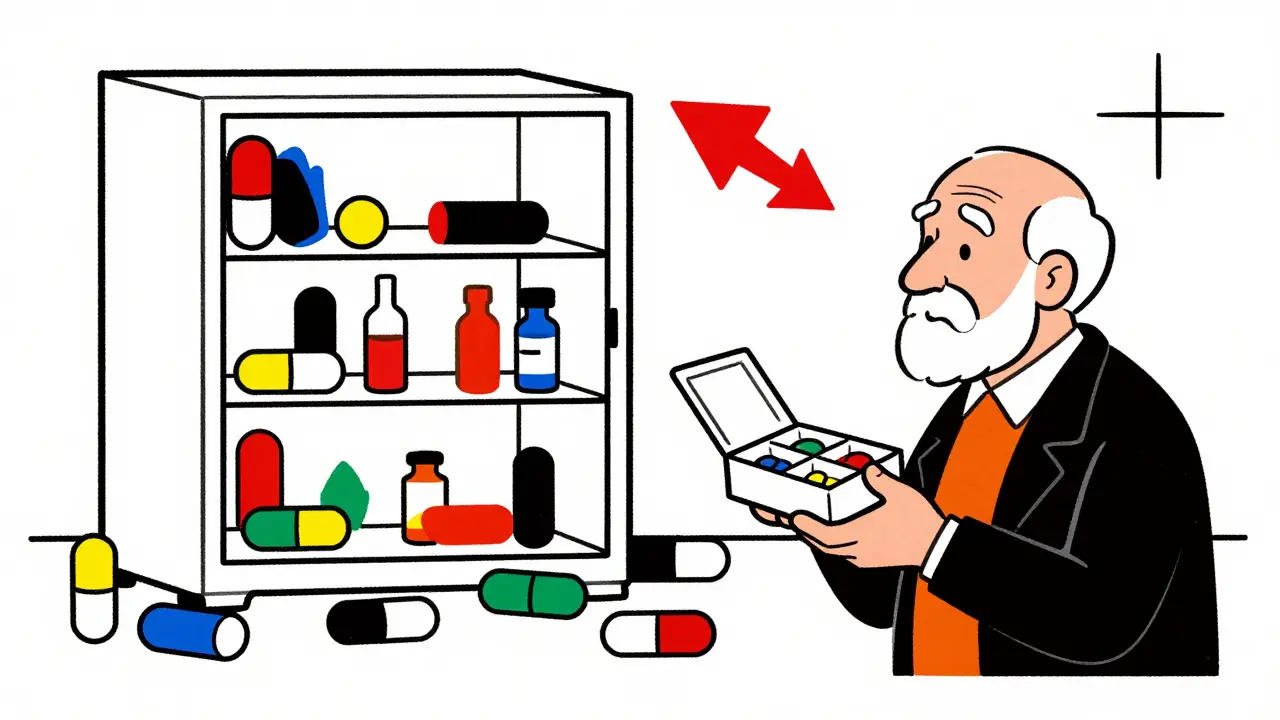
Every year, medication errors harm over 1.5 million people in the U.S. alone. Many of these errors happen not in hospitals, but in living rooms, kitchens, and bedrooms-where people take their pills without supervision. At the same time, hospitals still struggle with preventable mistakes that lead to death, injury, and unnecessary hospital stays. The good news? Most of these errors are avoidable. The key isn’t just better technology-it’s smarter systems, clearer communication, and real changes in how medications are handled every single day.
What Counts as a Medication Error?
A medication error isn’t just taking the wrong pill. It’s any mistake that happens from the moment a drug is prescribed to when it’s taken. This includes wrong doses, wrong drugs, missed doses, interactions with other medications, or even taking a pill at the wrong time. The World Health Organization calls these "preventable events" that lead to harm. They don’t just happen because someone forgot. They happen because systems are broken.
Think about this: a 78-year-old man takes five different medications. His doctor changes one dose. The pharmacist misreads the script. His daughter, who helps him manage his pills, doesn’t know about the change. He takes the old dose for three days. That’s not laziness. That’s a system failure.
Why Hospitals Still Get It Wrong
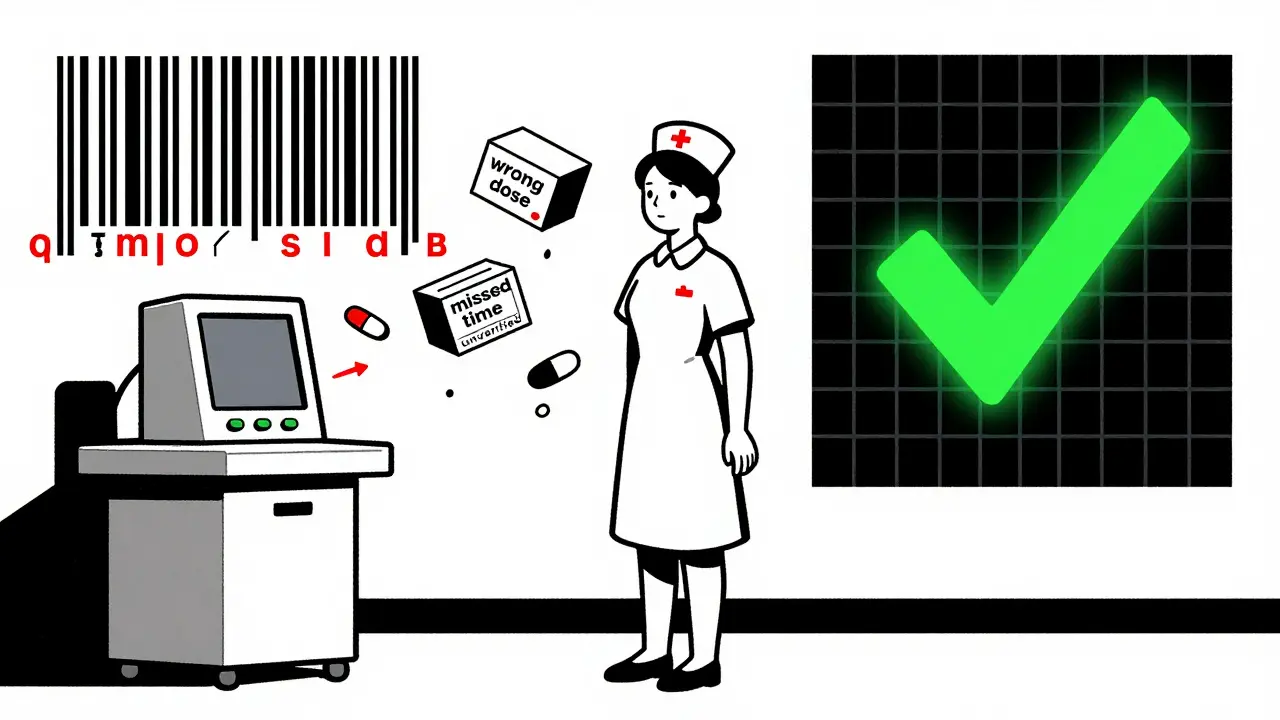
Hospitals have invested millions in technology to stop errors. Barcode scanning (BCMA) is one of the most common tools. It works like this: before giving a patient a drug, a nurse scans the patient’s wristband and the pill’s barcode. If they don’t match, the system stops them.
A 2025 study in JMIR showed BCMA cut dispensing errors by over 43%. Wrong drug errors dropped by 57%. Wrong doses? Down 43%. Dose omissions? Cut in half. It sounds perfect, right?
But here’s the catch: nurses report that scanning adds 15-20 minutes to each medication round. The constant beeping, the broken barcodes, the time it takes to find the right scanner-it leads to workarounds. Some nurses skip scanning if they’re "sure" it’s right. Others scan multiple pills at once, defeating the whole system. A 2024 survey of 1,200 pharmacists found that 57% saw new types of errors emerge because of these workarounds.
Computerized order entry (CPOE) helps too. Doctors type prescriptions instead of scribbling on paper. This cuts errors by at least 50%. But too many alerts can backfire. If a system warns you 10 times an hour about a possible interaction, you start ignoring it. One 2024 study found 42% of clinicians bypass medication alerts entirely.
The real problem? Technology doesn’t fix culture. If staff are rushed, overworked, or not trained well, even the best system fails. A 2024 Johns Hopkins study found error rates actually rose 12-15% in the first few months of BCMA rollout because staff were still learning. It takes 3-6 months to get good at it. And training? It’s not a one-hour video. It’s 16-20 hours of hands-on practice with real scenarios.
Medication Reconciliation: The Hidden Lifesaver
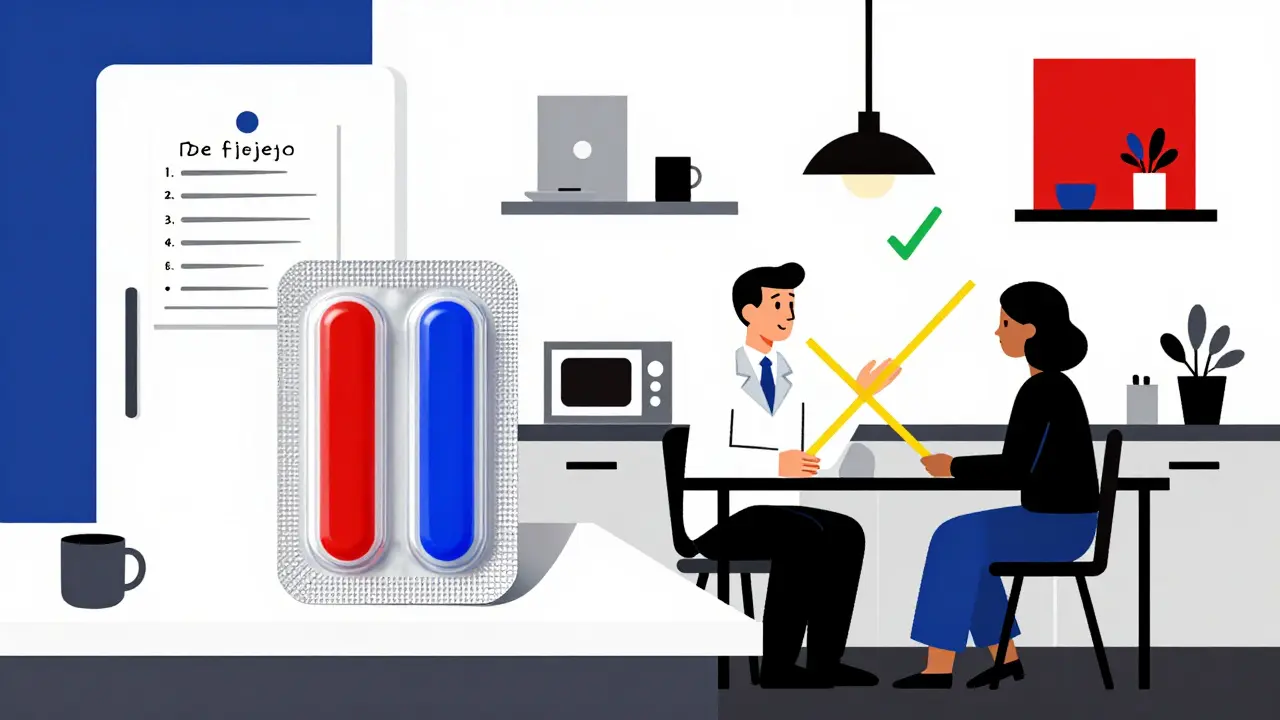
One of the most effective-but least used-tools is medication reconciliation. That’s when a pharmacist or nurse sits down with a patient and asks: "What are you really taking?" Not what the chart says. Not what you think you’re on. What’s in your pillbox right now?
This is especially critical during hospital transitions. A patient gets discharged, gets a new prescription, and forgets to tell their doctor about the over-the-counter supplement they take daily. Or they stop one drug because it made them dizzy, but no one documented it. That’s how dangerous interactions happen.
Studies show that when pharmacists lead this process, adverse events drop by 30-50%. But here’s the problem: most hospitals do it poorly at discharge. A WHO report found that 70% of discharge summaries still leave out key medications. Patients leave with a new script, no explanation, and no follow-up.
And it’s not just hospitals. When patients move from one care setting to another-say, from rehab to home-the information falls through the cracks. That’s why medication reconciliation needs to be a routine, not a checkbox.
What Happens at Home? The Silent Crisis
While hospitals get the spotlight, most medication errors happen at home. And they’re worse for older adults. A 2024 study in the Journal of Patient Safety found that 89% of home medication errors involve people 75 or older who take five or more drugs.
What’s the most common mistake? Confusing pills. People use pill organizers with 7 compartments. But if they have 10 different medications, they cram them in. Or they forget which compartment is for which day. A 2025 survey on SingleCare.com showed 63% of seniors using pill organizers still mix up their doses.
Another big issue: timing. 41% of errors happen because someone takes a pill at 8 a.m. instead of 8 p.m. Or they double up because they think they missed it. 33% of errors are wrong doses-cutting pills in half, guessing milligrams, or taking an extra tablet "just in case."
Over-the-counter meds and supplements make it worse. A patient on blood thinners takes fish oil because they heard it’s "good for the heart." No one tells their doctor. That’s a recipe for bleeding.
And let’s not forget online pharmacies. The WHO says 95% of online pharmacies selling prescription drugs are illegal. Many use fake Canadian logos or ".ca" domains to trick people. These sites sell fake, expired, or contaminated drugs. A 2025 ECRI report warned that substandard and falsified drugs are now a top global threat.
What Actually Works at Home?
Technology doesn’t help much at home. You can’t scan a pillbox. But simple changes do.
- Single-dose packaging: Instead of a bottle with 30 pills, get each day’s dose in its own sealed pouch. This reduces errors by 28%.
- Simplify the schedule: If someone has more than three daily doses, it’s too complex. Work with a pharmacist to combine pills or switch to once-daily versions.
- Weekly pharmacist reviews: A 2023 study in Annals of Internal Medicine found that patients who met with a pharmacist once a week had 37% fewer errors. No fancy tech. Just a conversation.
- Involve caregivers: If a family member or home helper knows what each pill is for and when it’s taken, mistakes drop. A simple printed list taped to the fridge helps more than you think.
Don’t rely on apps. Most seniors don’t use them. Don’t trust memory. Write it down. Talk about it. Keep it simple.
High-Risk Medications: The Real Danger Zone
Not all drugs are equal. Some are far more dangerous if used wrong. The FDA’s MAUDE database shows that insulin, blood thinners, and opioids cause 62% of all severe medication errors.
Insulin mistakes? A patient takes 10 units instead of 1. That can cause a coma. Blood thinners like warfarin? A slight dose change can cause internal bleeding. Opioids? Even a small overdose can stop breathing.
Hospitals handle these drugs differently. They use special protocols: double-checks, locked storage, and limited access. At home? Not so much. A patient might keep insulin in the fridge next to the butter. No one checks the dose. No one knows the signs of low blood sugar.
That’s why high-alert medications need special attention-whether you’re in a hospital or at home. Ask your doctor: "Is this a high-risk drug? What should I watch for?"
The Future: AI and Blockchain
There’s hope on the horizon. Johns Hopkins piloted an AI system in 2024 that predicted risky prescriptions before they were written. It cut high-risk errors by 53%. Another project uses blockchain to track every pill from manufacturer to patient. If a drug is fake, the system flags it.
But these aren’t magic fixes. They’re tools. They only work if people understand them, trust them, and use them correctly. Technology alone won’t fix a system where staff are burned out, patients are confused, and communication breaks down at every turn.
What You Can Do Right Now
Whether you’re a patient, a caregiver, or a healthcare worker, here’s what matters:
- Know your meds: Keep a written list. Include names, doses, times, and why you take them. Update it every time your doctor changes something.
- Ask questions: "What is this for?" "What happens if I miss a dose?" "Can this interact with my other meds?"
- Use single-dose packs: Especially if you take five or more drugs.
- Get a pharmacist involved: They’re not just for filling scripts. Ask for a free med review.
- Watch for fake drugs: Never buy prescription meds online unless you’re 100% sure the site is legitimate. Look for verified pharmacy seals.
- Speak up: If something feels wrong-like a pill looks different or you’re told to take more than usual-ask again.
Medication safety isn’t about perfection. It’s about layers. No single tool stops every error. But a list, a conversation, a pharmacist, a simple pillbox, and a little vigilance? That’s how you protect someone you love.
What are the most common medication errors at home?
The most common errors at home involve taking the wrong dose, taking a pill at the wrong time, mixing up pills in organizers, and not telling your doctor about over-the-counter drugs or supplements. People aged 75+ who take five or more medications are at highest risk. About 41% of errors are timing mistakes, and 33% are wrong doses.
Can barcode scanning stop all hospital medication errors?
No. Barcode scanning reduces dispensing errors by over 40%, but it doesn’t eliminate them. Problems like damaged barcodes, staff skipping scans, or scanning multiple pills at once create new risks. Studies show that 57% of pharmacists report new error types emerging after BCMA is introduced. The technology works best when combined with proper training and workflow changes-not as a standalone fix.
Why is medication reconciliation so important?
Medication reconciliation is the process of comparing a patient’s current medications with what’s been prescribed. It catches mismatches that happen during hospital admissions, transfers, or discharges. When pharmacists lead this process, it reduces adverse events by up to 50%. But most hospitals do it poorly at discharge-70% of discharge summaries leave out key meds. That’s why patients end up with dangerous drug interactions after leaving the hospital.
Are online pharmacies safe to use?
Most aren’t. The WHO estimates that 95% of online pharmacies selling prescription drugs operate illegally. Many use fake Canadian logos or .ca domains to look trustworthy. These sites sell expired, fake, or contaminated drugs. Always check for verified pharmacy seals and avoid sites that don’t require a prescription. If it seems too cheap, it’s likely unsafe.
What should I do if my medication looks different?
Stop and ask. Never assume the pharmacy made a mistake. Call your doctor or pharmacist and ask: "Is this the same medication? Why does it look different?" Pill appearance can change due to different manufacturers, but it’s always worth confirming. This simple step can prevent dangerous mix-ups.
How can I reduce medication errors for an elderly loved one?
Simplify their regimen: aim for no more than three daily doses. Use single-dose blister packs. Create a printed list of all meds with doses and times. Schedule a monthly review with a pharmacist. Involve a caregiver who knows what each pill is for. Avoid relying on memory or apps-paper lists and face-to-face checks work better for older adults.


jared baker
March 17, 2026 AT 23:55Simple fix: get single-dose packs. My grandma used to mix up her pills until we switched her to those little pouches. No more guessing. No more panic. Just one pouch per day, labeled clearly. Pharmacies will do this for free if you ask. Seriously, it’s the easiest win.
Also, keep a paper list taped to the fridge. Not an app. Not a note in your phone. Paper. She can’t spill coffee on it or forget to charge it. Just look up, see it, know it.
Michelle Jackson
March 18, 2026 AT 09:15Of course hospitals mess this up. They’re run by bureaucrats who think scanning a barcode is a cure-all. Meanwhile, nurses are working 12-hour shifts with no breaks, and the system expects them to be perfect robots. It’s not the tech that’s broken-it’s the entire culture of treating people like cogs. Stop throwing money at gadgets and start paying nurses a living wage.
Also, 57% of pharmacists see new errors? That’s not a feature. That’s a bug report screaming for a fire alarm.
David Robinson
March 19, 2026 AT 06:48You talk about technology but ignore the real issue: human behavior. Nurses skip scans because they’re tired. Patients don’t tell their doctors about fish oil because they think it’s ‘natural’ so it’s harmless. That’s not a system failure-it’s a failure of education and accountability. We’ve created a culture where people think healthcare is like Amazon: order it, get it, done. But medicine isn’t a product. It’s a process. And if you don’t treat it like one, people die. The data shows it. The studies prove it. Yet we keep pretending that a barcode will fix a broken mindset. It won’t. It never will.
And don’t get me started on online pharmacies. 95% illegal? That’s not a statistic. That’s a public health emergency. People are dying from fake insulin. Fake blood thinners. And no one’s doing anything about it because it’s easier to blame the patient than the system that let this happen.
Srividhya Srinivasan
March 20, 2026 AT 17:50Let’s be real: this whole system is a controlled demolition. Big Pharma pushes drugs. Hospitals push scans. Pharmacies push online sales. And who suffers? The elderly. The poor. The ones who can’t fight back. They’re not ‘making mistakes’-they’re being sacrificed by a system that profits from confusion.
Did you know that many pill organizers are made in factories where workers are paid less than $2 a day? And the pills inside? Often sourced from unregulated labs in China or India. The ‘safe’ label? A marketing trick. The ‘FDA-approved’ sticker? Sometimes just a sticker. I’ve seen the invoices. This isn’t healthcare. It’s a pyramid scheme with stethoscopes.
Prathamesh Ghodke
March 21, 2026 AT 19:08Hey, I work in a clinic in Mumbai, and we don’t have barcode scanners or AI systems. But we do have something better: trust. A pharmacist sits with the patient. A nurse asks, ‘What did you take yesterday?’ No forms. No apps. Just conversation.
Our error rate? Lower than some U.S. hospitals. Why? Because we treat people like humans, not data points. You don’t need tech to fix this. You need time. You need patience. You need to listen.
And yes, we use paper lists. Taped to the wall. With crayons sometimes. Works better than any app.
Stephen Habegger
March 21, 2026 AT 20:51Love this breakdown. Real talk: the solution isn’t high-tech. It’s high-touch.
My mom’s pharmacist does a free 15-minute med review every month. No charge. No paperwork. Just ‘What’s going on? Any new side effects?’ That’s all it takes.
Also, single-dose packs? Game-changer. Even if you’re on Medicare, ask for them. They’re covered. You just have to ask. Don’t be shy. Your life’s worth it.
Justin Archuletta
March 23, 2026 AT 07:17Yes. Yes. YES. I’ve been saying this for years. Paper list. Taped to the fridge. Not the phone. Not the app. The fridge. That’s where people look. That’s where they eat. That’s where they live.
Also, if a pill looks different? STOP. Call. Don’t guess. Don’t take it. You’re not being paranoid-you’re being smart.
Sanjana Rajan
March 25, 2026 AT 02:14Oh, so now we’re blaming the elderly for not being tech-savvy? Classic. They’re not ‘confused’-they’re being abandoned by a system that doesn’t care. And let’s not pretend that ‘pharmacist reviews’ are widely available. In rural America? You’re lucky if you get one in six months.
Meanwhile, insurance companies are cutting costs by replacing pharmacists with chatbots. And now we’re surprised people are dying? Shocking.
It’s not a medication error. It’s a moral failure.
Kyle Young
March 26, 2026 AT 09:46There’s a deeper philosophical question here: if a system is designed to prevent error, but the people within it are incentivized to bypass it, is the system truly broken-or is it functioning exactly as intended? We’ve created a paradox: the more we automate, the more we demand perfection from imperfect humans. And when they fail, we call it negligence. But what if the system itself is the source of the failure? What if the barcode scanner isn’t the solution, but a symptom of a deeper disconnection between care and process?
Perhaps we need to ask not ‘How do we fix the system?’ but ‘What kind of society allows this to happen?’
Aileen Nasywa Shabira
March 26, 2026 AT 11:33Let me guess: the article was sponsored by a pill organizer company. ‘Single-dose packs’? That’s a $20/month subscription. Meanwhile, the real solution? Stop prescribing so many damn drugs in the first place.
Why are 75-year-olds on five medications? Because doctors treat symptoms like puzzles, not people. One pill for blood pressure. One for cholesterol. One for arthritis. One for sleep. One for ‘general wellness.’
What if we just… stopped? What if we said, ‘Maybe you don’t need all this’? But that would require thinking. And empathy. And time. And none of those are profitable.
Kendrick Heyward
March 26, 2026 AT 20:45My dad almost died because he took two blood thinners by accident. I screamed at the pharmacist. I cried at the hospital. I begged for answers. And what did they say? ‘It happens.’
It happens? It HAPPENS? That’s not a mistake. That’s negligence wrapped in a white coat.
Now I don’t trust any doctor. Any pharmacy. Any system. And I won’t let my mom take a single pill without me there-watching, checking, double-checking.
This isn’t healthcare. It’s a gamble. And we’re all losing.
lawanna major
March 27, 2026 AT 18:14What struck me most is how deeply we’ve internalized the myth of technological salvation. We believe that if we just install one more scanner, one more alert, one more app, the problem will vanish. But the data shows otherwise. The deeper issue isn’t access to tools-it’s access to time, to dignity, to human connection.
Medication reconciliation isn’t a procedure. It’s a ritual. A moment of listening. A space where someone says, ‘Tell me what you’re really taking.’ Not what the chart says. Not what you think you should say. What you’re actually doing.
That’s not a policy change. That’s a cultural revolution.
Ryan Voeltner
March 28, 2026 AT 14:54Thank you for this thoughtful and evidence-based analysis. The emphasis on systemic rather than individual failure is both accurate and necessary. The data on medication reconciliation and single-dose packaging is compelling and underutilized.
I would only add that international comparisons reveal that countries with universal healthcare and integrated pharmacy services consistently report lower medication error rates-even without advanced technology. This suggests that equity of access and continuity of care may be more critical than technical innovation.
Simple, human-centered systems, supported by trained professionals, remain the most effective solution.
Linda Olsson
March 28, 2026 AT 18:28Of course the article downplays the real issue: Big Pharma is pushing drugs like candy. They fund studies. They influence guidelines. They pay doctors to prescribe. And now they’re selling ‘solutions’ like single-dose packs like it’s a breakthrough-when really, they just want you to keep buying pills.
Why not ask: Why does anyone need five medications? Why not question the entire model?
They don’t want you to ask. They want you to scan, take, and pay.
This isn’t safety. It’s sales.
Ayan Khan
March 30, 2026 AT 02:04In India, we have a tradition called ‘gurukul’-where knowledge is passed through personal guidance, not manuals. My grandmother never had a pill organizer, but she knew each pill by color, shape, and the story behind it. ‘This one is for your heart,’ she’d say. ‘This one, for the quiet nights.’
Maybe the answer isn’t more tech-but more storytelling. More connection. More remembering that behind every pill is a person, not a barcode.
Let’s not lose that.
jared baker
March 31, 2026 AT 21:05My cousin just called me. Her mom’s new pharmacist started doing weekly check-ins. No charge. Just a call. Said, ‘What’s changed? Any new pills? Any side effects?’
Three weeks later, they caught a dangerous interaction between her blood pressure med and a new OTC sleep aid.
That’s all it took. A phone call. No tech. Just care.