

How Pharmacy Workflow Systems Stop Errors Before They Happen
Imagine this: a pharmacist pulls a bottle of insulin off the shelf, scans the barcode, and the system flashes a warning - patient allergic to insulin. The dose is wrong. The label doesn’t match the prescription. But the system catches it before the pill ever leaves the counter. This isn’t science fiction. It’s happening in pharmacies right now, every day. And it’s saving lives.
Medication errors aren’t rare. They’re terrifyingly common. In the U.S. alone, the Institute of Medicine found that between 44,000 and 98,000 people die each year from preventable medication mistakes. Many of those errors happen in pharmacies - during dispensing, labeling, or compounding. That’s why modern pharmacies don’t just rely on human eyes and memory anymore. They use pharmacy workflow and error prevention systems - automated, interconnected tools that act like a second set of eyes, always checking, always verifying.
What Exactly Is a Pharmacy Workflow System?
A pharmacy workflow system is more than just software. It’s a full digital pipeline that takes a prescription from the moment it arrives until the patient walks out with their meds. Think of it like an assembly line, but instead of cars, you’re handling life-saving drugs. Each step is monitored and verified.
Here’s how it works in practice:
- A doctor sends an electronic prescription to the pharmacy.
- The system automatically checks the patient’s history - allergies, other meds, kidney function, age - and flags anything risky.
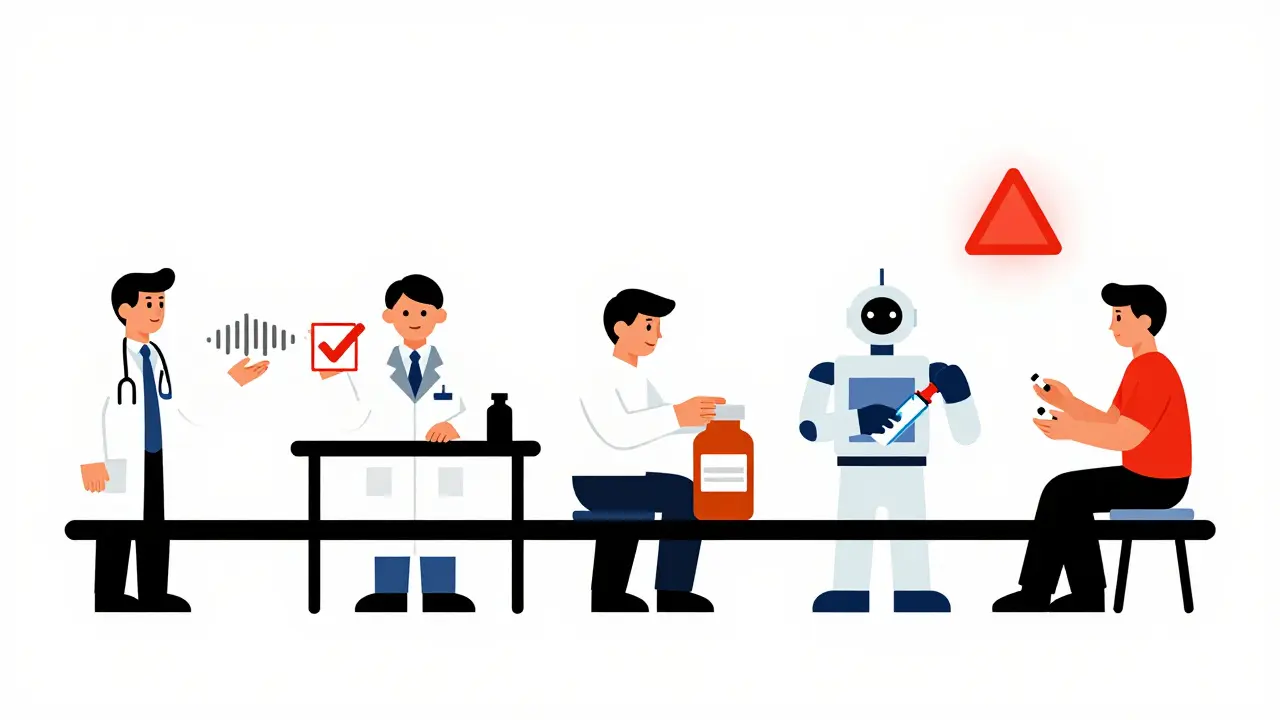
- A pharmacist reviews the order. The system highlights red flags: duplicate therapy, dangerous interactions, wrong dose.
- The technician pulls the medication. A barcode scanner confirms it’s the right drug, right strength, right patient.
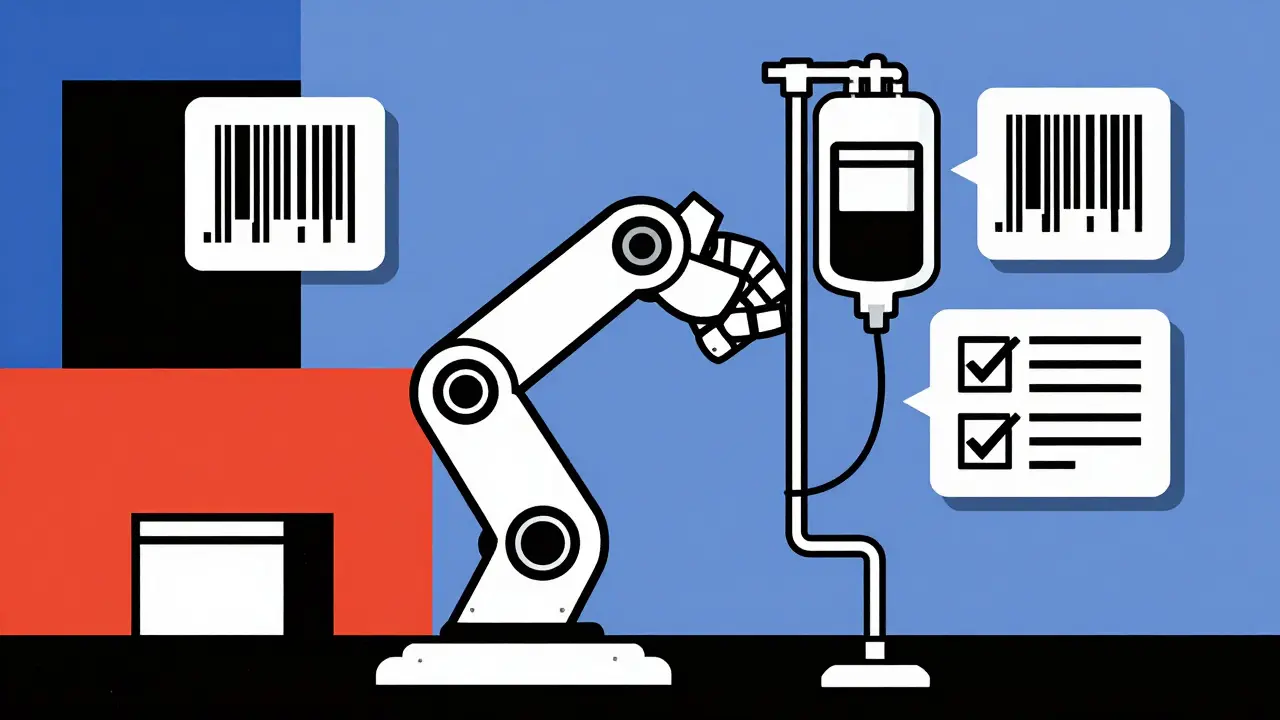
- If it’s an IV bag? A robotic arm measures and mixes it under sterile conditions, with cameras recording every step.
- The final product is scanned again before it’s handed to the patient.
Every single step leaves a digital trail. No guesswork. No handwritten notes that get misread. No skipping a step because you’re rushed.
Key Technologies Behind the Safety Net
These systems don’t work alone. They’re made up of several smart tools working together:
- Barcode Scanning - Every bottle, vial, and patient wristband has a barcode. Scanning them at each step ensures the right drug goes to the right person. Studies show this alone cuts dispensing errors by up to 85%.
- Electronic Health Record (EHR) Integration - The system pulls real-time data from the patient’s medical record. If the patient has liver disease, the system knows to lower the dose. If they’re on blood thinners, it warns about interactions.
- Robotics for Compounding - Hospitals that prepare IV medications use robotic arms to mix drugs with precision. No human hand touches the solution. This cuts contamination risks and dosing errors. Systems like BD Pyxis™ and Simplifi+ IV use cameras and sensors to verify every drop.
- Inventory Alerts - The system tracks expiry dates and stock levels. If a drug is about to expire or run out, it sends an alert. No more handing out expired antibiotics.
- Two-Factor Authentication - Before a high-risk drug is dispensed, two staff members must verify it in the system. One scans. The other approves. No exceptions.
These aren’t optional extras. They’re mandatory in most hospitals and large pharmacies today. The U.S. Pharmacopeia (USP) standards <797> and <800> require sterile compounding environments and strict controls - and these systems are the only way to consistently meet them.
Real-World Impact: Numbers That Matter
Let’s talk about results. This isn’t theoretical.
A study at a major U.S. hospital showed that before they installed an automated IV compounding system, they had 12 medication errors per month related to IV bags. After? Two. That’s an 83% drop.
Another pharmacy in Australia reported that their error rate fell from 1 in every 200 prescriptions to 1 in every 2,500 after implementing barcode scanning and workflow software. That’s a 14x improvement in error detection.
And it’s not just about mistakes. It’s about speed. One pharmacy using Cflow software cut average prescription fill time from 22 minutes to 9 minutes. Patients wait less. Pharmacists burn out less. Everyone wins.
But here’s the catch: these systems only work if they’re used right. Installing the software is step one. Changing how people work is step two - and that’s where most fail.
Why Technology Alone Isn’t Enough
Some pharmacies think buying a fancy robot will fix everything. It won’t.
The American Society of Health-System Pharmacists (ASHP) says bluntly: “Technology without workflow redesign is just expensive noise.”
Here’s what goes wrong:
- Staff skip scanning because “I know this drug.”
- They override alerts without checking the patient’s record.
- They’re trained on the system for 30 minutes and expected to be experts.
One hospital in Sydney spent $180,000 on a new system - then had to pause rollout because pharmacists kept disabling the alerts. Why? Because the system flagged too many low-risk interactions, and staff got alert fatigue. They turned it off.
That’s why successful implementations take 3 to 6 months. It’s not about tech. It’s about:
- Redesigning workflows to fit the system, not forcing the system into old habits.
- Training staff not just on how to click buttons, but why each step matters.
- Creating a culture where stopping for a safety check isn’t seen as slow - it’s expected.
Pharmacists who use these systems well say the same thing: “I used to stress every time I handed out a new prescription. Now I’m confident.”
Choosing the Right System - What to Look For
Not all pharmacy workflow systems are the same. Here’s what to compare:
| System Type | Best For | Key Features | Limitations |
|---|---|---|---|
| Enterprise Platforms (Epic, Cerner) | Large hospitals | Full EHR integration, multi-department use | Expensive, complex setup, slow to customize |
| IV Compounding Systems (Simplifi+, Pyxis) | Hospitals with IV labs | Robotics, sterile environment controls, video audit | Only for IVs, doesn’t handle oral meds |
| Cloud-Based Workflow Tools (Cflow, Kissflow) | Independent pharmacies | Easy setup, mobile access, reporting on fill times | Limited inventory or EHR integration |
| Specialized Compounding Software | Compounding pharmacies | USP compliance tracking, batch records, expiry alerts | Narrow focus, no dispensing automation |
Price? Enterprise systems cost $50,000 to $250,000 a year. Smaller cloud tools start at $1,000/month. But the real cost isn’t the license - it’s training, downtime during rollout, and ongoing support.
What’s Next? AI and the Future of Safety
The next wave isn’t just automation. It’s prediction.
Some systems are starting to use AI to spot patterns. For example:
- If a certain prescriber regularly orders high-dose opioids for elderly patients, the system learns and flags it before it’s even dispensed.
- If inventory drops below a safe level for a critical drug, it automatically orders more - and alerts the pharmacist before the shelf runs empty.
- It can even predict which days will be busiest based on past refill patterns, so staffing is adjusted ahead of time.
Integration with telehealth is also growing. A patient gets a video consult, the prescription is sent digitally, and the pharmacy starts preparing it before the patient even leaves the call. That’s the future - faster, safer, and more connected.
And with the rise in IV medications for cancer, chronic pain, and autoimmune diseases, these systems aren’t just helpful - they’re becoming essential.
Final Thought: It’s Not About the Machine. It’s About the Mindset.
Pharmacy workflow systems don’t replace pharmacists. They empower them. They free up time from manual checks so pharmacists can do what humans do best - talk to patients, catch subtle signs of misuse, answer questions, and provide care.
Every barcode scan, every alert, every robotic mix - it’s not just about avoiding error. It’s about building trust. Trust that the person handing you your medicine didn’t just guess. They verified. They double-checked. They cared enough to use every tool available.
That’s the real win.
How do pharmacy workflow systems reduce medication errors?
They use automated checks at every step - scanning barcodes, verifying patient history, flagging drug interactions, and requiring dual approval for high-risk meds. These systems catch mistakes humans might miss due to fatigue, distraction, or workload. Studies show they detect up to 14 times more errors than manual processes alone.
Are pharmacy workflow systems only for hospitals?
No. While hospitals use advanced systems with robotics for IV compounding, independent pharmacies use simpler cloud-based tools like Cflow or Kissflow to automate prescription tracking, inventory alerts, and patient verification. The core goal - reducing errors - applies to any pharmacy that dispenses medication.
How long does it take to implement a pharmacy workflow system?
Most implementations take 3 to 6 months. The tech can be installed in weeks, but real success comes from retraining staff, redesigning workflows, and building new habits. Pharmacies that rush the process often see staff resistance and underuse of features.
Can these systems prevent all medication errors?
No system is perfect. They reduce errors dramatically - by 70-90% in most cases - but human judgment is still needed. For example, a system might not catch a subtle miscommunication between a doctor and patient about dosage intent. That’s why pharmacists remain critical: they interpret, question, and adapt where the system can’t.
What are the biggest challenges when adopting these systems?
The biggest hurdles are staff resistance, poor training, and alert fatigue. If the system flags too many low-risk warnings, staff start ignoring them. Also, transitioning from paper or outdated software can disrupt daily operations. Successful pharmacies treat this as a cultural change, not just a tech upgrade.
Do these systems comply with Australian regulations?
Yes. Systems used in Australia must meet standards set by the Therapeutic Goods Administration (TGA) and align with international guidelines like USP <797> for sterile compounding and HIPAA-equivalent privacy rules. Most major vendors design their platforms to be globally compliant, with region-specific settings.




Alec Stewart Stewart
February 3, 2026 AT 20:52People think tech takes jobs away, but this? It gives pharmacists their humanity back.
pradnya paramita
February 4, 2026 AT 06:38Katherine Urbahn
February 5, 2026 AT 14:42Harriot Rockey
February 6, 2026 AT 00:26Jamillah Rodriguez
February 6, 2026 AT 06:56Lorena Druetta
February 7, 2026 AT 22:06rahulkumar maurya
February 8, 2026 AT 18:05Susheel Sharma
February 9, 2026 AT 09:32Alec Stewart Stewart
February 11, 2026 AT 03:14Yeah, the system’s not perfect. But neither are we. And if a machine can catch what we miss when we’re tired? I’ll take the robot.