
Aortic Stenosis: Causes, Symptoms, and What You Need to Know
When the aortic stenosis, a narrowing of the heart’s aortic valve that restricts blood flow from the left ventricle to the aorta. Also known as aortic valve stenosis, it’s not just a sign of aging—it’s a progressive condition that can lead to heart failure if ignored. This isn’t a minor glitch. It’s a mechanical problem in one of your heart’s most critical valves, and over time, your heart muscle thickens trying to push blood through the tight opening. Many people don’t feel anything at first, but when symptoms show up—like shortness of breath during a walk, chest tightness, or fainting after climbing stairs—it’s already advanced.
Aortic stenosis often starts with calcium buildup on the valve leaflets, especially in older adults. But it can also be present from birth, called congenital bicuspid aortic valve, where the valve has only two flaps instead of three. This form can show up decades earlier. The key is catching it before your heart gives out. Doctors use an echocardiogram, a non-invasive ultrasound test that shows how well the heart valve opens and closes to measure the speed of blood flow and calculate the pressure difference across the valve. If the numbers are bad enough, surgery becomes the only real solution—either replacing the valve with a mechanical one or a biological tissue valve, or using a minimally invasive procedure called TAVR for patients who can’t handle open-heart surgery.
It’s not just about the valve. Aortic stenosis affects your whole body. Reduced blood flow means less oxygen to your muscles, your brain, your kidneys. That’s why people with this condition often get winded climbing one flight of stairs or feel dizzy standing up too fast. It’s not laziness—it’s your heart struggling. And because it’s silent at first, many wait too long. If you’re over 65 and have unexplained fatigue, or if your doctor hears a heart murmur during a checkup, don’t brush it off. Get it checked.
There’s no pill that fixes a narrowed valve. Medications like diuretics might help with swelling, and beta-blockers can slow your heart rate, but they don’t reverse the damage. Only intervention does. That’s why knowing the warning signs matters so much. If you’ve been told you have a heart murmur, or if your family history includes early valve disease, pay attention. Your heart doesn’t shout—it whispers. And by the time it yells, you’re already in danger.
Below, you’ll find real-world guides that connect directly to what you’re facing: how to manage symptoms at home, what tests to expect, how to prepare for surgery, and what to watch for after treatment. These aren’t generic health tips—they’re practical, tested advice from people who’ve walked this path and the doctors who treat them.
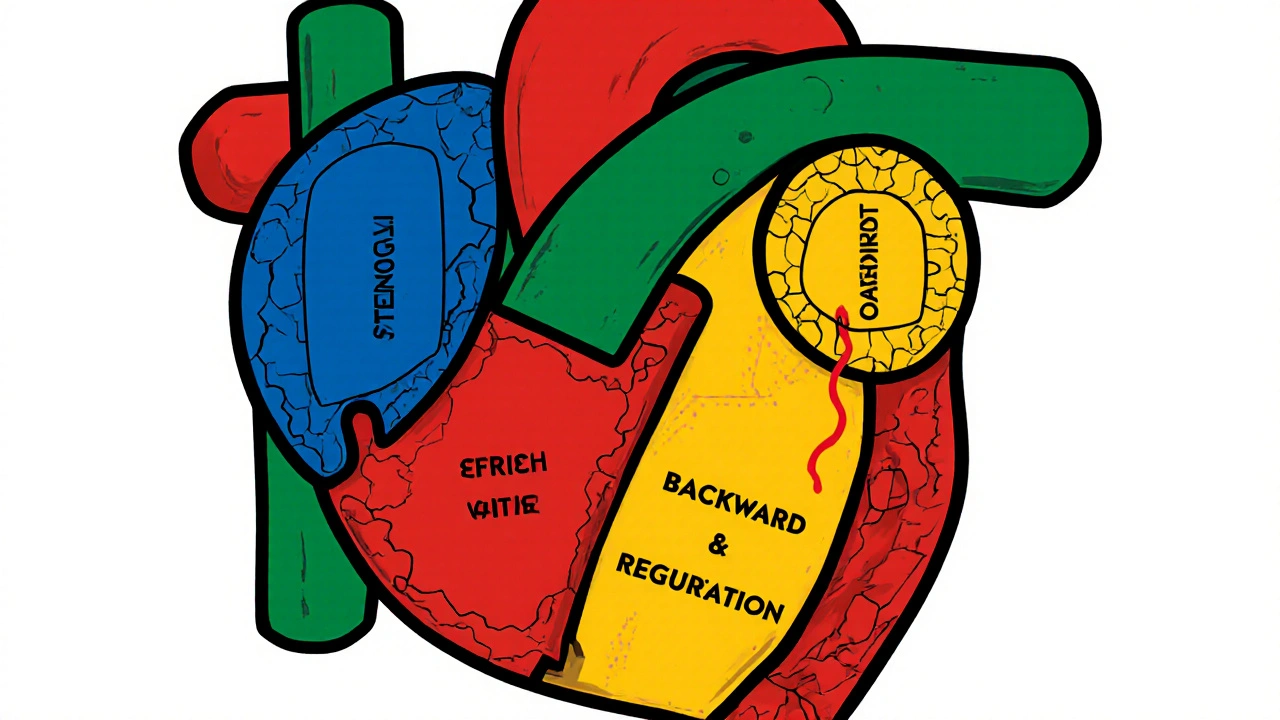
Heart Valve Diseases: Understanding Stenosis, Regurgitation, and Modern Surgical Treatments
Nov 13 2025 / Health and WellnessLearn how heart valve stenosis and regurgitation affect blood flow, what symptoms to watch for, and the latest surgical options-including TAVR and MitraClip-that can restore heart function and save lives.
VIEW MORE