
Care Team Collaboration: How Doctors, Pharmacists, and Patients Work Together for Better Outcomes
When care team collaboration, the coordinated effort between healthcare providers, patients, and support staff to deliver safe, effective treatment. Also known as interdisciplinary care, it means no one works in a vacuum—your doctor, pharmacist, nurse, and even you are all part of the same team. This isn’t just a buzzword. It’s what stops a patient from taking two drugs that clash, prevents a dose mistake after switching generics, or catches a dangerous side effect before it turns into a hospital visit.
Think about the medication safety, the system of checks and communication designed to prevent errors in prescribing, dispensing, or taking drugs. One post shows how switching from brand to generic levothyroxine can throw off thyroid levels if no one talks about it. Another explains how double-dosing happens because no one updated the patient’s medication list. These aren’t random mistakes—they’re breakdowns in collaboration. When a pharmacist catches a drug interaction between dofetilide and cimetidine before the patient fills the script, that’s care team collaboration in action. When a doctor asks a teen’s parent about appetite loss from ADHD meds, and the parent shares it with the pharmacist who suggests meal timing tricks, that’s collaboration too.
And it’s not just about drugs. patient care, the full spectrum of services and support a person receives during treatment, from diagnosis to long-term management depends on this teamwork. Take anticoagulation in kidney disease—there’s no single guideline that covers every case. So doctors rely on pharmacists to track lab values, nurses to monitor for bleeding, and patients to report changes in swelling or bruising. Without that back-and-forth, someone could end up with a stroke or a bleed. Even something as simple as reading an NDC number to confirm the right pill relies on the pharmacist double-checking what the doctor ordered, and the patient knowing what to look for on the bottle.
You don’t need a fancy system to make this work. Sometimes it’s just a printed list of meds, a reminder app, or asking one simple question before starting a new drug. The posts below show real cases where collaboration made the difference: how slow dose increases help with side effects, how FDA monitoring catches problems after a drug hits the market, why athletes need to file TUEs, and how generic drug myths hurt trust. These aren’t isolated stories—they’re all pieces of the same puzzle. What you’ll find here are the tools, the red flags, and the questions that turn scattered care into a real team effort. Because when everyone speaks up, people stay safer, healthier, and in control.
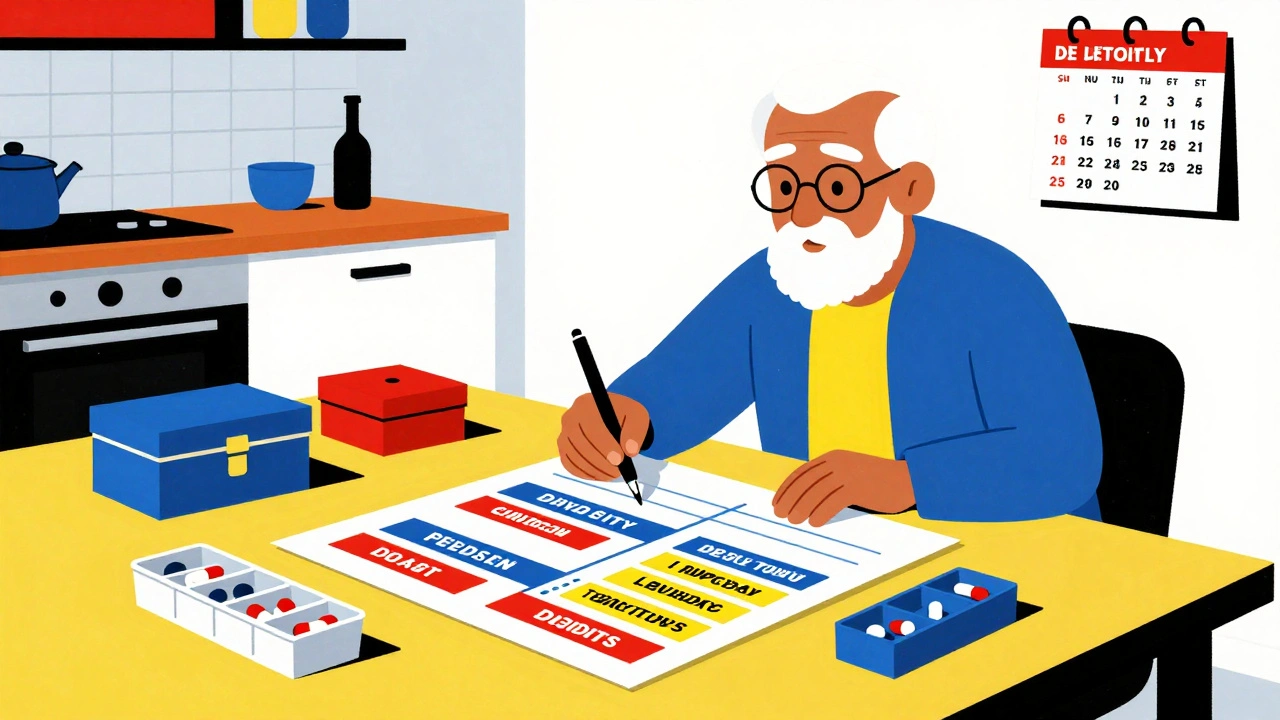
How to Build a Personal Medication Safety Plan with Your Care Team
Dec 8 2025 / MedicationsBuild a personal medication safety plan with your care team to avoid dangerous errors, drug interactions, and missed doses. Learn how to track, store, and review your meds safely every day.
VIEW MORE