
Why So Many People Still Don’t Trust Generic Drugs
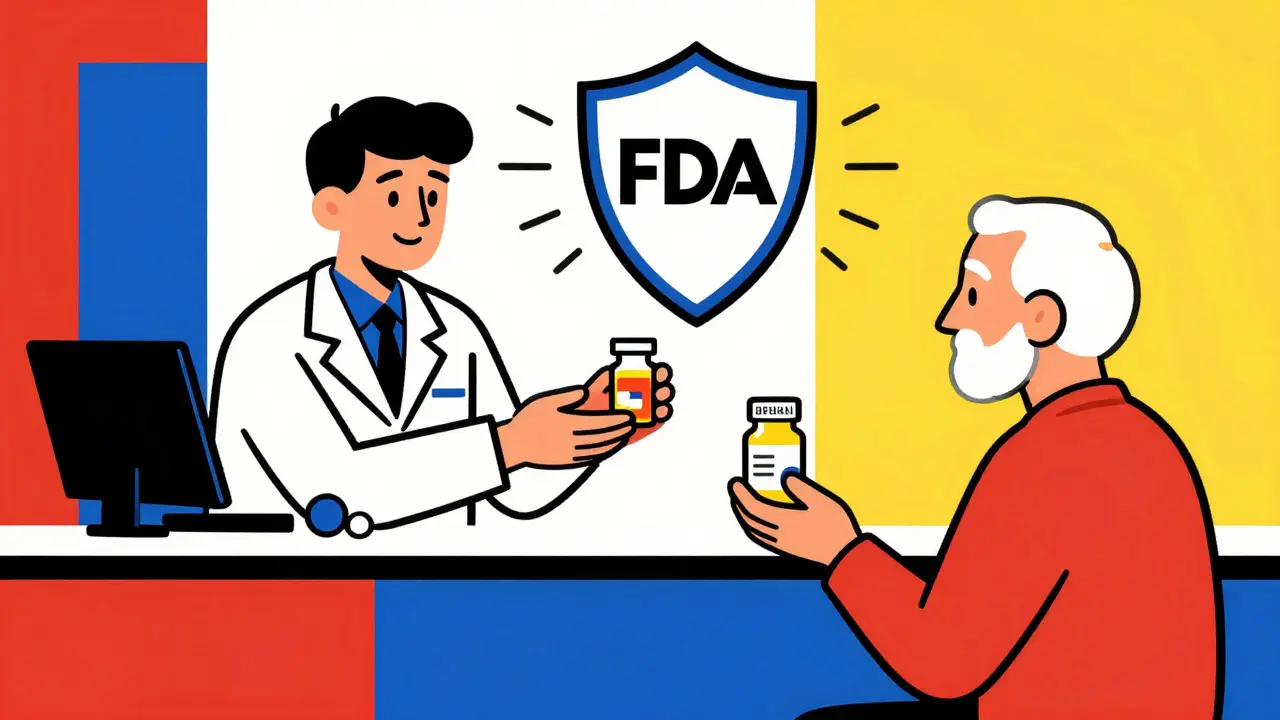
You’ve probably seen it: someone holding up a pill bottle, frowning, and saying, ‘But this isn’t the same brand.’ They’ve been told their doctor switched them to a generic. And even though it’s cheaper, they’re worried it won’t work. This isn’t just a personal belief-it’s a widespread myth. In fact, a 2016 CVS Health survey found that 87% of patients had serious misunderstandings about generic drugs. Many think they’re weaker, less safe, or made in lower-quality factories. The truth? The U.S. Food and Drug Administration (FDA) requires generics to be identical in active ingredient, strength, dosage, and how they work in the body. They’re not copies. They’re exact matches-just without the fancy packaging or marketing.
How Generic Drugs Are Really Made and Approved
Every generic drug you pick up at the pharmacy has gone through the same strict review as its brand-name version. The FDA doesn’t just accept claims. They demand proof. To get approved, a generic must show it delivers the same amount of active ingredient into the bloodstream at the same rate as the brand-name drug. This is called bioequivalence. The standard? The generic’s concentration in the blood must fall between 80% and 125% of the brand’s. That’s not a guess. It’s based on clinical studies using real people, measuring blood levels over time. The FDA reviews about 1,000 of these applications every year. And they don’t cut corners. The manufacturing sites for generics are inspected just as often as those for brand-name drugs. Many are even run by the same companies that make the original brand. The only real difference? The inactive ingredients-like color, shape, or flavor-can change. That’s why your generic pill might look different. But the part that actually treats your condition? It’s the same.
The Real Cost Difference-And Why It Matters
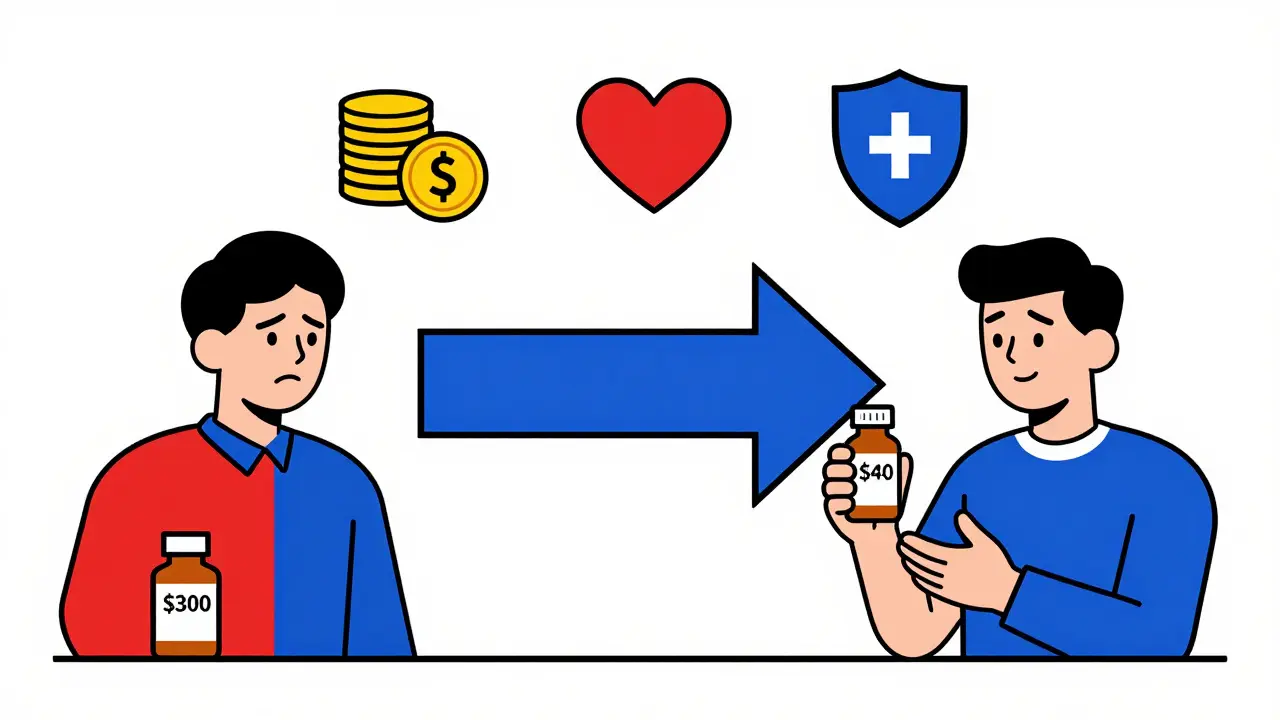
Generics save money. A lot of it. On average, they cost 80% to 85% less than brand-name drugs. In 2022, that added up to $377 billion in savings across the U.S. healthcare system. That’s money that stays in patients’ pockets, lowers insurance premiums, and helps public programs stretch further. For someone on a fixed income, switching from a $300 brand-name monthly prescription to a $40 generic can mean the difference between taking their medicine regularly or skipping doses. Studies show that when cost is lowered, adherence goes up. One 2021 study tracking 3.2 million patients found that switching to generics improved medication adherence by 22% among low-income groups. That’s not just a financial win-it’s a health win. More people taking their meds correctly means fewer hospital visits, fewer complications, and better outcomes.
What Doctors and Pharmacists Know That Patients Don’t
Here’s something surprising: 97% of pharmacists say they have full confidence in generic drugs. And most doctors do too. But there’s a gap between what professionals believe and what patients accept. Why? Because patients don’t always hear the same message. A 2022 study in JAMA Internal Medicine showed that when a doctor explicitly said, ‘This generic is just as good as the brand,’ patient acceptance jumped from 52% to 89%. That’s a huge difference. It’s not about the drug. It’s about the conversation. Community health workers and pharmacists who use simple, clear language-like ‘The FDA says this pill has the same medicine in it’-see much higher acceptance rates. The FDA’s own toolkit includes proven phrases that work across cultures and education levels. One of the most effective? ‘The active ingredient is the same. The FDA makes sure of it.’
Why Some People Still Feel Like Generics Don’t Work
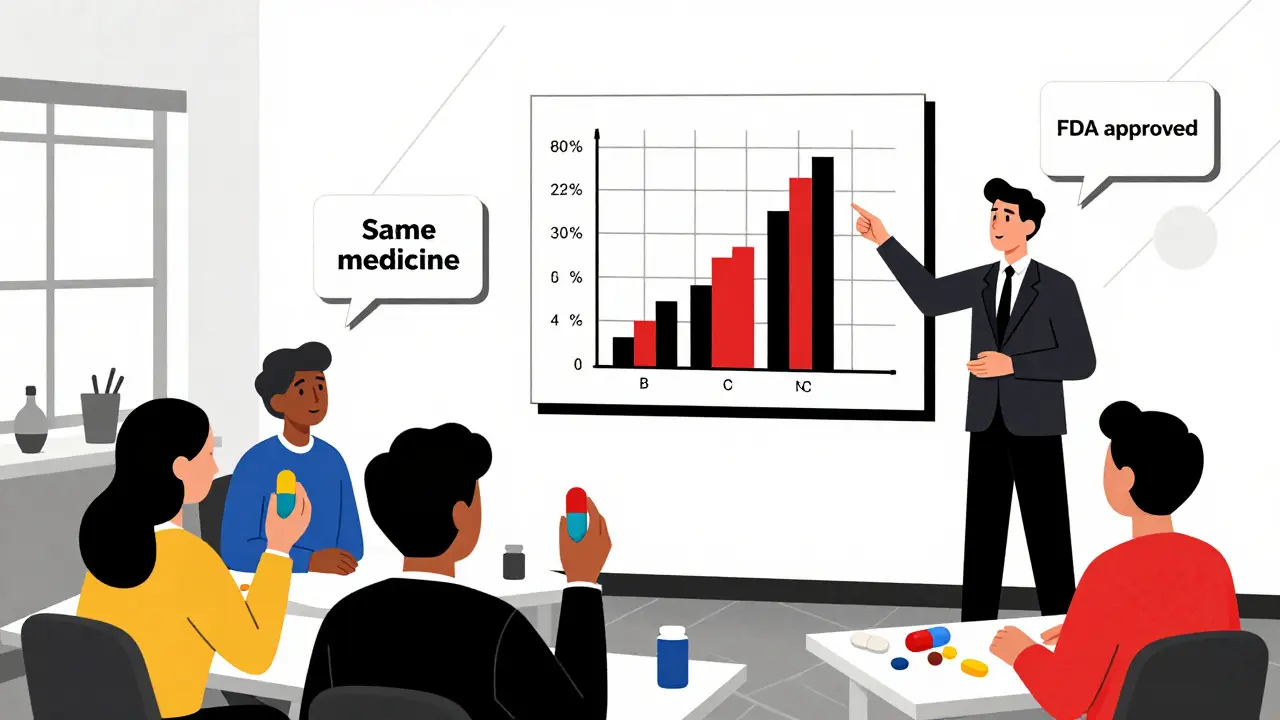
Even when the science is clear, some people still report side effects or feel the medicine isn’t working. This isn’t always about the drug. It’s called the nocebo effect-the opposite of placebo. If you believe a generic is inferior, your brain can start to expect problems. A 2021 study in Annals of Internal Medicine found that patients told they were switching to a generic were 18.7% more likely to report side effects and stop taking the drug, even when they were actually still taking the same medicine. This is especially common with pills that look different. A University of Michigan survey found that 23% of patients questioned whether a generic was real just because it was a different color or shape. That’s why community presentations focus on showing patients the actual pills side by side, explaining why the look changes but the effect doesn’t. Visuals help. Hands-on examples help even more.
Where Generics Struggle-and Why
Not every drug category has the same level of patient trust. For heart medications like statins or blood pressure pills, generic use is over 95%. But for mental health and seizure drugs, it’s lower-around 68%. Why? Because these conditions are more sensitive. Small changes in blood levels can feel noticeable to patients. A 2023 study in Epilepsy & Behavior found a slightly higher seizure rate when patients switched from brand to generic antiepileptic drugs. But here’s the key: the American Academy of Neurology still says this is an extremely rare exception. They stress that for nearly all patients, generics are safe and effective. The real issue isn’t the science-it’s the fear. That’s why education matters more here than anywhere else. When doctors explain the risk is minimal and offer to monitor closely, patients are far more willing to try generics.
What’s New in Generic Drug Education (2025)
Things are changing fast. In January 2025, Medicare Part D plans will be required by law to give all beneficiaries standardized education about generics. The FDA launched a new video series called ‘Generics 101’ last year, aimed at older adults. Early results show viewers aged 65+ improved their knowledge by 31%. Meanwhile, the Association for Accessible Medicines has handed out over 2.7 million brochures through community health centers. And starting in 2024, every patient counseling session at federally funded community health centers must include a discussion about generics. It’s not optional anymore. This isn’t just about saving money. It’s about making sure everyone, no matter their income or background, gets the same effective treatment.
How to Talk About Generics in Your Community
If you’re running a health presentation, here’s what works:
- Start with the FDA. Say: ‘The FDA requires generics to have the same active ingredient, strength, and dosage as brand-name drugs.’ That’s the law. It’s not opinion.
- Use the Teach-Back method. After explaining, ask: ‘Can you tell me in your own words why this generic is safe?’ This catches misunderstandings early.
- Show the pills. Bring real examples. Point out the differences in color or shape-but emphasize the active ingredient is unchanged.
- Acknowledge the fear. Say: ‘I get why you’re worried. Many people feel the same way. But here’s what the data shows.’
- Link to savings. ‘This switch could save you $200 a month. That’s money for groceries, bus fare, or your next prescription.’
These aren’t just tips. They’re proven strategies tested in clinical trials. Community health centers using them saw a 37% rise in patient acceptance within six months.
What’s Next for Generic Drugs?
More than 287 brand-name drugs will lose patent protection between now and 2028. That means more generics will hit the market. But access isn’t equal. Rural areas still lag behind cities-only 78% of prescriptions there are generic, compared to 93% in urban centers. That gap matters. It’s not just about cost. It’s about equity. As new complex generics-like inhalers, creams, and injectables-become more common, education needs to keep up. These aren’t simple pills. They’re harder to copy. But the same rules apply: if approved by the FDA, they meet the same standards. The challenge now isn’t science. It’s communication. Making sure everyone, everywhere, understands that a cheaper pill doesn’t mean a weaker one.
Frequently Asked Questions
Are generic drugs really as effective as brand-name drugs?
Yes. The FDA requires generic drugs to have the exact same active ingredient, strength, dosage form, and route of administration as the brand-name version. They must also prove they work the same way in the body through strict bioequivalence testing. Over 90% of prescriptions in the U.S. are for generics, and they’re used safely every day by millions of people.
Why do generic pills look different from brand-name ones?
The law allows manufacturers to change the color, shape, size, or flavor of a generic pill-because those are inactive ingredients. Only the active ingredient (the part that treats your condition) must match the brand. Different looks help avoid trademark issues, but they don’t affect how the drug works.
Can switching to a generic cause side effects?
The generic drug itself doesn’t cause new side effects. But some people report them because they believe generics are inferior-a psychological effect called the nocebo effect. Studies show patients told they’re switching to a generic are more likely to report problems, even when the medicine is identical. If you feel unusual symptoms after switching, talk to your provider. It’s rarely the drug-it’s often the belief around it.
Are generic drugs made in the same factories as brand-name drugs?
Many are. The FDA inspects all manufacturing sites-whether they make brand-name or generic drugs-with the same standards. In fact, about half of all generic drugs are made by the same companies that produce the original brand-name versions. The difference is in branding, not quality.
Why are generics so much cheaper?
Generics don’t have to pay for expensive research, marketing, or advertising. Brand-name companies spend billions developing a new drug and promoting it. Once the patent expires, other companies can make the same drug without those costs. That’s why generics cost 80-85% less. The savings go to patients, insurers, and the healthcare system.
Is it safe to switch from a brand-name drug to a generic?
Yes-for nearly all medications. The FDA approves every generic for safety and effectiveness. For most conditions like high blood pressure, diabetes, or cholesterol, switching is safe and common. For a few complex drugs, like certain seizure medications, doctors may monitor more closely, but this is rare. Always talk to your provider before switching, but don’t assume the brand is better.
How can I tell if a drug is generic?
Look at the label. Generic drugs are listed by their active ingredient name, not a brand name. For example, instead of ‘Lipitor,’ you’ll see ‘atorvastatin.’ Your pharmacist can also confirm it’s a generic. The pill may look different, but the name on the bottle will tell you.
What You Can Do Today
If you’re taking a brand-name drug, ask your pharmacist: ‘Is there a generic version?’ If your doctor prescribes a brand, ask: ‘Is there a generic that works just as well?’ Don’t assume the expensive one is better. The science says otherwise. And if you’re part of a community group, clinic, or church health team-use the free FDA resources. Print the fact sheets. Show the videos. Start the conversation. Because when people understand what’s in their medicine, they take it. And when they take it, they stay healthier.

clifford hoang
January 19, 2026 AT 19:26Nadia Watson
January 20, 2026 AT 06:01Jacob Cathro
January 21, 2026 AT 13:51Paul Barnes
January 23, 2026 AT 08:11kumar kc
January 25, 2026 AT 01:37Thomas Varner
January 26, 2026 AT 13:39Art Gar
January 27, 2026 AT 22:46thomas wall
January 28, 2026 AT 22:17Shane McGriff
January 29, 2026 AT 07:10sagar sanadi
January 29, 2026 AT 07:35