| Feature | Standard Protocol | Shortage Extension |
|---|---|---|
| Expiration Date | Fixed at manufacture | Extended based on stability data |
| Relabeling | Required for changes | Usually not required by FDA |
| Applicability | All units in a lot | Specific approved lot numbers only |
| Goal | Product safety | Maintaining critical supply |
Why does the FDA extend drug expiration dates?
When the demand for a drug exceeds the available supply, the Drug Shortages Staff is a dedicated team within the FDA's Center for Drug Evaluation and Research (CDER) that monitors and mitigates medication shortages looks for ways to stretch the current inventory. The goal is simple: prevent a total blackout of a necessary treatment. Not every drug gets this treatment. The agency focuses on "critical" medications-those where there are no easy alternatives or where a substitute could be dangerous for certain patients. For example, if a specific anesthetic is unavailable, a surgeon can't just "try something else" without risking the patient's life. By extending the use date, the FDA effectively creates a temporary buffer of inventory while manufacturers scramble to ramp up production.How the extension process actually works
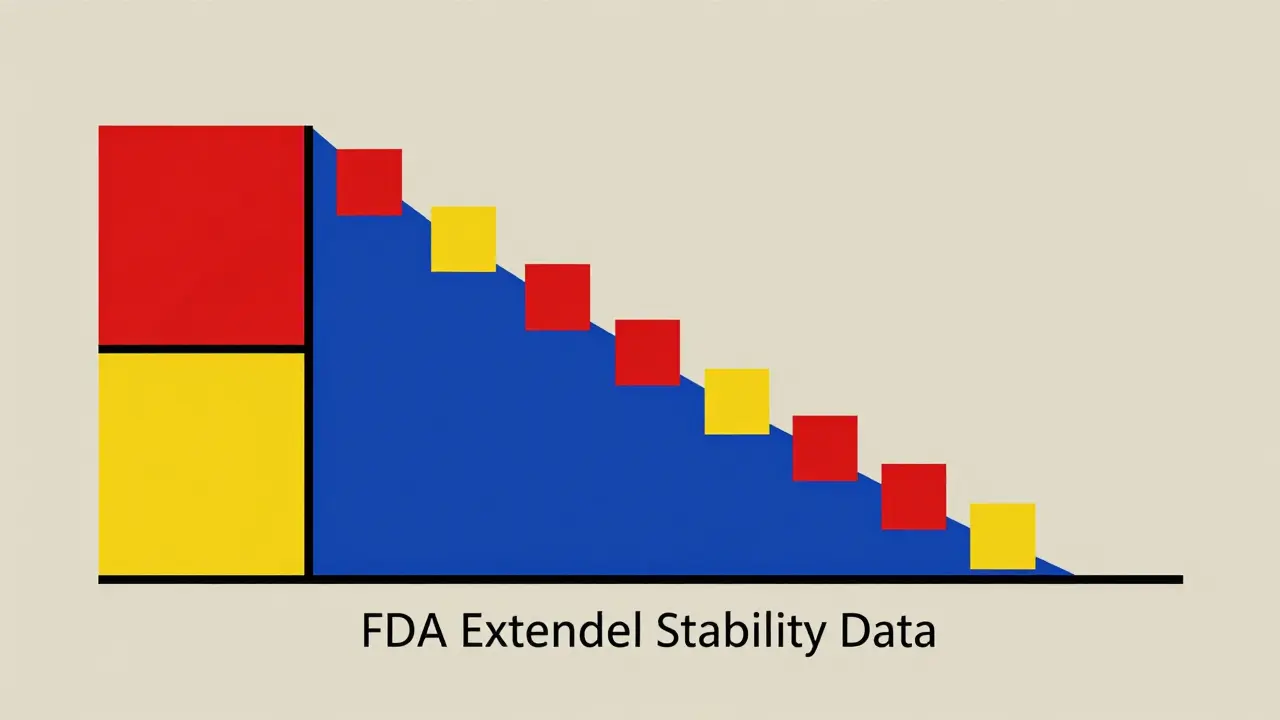
It would be dangerous to just guess a new date. The process is rooted in hard science. To get an extension, manufacturers must provide stability data is scientific evidence showing that a drug maintains its identity, strength, quality, and purity over a specific period of time . The FDA reviews this data to ensure the drug won't degrade into something ineffective or, worse, toxic. There are a few different pathways the agency uses:- Manufacturer-initiated: The company submits long-term stability studies proving the drug lasts longer than originally labeled.
- Shelf-Life Extension Program: A systematic approach to periodically testing and extending dates for stockpiled goods.
- Emergency Use Authorities: Used for Medical Countermeasures is pharmaceuticals and other medical products for treating or preventing diseases caused by chemical, biological, radiological, or nuclear emergencies (MCMs), often used for national stockpiles during crises.
- Enforcement Discretion: The FDA decides not to penalize the use of slightly expired products under very specific, dire circumstances.
Managing extended dates in a clinical setting
For a pharmacist or nurse, this creates a bit of a headache. You can't just assume every bottle of a certain drug is extended. The FDA doesn't issue blanket extensions for an entire brand; they issue them for specific lot numbers. If you're managing inventory, here is how you have to handle it:- Verify the NDC and Lot: Check the National Drug Code (NDC) and the specific lot number on the vial against the FDA's searchable database.
- Avoid Relabeling: Interestingly, the FDA generally doesn't require the manufacturer to print new labels. This means the physical bottle still shows the old date, but the official FDA list overrides it.
- First-In, First-Out (FIFO): Use the extended lots, but as soon as a fresh shipment arrives, those extended lots should be replaced and disposed of properly.
- Staff Training: Ensure the team knows that a "red-flagged" date on a specific lot is actually approved, so they don't accidentally throw away viable medicine.
The legal evolution of shortage management
This isn't a new practice, but it has become much more organized. Back in the day, manufacturers only had to tell the FDA if they were stopping a drug permanently. That left the agency reacting to shortages after they already happened. That changed with the Food and Drug Administration Safety and Innovation Act is a 2012 law (FDASIA) that expanded the FDA's ability to monitor drug supplies and required earlier notification of manufacturing interruptions (FDASIA). Now, companies must report temporary interruptions that *might* lead to a shortage. This early warning system allows the FDA to start reviewing stability data before the shelves are actually empty. Further authority was added through the Project BioShield Reauthorization Act (PAHPRA) of 2013. This specifically helped with the Strategic National Stockpile, allowing the government to extend the dates on antivirals like Tamiflu or Relenza during public health emergencies.Common drugs affected by extensions
While any drug can technically be extended, some appear more often than others. Data from analysts like Lachman Consultants suggests that Propofol is a potent intravenous anesthetic used for the induction and maintenance of general anesthesia injections are among the most frequent candidates for extensions. Other common ones include epinephrine and various IV solutions. Why these? Because they are often "essential" but have complex manufacturing processes or rely on a single supplier. When one factory goes offline due to a quality issue, the entire U.S. supply can vanish overnight. Extending the date on existing stock becomes the only way to keep operating rooms running.
Is it safe to use an expired drug with FDA approval?
This is the big question for patients and providers. The answer is yes, provided the extension is officially documented by the FDA. The "expiration date" on a label is not the date the drug turns into poison; it's the date until which the manufacturer guarantees full potency based on their initial studies. When the FDA grants an extension, they are essentially saying, "The new data proves the drug is still potent and safe beyond the original date." It's a risk-based decision. The agency weighs the small risk of slightly reduced potency against the massive risk of a patient having no medication at all. In a crisis, the latter is almost always the greater danger.Does the FDA extend the date for all drugs on the shortage list?
No. Only drugs designated as 'critical' and supported by valid stability data qualify. If a drug's chemical structure degrades too quickly, the FDA will not grant an extension regardless of how severe the shortage is.
Do I need to look for a new label on the medication?
Usually, no. The FDA does not require manufacturers to relabel the products. Healthcare providers must verify the lot number against the official FDA extended use date table to confirm the new expiration date.
What happens when the fresh supply finally arrives?
The FDA expects that as soon as replacement products become available, the extended-date lots will be replaced and properly disposed of. These extensions are temporary measures, not permanent changes to the drug's shelf life.
Who decides if an alternative drug is appropriate during a shortage?
The treating clinician. While the FDA provides the list of shortages and extensions, they explicitly state they do not regulate the practice of medicine. Doctors must determine if an alternative is safe for their specific patient.
How often is the FDA shortage list updated?
The FDA's drug shortage database is updated daily with new and resolved shortages to provide the most current information to the healthcare community.