
Goldenseal Medication Interaction Checker
Check Your Medication Interactions
Goldenseal can dangerously interfere with how your liver processes medications. Enter your medications to see potential interactions.
Many people turn to goldenseal when they feel a cold coming on. It’s marketed as a natural immune booster, often sold in capsules or tinctures with claims of fighting infections. But what most users don’t realize is that goldenseal can seriously interfere with the medications they’re already taking - sometimes with dangerous results.
What Exactly Is Goldenseal?
Goldenseal (Hydrastis canadensis) is a slow-growing herb native to eastern North America. For over a century, it’s been used in herbal medicine, mostly for sore throats, sinus infections, and digestive upset. Today, it’s sold as a dietary supplement, with labels promising immune support or natural antibiotic effects. But here’s the catch: the U.S. Food and Drug Administration (FDA) has never approved goldenseal for any medical use. There’s no solid proof it actually treats infections. What we do know is that it contains powerful compounds - primarily berberine and hydrastine - that directly interfere with how your liver processes medications.
How Goldenseal Disrupts Your Liver’s Work
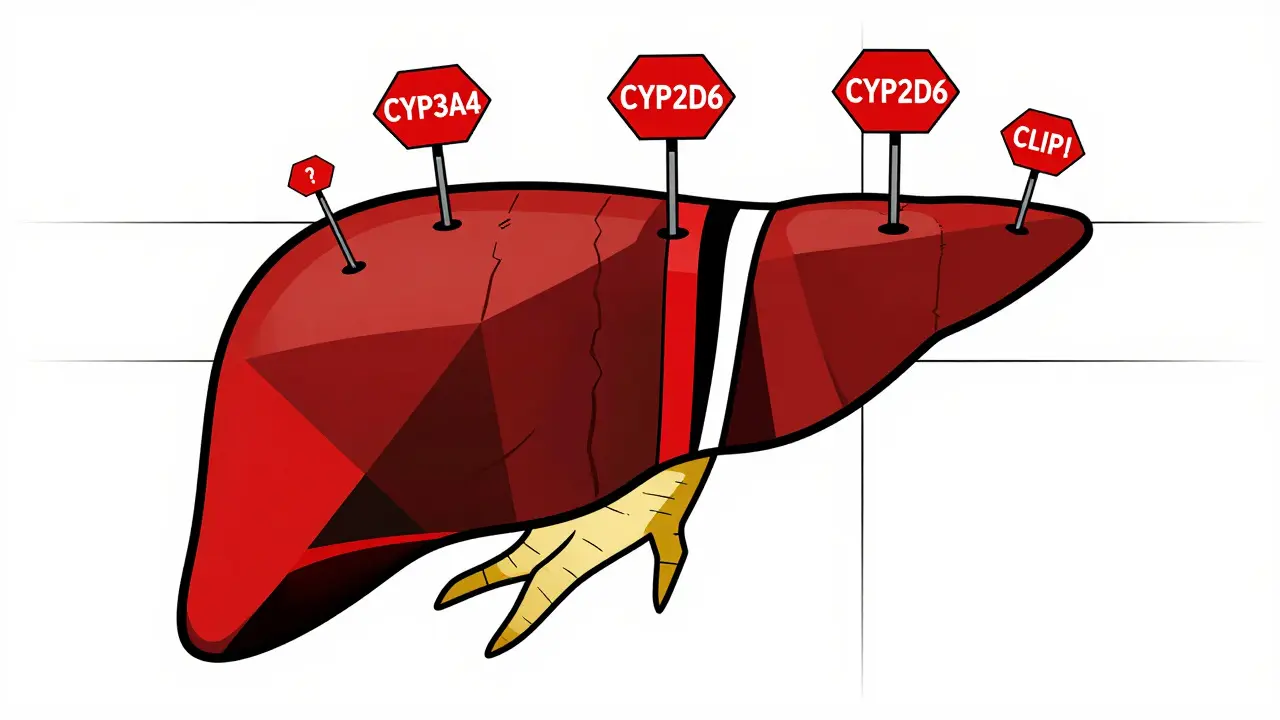
Your liver doesn’t just filter toxins. It’s also the main factory that breaks down most prescription drugs. This job is handled by a group of enzymes called cytochrome P450 (CYP). About 75% of all medications you take - from blood pressure pills to antidepressants - rely on these enzymes to be safely processed and removed from your body.
Goldenseal doesn’t just gently slow this process. It slams the brakes. Studies show it strongly inhibits at least five key CYP enzymes:
- CYP3A4 - handles half of all prescription drugs
- CYP2D6 - processes 25% of medications, including beta-blockers and SSRIs
- CYP2C9 - breaks down blood thinners like warfarin
- CYP1A2 - metabolizes caffeine and some asthma meds
- CYP2E1 - processes acetaminophen (Tylenol) and alcohol
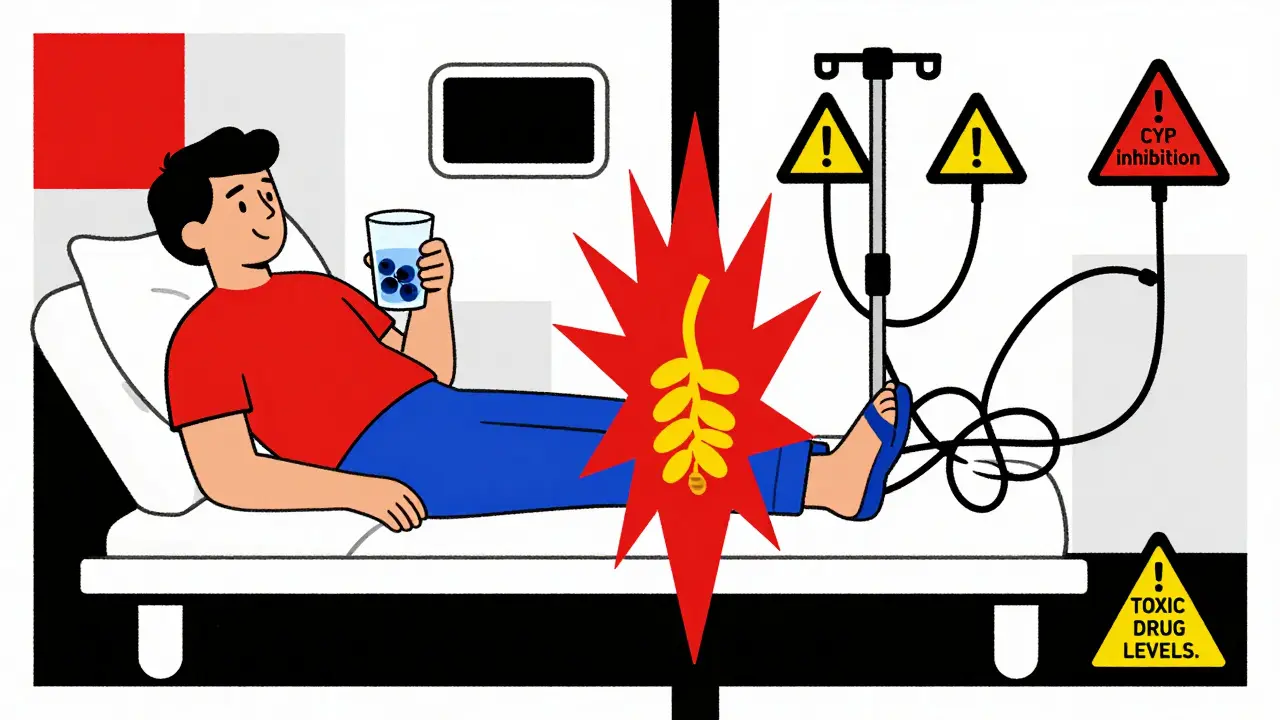
When goldenseal blocks these enzymes, your body can’t break down your medications properly. That means the drugs build up in your bloodstream. A 2018 clinical trial found that goldenseal increased levels of drugs metabolized by CYP2D6 by 40-60%. That’s not a small bump. That’s enough to cause side effects, overdose, or even organ damage.
Which Medications Are Most at Risk?
If you’re on any of these, goldenseal could be dangerous:
- Statins (simvastatin, atorvastatin) - higher levels raise your risk of muscle damage
- Blood thinners (warfarin) - goldenseal can spike your INR by 1.5-2.0 points, increasing bleeding risk
- Immunosuppressants (cyclosporine, tacrolimus) - levels can jump 30-50%, leading to kidney toxicity
- Benzodiazepines (midazolam, triazolam) - can cause extreme drowsiness or breathing problems
- Antidepressants (fluoxetine, sertraline) - risk of serotonin syndrome
- Beta-blockers (metoprolol, propranolol) - can cause dangerously low heart rate or blood pressure
- Diabetes drugs (metformin) - goldenseal can reduce absorption, leading to uncontrolled blood sugar
- Heart rhythm drugs (digoxin) - berberine interferes with P-glycoprotein transporters, raising digoxin levels
A 2022 case report in Pharmacy Times described a 68-year-old diabetic whose HbA1c jumped from 6.8% to 8.2% in just four weeks after taking goldenseal. His blood sugar went out of control because his body couldn’t absorb metformin properly. Another Reddit user reported near-fainting after combining goldenseal with lisinopril - his blood pressure dropped to 85/50.
Why This Isn’t Just a “Maybe” Risk
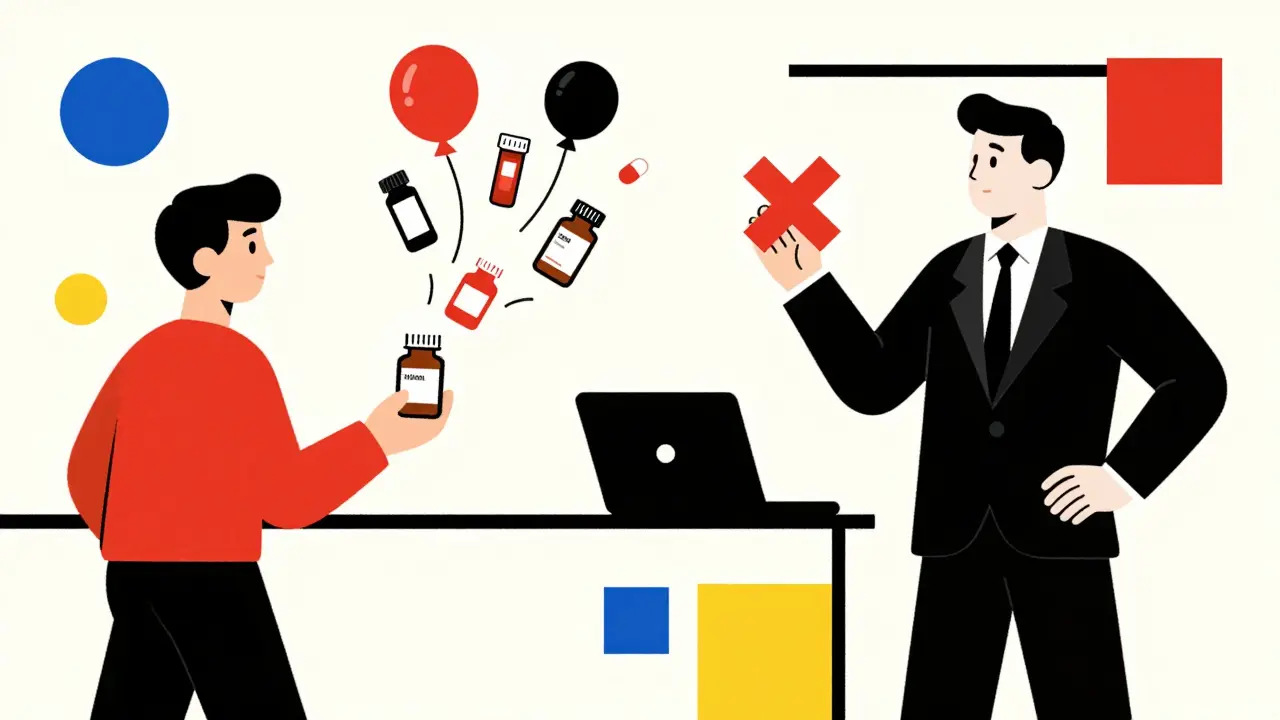
Some people think herbal supplements are safe because they’re “natural.” But goldenseal is more dangerous than many prescription drugs when it comes to interactions. Dr. Edzard Ernst, a former professor of complementary medicine at the University of Exeter, called it “one of the most dangerous herbal supplements” due to its multi-enzyme inhibition. Unlike St. John’s Wort (which mainly induces enzymes and reduces drug levels), goldenseal blocks them - meaning drugs stick around longer and in higher amounts.
And it’s not consistent. A 2022 study by the United States Pharmacopeia (USP) found that only 38% of goldenseal supplements had berberine levels within 20% of what was listed on the label. One bottle might have 0.5% berberine. The next might have 8%. There’s no way to predict how your body will react.
What Experts Say - And What You Should Do
The American Academy of Family Physicians recommends avoiding goldenseal entirely if you’re on any medication. The American Pharmacists Association advises the “5 CYP Rule”: if you take any drug metabolized by CYP3A4, CYP2D6, CYP2C9, CYP1A2, or CYP2E1, skip goldenseal. That covers the vast majority of chronic medications.
Even stopping goldenseal doesn’t solve the problem fast. Its effects linger for 7-14 days after you quit. If you’re scheduled for surgery or need to start a new medication, doctors recommend waiting at least two weeks after your last goldenseal dose.
There’s no safe dose for people on meds. Even short-term use - like three days for a cold - can be risky. A review of Amazon reviews showed that 62% of positive experiences came from people who only used goldenseal when they weren’t taking any other medications.
What About Other Herbal Supplements?
Not all herbs are equal. Milk thistle mainly affects CYP2C9. Grapefruit juice hits CYP3A4 hard. St. John’s Wort induces enzymes, making drugs less effective. But goldenseal is unique - it hits multiple enzymes at once. In a 2020 review ranking 15 common herbal supplements by interaction risk, goldenseal came in third, behind only grapefruit juice and St. John’s Wort. And unlike those, it doesn’t even have proven benefits.
The Bigger Picture
The supplement industry is booming. Goldenseal made $18.7 million in U.S. sales in 2022. Yet, adverse event reports to the FDA jumped 37% between 2018 and 2022. The European Medicines Agency has banned goldenseal from medicinal products. The FDA has issued warning letters to 12 manufacturers for making illegal health claims.
Meanwhile, the National Institutes of Health is running a $2.3 million clinical trial (NCT05578231) to study goldenseal’s interaction with 10 common drugs. Results won’t be out until late 2025. Until then, the evidence we have is enough to say: don’t risk it.
Can I take goldenseal if I’m not on any medications?
If you’re not taking any prescription or over-the-counter drugs, short-term use (3-5 days) for a cold or sinus infection may be low-risk for some people. But even then, there’s no proven benefit, and side effects like nausea or allergic reactions are still possible. The lack of standardization in supplements means you can’t be sure what you’re getting. If you’re healthy and want to avoid risks, skip it.
What should I do if I’ve already taken goldenseal with my meds?
Stop taking goldenseal immediately. If you notice unusual side effects - dizziness, nausea, irregular heartbeat, unexplained bruising, or blood sugar swings - contact your doctor or pharmacist right away. Don’t wait for symptoms to get worse. Even if you feel fine, the interaction could still be happening silently. Keep a record of when you took goldenseal and what medications you’re on.
Is there a safe herbal alternative to goldenseal for colds?
Yes - and you don’t need herbs at all. For colds, rest, hydration, and saline nasal rinses are more effective and safer than any supplement. If you want something herbal, elderberry has some evidence for reducing cold duration and doesn’t interfere with liver enzymes. Zinc lozenges (taken within 24 hours of symptoms) may also help. Always check with your pharmacist before trying anything new, even if it’s labeled “natural.”
Why don’t supplement labels warn about these interactions?
Under U.S. law (DSHEA), dietary supplements aren’t required to prove safety or effectiveness before being sold. Manufacturers aren’t obligated to list drug interactions unless they’ve been proven in clinical trials - and even then, they often don’t. The FDA can only act after harm occurs. That’s why it’s up to you to research interactions. Always tell your pharmacist about every supplement you take - not just your prescriptions.
Can I take goldenseal if I stop my meds for a few days?
No. Goldenseal’s effects on liver enzymes last 7-14 days after you stop taking it. If you plan to restart medication, you still need to wait two weeks after your last goldenseal dose. Never stop or adjust your medication without talking to your doctor. The risks of stopping your meds - like uncontrolled blood pressure or blood sugar - are far greater than the unproven benefits of goldenseal.
Jacob Hessler
March 22, 2026 AT 22:21Amber Gray
March 23, 2026 AT 21:44Danielle Arnold
March 25, 2026 AT 12:02James Moreau
March 27, 2026 AT 11:20J. Murphy
March 27, 2026 AT 13:58Jesse Hall
March 29, 2026 AT 00:28Donna Fogelsong
March 29, 2026 AT 21:56Sean Bechtelheimer
March 30, 2026 AT 11:20Seth Eugenne
March 31, 2026 AT 20:42rebecca klady
April 2, 2026 AT 02:42