
When a patient picks up a prescription and sees a pill that looks completely different from what they’ve taken before, panic can set in. Generic medications are not just cheaper alternatives-they’re the same medicine, approved by the FDA, with identical active ingredients, strength, and dosage form. But patients don’t always know that. And that’s where nurses step in.
Why Patients Worry About Generics
It’s not just about cost. Patients see a different color, shape, or label and assume something’s changed. A 2021 FDA survey found that 68% of patients believe generics are less effective than brand-name drugs. That’s not because they’re wrong about the science-it’s because no one explained it clearly.
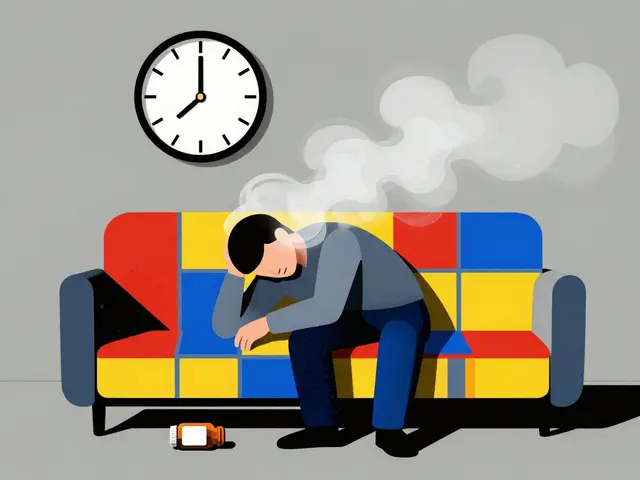
Imagine a 72-year-old woman on levothyroxine. Her pill used to be white and oval. Now it’s blue and round. She stops taking it because she’s convinced it’s not the same. A month later, she’s hospitalized with myxedema crisis. This isn’t rare. It’s preventable. Nurses are often the last line of defense before a patient walks away from their treatment.
The Science Behind Generics
Generic drugs must meet strict FDA standards to be approved. They must deliver the same amount of active ingredient into the bloodstream within 80% to 125% of the brand-name drug’s rate-this is called bioequivalence. That’s not a guess. It’s measured in clinical studies with hundreds of volunteers. The FDA inspects manufacturing facilities for generics the same way they do for brand-name drugs. The same equipment, same quality controls, same inspections.
What’s different? The inactive ingredients. Fillers, dyes, binders. Those change to avoid patent issues. That’s why the pill looks different. But those don’t affect how the medicine works. The active ingredient? Exactly the same. The dose? Exactly the same. The effect? Exactly the same.
How Nurses Counsel: The 5-Step Framework
Nurses don’t wing it. They use a proven structure. The Institute for Safe Medication Practices (ISMP) recommends a five-step approach:
- Assess-Ask what the patient already knows. Don’t assume. Some patients have read online that generics are "filler." Others have had bad experiences.
- Explain-Use plain language. "This pill has the same medicine in it as the brand. The FDA made sure of that. The only difference is the color and shape. That’s because of the extra ingredients that hold the pill together. They don’t change how it works."
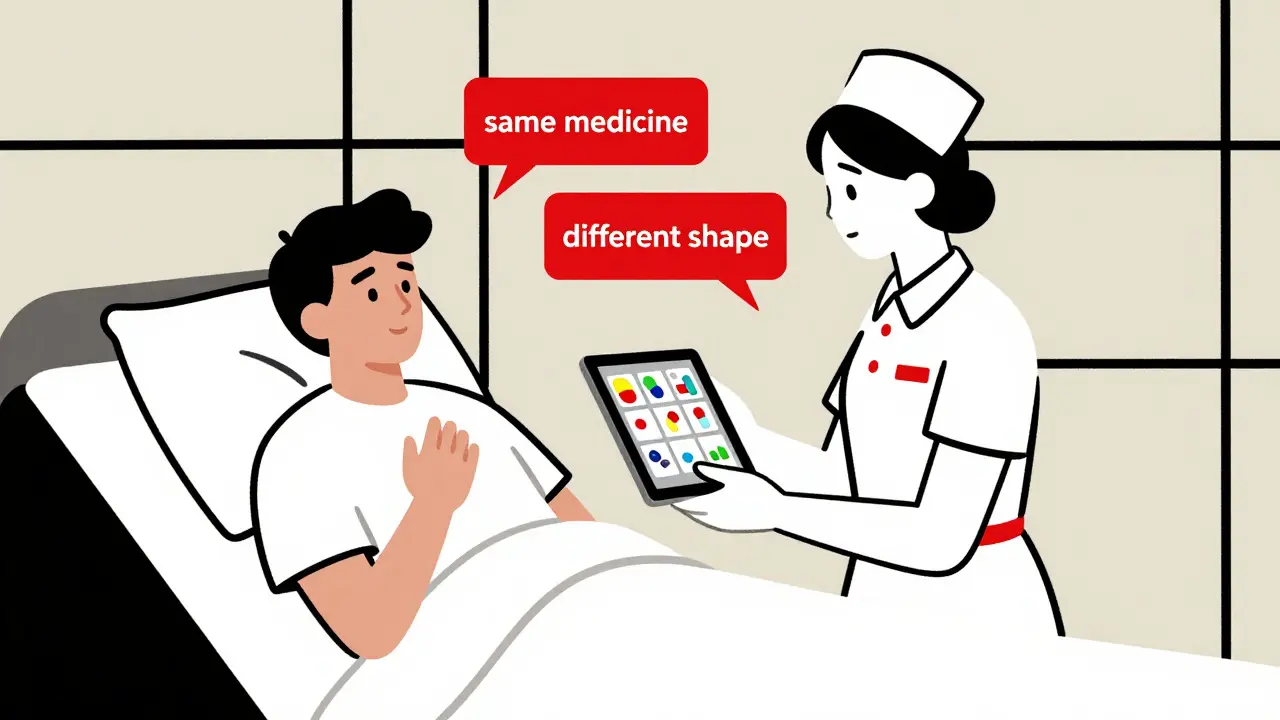
- Address appearance-Show them the pill. Compare it to the old one. Use visual aids. Many hospitals now have printed cards or tablet apps showing common generic switches and what to expect.
- Verify-Use the teach-back method. "Can you tell me why we switched to this pill?" If they say, "Because it’s cheaper," that’s not enough. They need to say, "Because it has the same medicine and works the same way."
- Document-In 92% of Magnet-status hospitals, nurses must document patient understanding. This isn’t bureaucracy. It’s safety.
That whole process takes 8 to 10 minutes total. In a busy hospital, that’s hard. But it’s worth it. Studies show that when nurses do this right, patient adherence increases by 22% to 37%.
Where Nurses Shine: The Hospital Setting
Pharmacists counsel at the pharmacy counter. Nurses counsel at the bedside. That’s the difference.
In the hospital, patients get five, six, even ten medications at once. A nurse can say, "You’re getting metoprolol for your heart, and now it’s generic. You’re also on lisinopril, which switched last week. Both are the same medicine, just different-looking pills. Here’s what to watch for."
That context matters. Nurses see the whole picture. They notice when a patient’s blood pressure drops after a switch. They catch when a patient forgets to take a pill because they think it’s "not the real one." They build trust over days, not minutes.
A 2023 study in Patient Education and Counseling found that patients who saw the same nurse regularly had 44% fewer concerns about generic switches than those who only talked to pharmacists. Why? Because nurses are there when the patient wakes up scared, when they’re confused, when they’re alone.
Where It Gets Tricky: Narrow Therapeutic Index Drugs
Some drugs don’t have room for error. Warfarin. Levothyroxine. Phenytoin. These are called narrow therapeutic index drugs. Even small changes in blood levels can cause serious side effects.
That’s why nurses are extra careful here. They don’t just say, "It’s the same." They say, "We’re keeping you on the same manufacturer because your levels have been stable. We’re not switching you unless your doctor approves it-and even then, we’ll check your blood before you leave."
One ICU nurse in Texas told me: "I had a patient on warfarin. His pill changed color. He refused to take it. I spent 15 minutes showing him the FDA Orange Book on my tablet. I showed him the manufacturer code. I called his pharmacist. He took it. His INR was normal the next day. That’s nursing."
Training Gaps and Real-World Barriers
Not every nurse feels ready. A 2023 survey by the National Council of State Boards of Nursing found that 41% of new graduates felt unprepared to counsel on generics. Why? Nursing school doesn’t always cover it in depth. Many hospitals still don’t have standardized training.
Time is another issue. In emergency departments, counseling drops to 90 seconds. Language barriers affect 28% of cases. Electronic health records don’t always prompt nurses to document counseling. Some nurses skip it because they’re overwhelmed.
But the solutions exist. Hospitals are using:
- Standardized scripts approved by pharmacy and nursing teams
- Visual aids showing pill changes (with photos of both brand and generic)
- AI tools that pull FDA Orange Book data in real time during medication passes
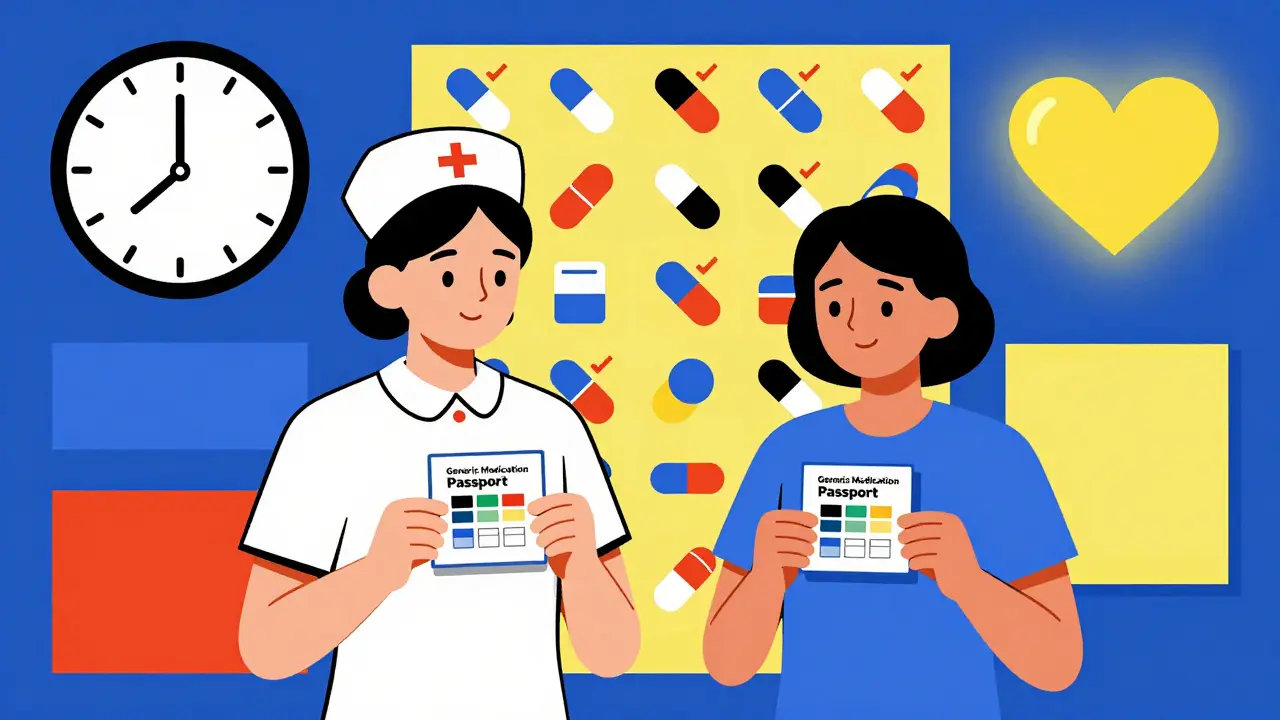
- The "Generic Medication Passport"-a small card patients keep that lists every generic switch they’ve had, with the reason and the manufacturer
The Bigger Picture: Generics Are the Norm
Ninety percent of all prescriptions filled in the U.S. are generics. That’s not a trend. That’s the system. Nurses give medication 98.7% of the time in hospitals. That means they’re the ones who explain this to patients every single day.
And it’s not just about saving money. It’s about access. A patient who can’t afford their brand-name insulin won’t take it. A generic version? They can. But only if they trust it.
The Joint Commission requires hospitals to educate patients about their medications. The ANA says it’s a nursing standard. The FDA says generics are safe. But none of that matters if the patient doesn’t understand it.
What’s Next
By 2026, the Nursing Generic Medication Education Collaborative plans to standardize training across 500 hospitals. New rules from CMS will require documentation of counseling for all Medicare patients. Biosimilars-complex biologic generics-are coming fast. Nurses will need to explain those too.
One thing won’t change: Nurses will still be the ones sitting beside the patient, holding their hand, answering their fear with facts. Because sometimes, the most powerful medicine isn’t in the pill-it’s in the conversation.
Are generic medications really as effective as brand-name drugs?
Yes. The FDA requires generic medications to have the exact same active ingredient, strength, dosage form, and route of administration as the brand-name version. They must also meet strict bioequivalence standards-delivering the same amount of medicine into the bloodstream within 80% to 125% of the brand-name drug’s rate. This is proven through clinical studies and verified by FDA inspections of manufacturing facilities.
Why do generic pills look different from brand-name pills?
The difference in color, shape, or size comes from inactive ingredients like dyes, fillers, or coatings-used to avoid patent restrictions. These ingredients don’t affect how the medicine works. The active ingredient, which does the healing, is identical. The FDA allows these changes as long as the drug’s effectiveness and safety remain unchanged.
Do nurses have a special role in counseling about generics compared to pharmacists?
Yes. Pharmacists typically counsel at the pharmacy, focusing on the drug itself. Nurses counsel at the bedside, where patients are already taking multiple medications. Nurses can connect the generic switch to the patient’s full regimen, answer immediate concerns about side effects or appearance, and build trust over time. Studies show nurses are more effective than pharmacists at addressing real-time administration fears.
What should nurses do when a patient refuses a generic medication?
Nurses should never force a switch. Instead, they should assess why the patient is refusing-fear, past experience, misinformation. Use the teach-back method to clarify misconceptions. Show FDA resources like the Orange Book or "It’s the Same Medicine" materials. If the patient still refuses, document the refusal and notify the prescriber. In some cases, staying on the brand-name drug may be medically appropriate.
Which medications require extra caution during generic switches?
Medications with a narrow therapeutic index require extra care because small changes in blood levels can cause serious harm. These include warfarin, levothyroxine, phenytoin, cyclosporine, and lithium. Nurses should verify the manufacturer hasn’t changed, monitor blood levels closely, and ensure the patient understands why consistency matters. Many hospitals now avoid switching these drugs unless absolutely necessary.
How can nurses verify that a patient understands the counseling?
Nurses use the teach-back method: asking the patient to explain the information in their own words. For example: "Can you tell me why we switched from the brand-name pill to this one?" If they say, "Because it’s cheaper," the nurse needs to clarify. The correct understanding is: "Because it has the same medicine inside and works the same way-it’s just a different color or shape." This method is required in 92% of Magnet-status hospitals.

Amadi Kenneth
March 20, 2026 AT 10:53Shameer Ahammad
March 20, 2026 AT 22:42Alexander Pitt
March 21, 2026 AT 14:34Manish Singh
March 21, 2026 AT 21:14Nilesh Khedekar
March 23, 2026 AT 16:16Robin Hall
March 24, 2026 AT 06:45Michelle Jackson
March 24, 2026 AT 23:45Suchi G.
March 25, 2026 AT 23:55becca roberts
March 26, 2026 AT 19:52SNEHA GUPTA
March 26, 2026 AT 20:28Gaurav Kumar
March 27, 2026 AT 10:35David Robinson
March 28, 2026 AT 23:31Alexander Pitt
March 29, 2026 AT 05:44