

If you have ever been in a crowded room struggling to catch a friend's voice over the din of traffic and chatter, you know exactly how frustrating hearing loss can be. It is not just about missing sounds; it is about losing connection. By 2025, over 1.5 billion people worldwide experienced some degree of hearing loss, yet many still struggle to find the right device to help them listen clearly again.
The landscape of hearing assistance changed dramatically starting in late 2022 with the introduction of Over-the-Counter (OTC) regulations in major markets, making devices more accessible than ever before. However, navigating between prescription-grade models and consumer electronics requires knowing what actually works for your ears. This guide cuts through the jargon to explain the types, technologies, and fitting processes so you can choose a solution that truly fits your life.
Understanding Hearing Aid Styles and Comfort
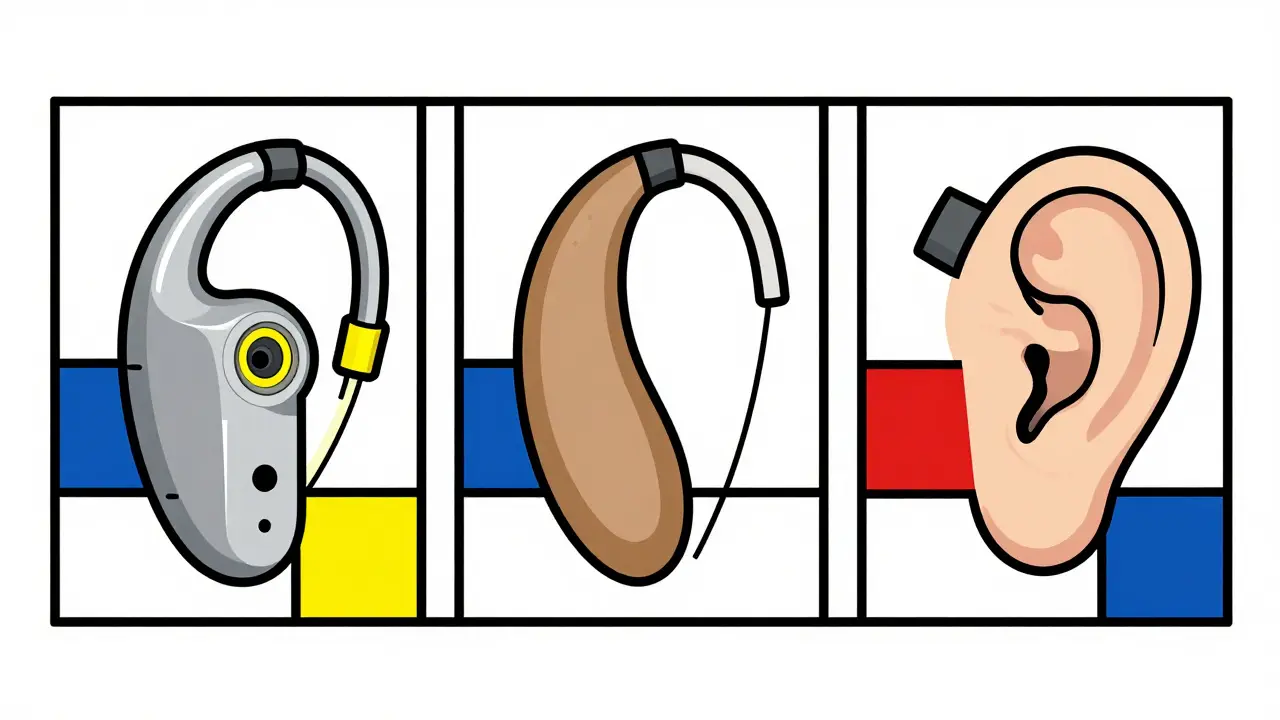
Choosing a hearing aid often begins with finding a style that fits comfortably in or behind your ear without drawing unwanted attention. The physical design dictates not just looks, but also battery life and feature sets available to you.
Behind-the-Ear (BTE) models remain the workhorse for significant hearing loss. These units sit behind the ear and connect to an earmold via tubing. They are robust and handle moisture better. For example, the Phonak Na\u00eda Lumity L-UPis a BTE model designed for severe to profound hearing loss offers up to three weeks of battery life depending on usage patterns. Their IP68 water resistance rating means they can withstand sweat and accidental splashes during exercise.
For most users with moderate loss, Receiver-in-Canal (RIC) devices are becoming the standard. The receiver sits inside the ear canal while the main body rests behind the ear, connected by a thin wire. Devices like the Jabra Enhance Select 700is a popular RIC-style hearing aid offering modern connectivity provide roughly 24 hours of battery life. They offer a balance of comfort and visibility, often being much smaller than traditional BTEs.
In-the-Ear (ITE) options fill the concha bowl of the outer ear. These are custom-molded and generally house larger batteries due to their size. Models such as the Signia Active Pro IXdelivers high-fidelity audio processing with extensive battery runtime can last up to 34 hours on a single charge, making them ideal for all-day wearers who do not want to carry spares.
| Style | Battery Life | Water Resistance | Best For |
|---|---|---|---|
| Behind-the-Ear (BTE) | Up to 3 Weeks | IP68 | Severe to Profound Loss |
| Receiver-in-Canal (RIC) | 24 Hours | IP68 | Moderate Loss, Everyday Use |
| In-the-Ear (ITE) | 34 Hours | IP68 | Dexterity Challenges |
| Completely-in-Canal (CIC) | 16-20 Hours | IP66 | Cosmetic Concerns |
If cosmetic invisibility is your top priority, Completely-in-Canal (CIC) or Invisible-in-Canal (IIC) styles like those from Eargo hide deep in the ear canal. While these look great, their small size limits battery capacity, typically capping out at 16 to 20 hours of life, and reduces the space available for advanced wind noise filtering.
The Power of Amplification and Sound Processing
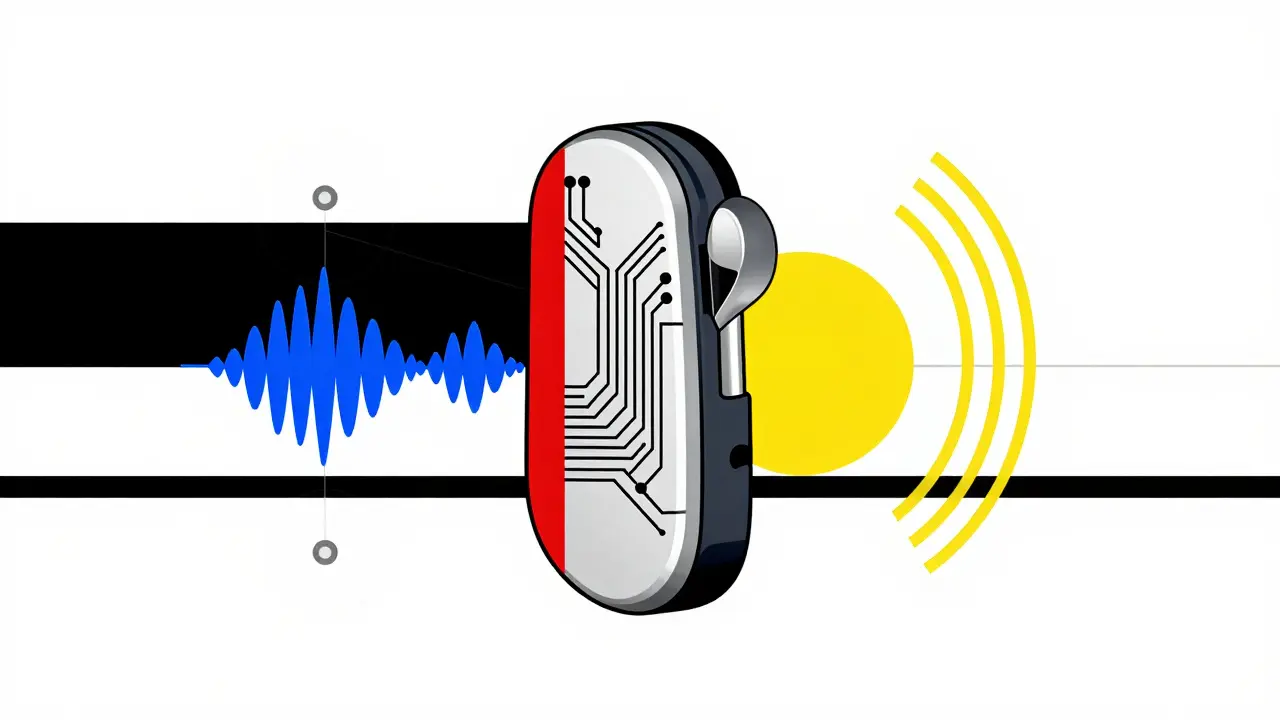
You might assume hearing aids simply turn up the volume, but modern amplification involves sophisticated Digital Signal Processing (DSP) to separate speech from noise. In 2026, the gap between basic and premium sound processing is defined by chip architecture.
Premium models now utilize dual-chip architecture to minimize delay between hearing a sound and processing it. According to Dr. Brian Taylor at HearingTracker, the Phonak Aud\u00edo Infiniofeatures dual-chip architecture reducing sound delay to 0.4 milliseconds brings this latency down to 0.4 milliseconds compared to an industry average of five to seven milliseconds. That fraction of a second matters immensely; if the processing lags too long, the sound feels unnatural, and lip movements won't match the audio you hear.
Artificial Intelligence (AI) has transformed how devices adapt to your environment. The Starkey Edge AIplatform uses machine learning to optimize audio in real-time analyzes hundreds of millions of data points per second. This allows the device to learn your preferences over time. If you frequently attend family dinners where music plays quietly in the background, the device learns to prioritize speech clarity in that specific acoustic signature.
Connectivity is also a massive leap forward with standards like LE Audio and Auracast. Traditional Bluetooth connections paired devices one-to-one, meaning you had to take off your phone to switch audio. Newer platforms support Auracast broadcasting, allowing you to tap into a venue's audio feed-like a movie theater or conference center-directly to your ears. This was notably tested with the Widex MOMENT SmartRICsupports LE Audio for superior streaming quality, which received strong praise from users for music streaming quality improvements in early 2025 reviews.
Fitting Options: Professional Care Versus Self-Adjustment
One of the biggest decisions today is choosing between professional fitting and buying OTC devices online. The route you take changes how you interact with the technology.
Prescription hearing aids require a visit to a licensed audiologist. In Australia, this process usually involves 3 to 4 appointments spread over a few weeks. You undergo diagnostic testing to map your specific hearing thresholds across frequencies. This detailed mapping ensures the device isn't just amplifying everything, but targeting the specific frequencies you struggle with.
Conversely, OTC hearing aids like the Jabra Enhance line allow for self-fitting through mobile apps. These are intended for adults with perceived mild-to-moderate hearing loss. Tests show that about 85% of users successfully complete self-fitting on their first attempt within 2.5 hours. The app asks you to perform simple listening tests to calibrate the gain.
However, experts like Dr. Mark Ross warn that OTC users can face suboptimal outcomes without guidance. Trials indicated roughly 68% of self-fitters experienced issues like feedback whistling because they missed nuanced adjustments needed for severe loss. For many, hybrid models using telehealth have emerged as a middle ground, offering app-based control with remote audiologist support to adjust settings when problems arise.
Price remains a clear differentiator. In-clinic premium brands range from $3,500 to $7,500 AUD per pair, including follow-up care. Telehealth models hover between $1,000 and $3,500. Retail OTC devices are significantly cheaper, often priced from $200 to $1,300 per pair. While cost-effective, remember that cheap devices sometimes lack the directional microphone capabilities needed for complex listening environments.
Maintenance and Daily Management
Even the best technology fails if not maintained. Earwax is the primary enemy, affecting roughly 42% of users monthly with blockages that cut off sound.
You need a routine cleaning schedule. Using manufacturer-provided tools to wipe down the mic ports weekly can reduce malfunctions by up to 67%. Humidity also drains battery performance faster than advertised. Living in Sydney summers means high humidity levels. Many users suggest keeping silica gel desiccant packets in your charging case to extend battery life during wet conditions.
Another common issue is the "occlusion effect," where your own voice sounds booming or hollow because the ear canal is blocked. Recent innovations like the ReSound Viviaincorporates MAV technology to reduce the occlusion effect introduced MAV (Microphone Acoustic Vent) technology in 2025 specifically to address this, venting low-frequency internal sounds out of the canal rather than reflecting them back to your ear drum.
Common Questions About Hearing Aid Technology
Do hearing aids help with tinnitus?
Many modern hearing aids include specialized programs for tinnitus management. They generate sound therapy masks to distract from ringing in the ears. Features in devices like Starkey and Signia allow you to customize sound profiles to reduce the perception of tinnitus noise, which can be adjusted alongside amplification.
How long does hearing aid fitting take?
Professional clinic fittings usually span 3 to 4 appointments over two to three weeks to ensure proper adjustment. OTC models allow for same-day setup, but experts recommend giving yourself 2 to 4 weeks of consistent wear to let your brain adapt to the new sound levels.
Are waterproof hearing aids safe to swim in?
Most premium aids rated IP68 are dustproof and protected against immersion in water, but manufacturers generally advise against swimming directly with them to prevent seal degradation. Showering and heavy sweating are typically safe, but direct submersion in chlorinated saltwater may damage seals over time.
What is Auracast in hearing technology?
Auracast is a broadcast standard part of LE Audio technology that allows venues to stream audio directly to multiple listener devices simultaneously. Instead of connecting personally to your phone, you can tune into a public feed in restaurants, airports, or lecture halls for clearer reception.
Do insurance providers cover OTC hearing aids?
Coverage varies widely. Private health funds in Australia may cover prescribed devices more generously than OTC options. Medicare benefits exist for certain clinics. Always check your specific policy exclusions regarding general assistive technology versus prescription medical devices.
Moving forward, hearing aid trends indicate a shift toward health monitoring beyond just sound. By late 2026, we expect features like fall detection and blood oxygen sensing to become standard in high-end models. As the market evolves, ensuring you select a device with a roadmap that supports updates will be just as important as the initial hardware specs. Understanding the core mechanics ensures you get the clearest, most natural sound experience possible.


Divine Manna
April 1, 2026 AT 16:16Many people misunderstand the fundamental difference between digital signal processing and simple amplification.
You cannot rely on marketing fluff to determine hardware capability.
The latency numbers cited in recent studies indicate a significant gap between consumer expectations and reality.
If you ignore the dual-chip architecture, you are essentially paying for branding alone.
Most audiologists recommend avoiding single-chip solutions for severe loss scenarios.
Battery efficiency is often secondary to sound quality preservation during dynamic environments.
Water resistance ratings are misleading if the sealing mechanism degrades quickly.
You should examine the ventilation technology to prevent occlusion effects entirely.
Modern platforms require constant firmware updates to maintain performance standards.
Without proper calibration, even premium devices will feedback constantly.
The industry average for processing speed remains stagnant in budget sectors.
Artificial intelligence integration is often overhyped for marginal gains.
Consumers need to understand the physical limitations of ear canal acoustics.
Fitting processes vary wildly depending on regional healthcare infrastructure differences.
Ultimately, proper maintenance outweighs initial purchase specifications regarding longevity.
Hudson Nascimento Santos
April 1, 2026 AT 23:13Hearing is not merely mechanical but deeply connected to how we perceive existence itself.
The philosophical implications of losing connection to the world are profound.
We must consider the nature of silence and how technology disrupts it.
Technology serves as a bridge rather than just a tool.
This approach changes how we value sensory input completely.
Vicki Marinker
April 2, 2026 AT 06:39I feel like most people do not care about the actual social isolation factor involved here.
Everyone focuses on specs instead of emotional well-being outcomes.
It drains me thinking about how ignored this demographic feels daily.
Social withdrawal is worse than the hearing deficit itself in many cases.
We need more empathy rather than technical jargon explanations.
Sakshi Mahant
April 3, 2026 AT 04:07We must acknowledge that healthcare access varies significantly depending on geography.
Regional availability of professional services impacts patient outcomes heavily.
It is important to respect the diverse economic situations faced by buyers globally.
Support systems play a crucial role in successful adaptation to new devices.
Cultural context matters when evaluating which styles are acceptable in public spaces.
HARSH GUSANI
April 4, 2026 AT 07:00Tech lies 🙄 Just buy cheap ones 👍
Rob Newton
April 4, 2026 AT 16:05Expensive does not mean effective.
The Charlotte Moms Blog
April 4, 2026 AT 17:23Honestly!!! It is frightening!!! The lack of regulation!!!
They sell anything online!!! People get hurt easily!!!
Medical devices are not toys!!! Regulations protect us!!!
Ignore the marketing hype!!! Stay safe!!!
Health is too important!!! Take it seriously!!!
Aysha Hind
April 5, 2026 AT 23:42Did anyone notice how they want us dependent on app subscriptions now?
Big tech owns our biology data secretly.
Cloud processing means they listen to everything anyway.
Data privacy is compromised the moment you connect Bluetooth.
Freeze-dry your audio files locally offline instead.
Lawrence Rimmer
April 6, 2026 AT 21:21Why bother with all these features when you just need volume.
Simple amplifiers worked fine for decades before.
New features are just excuses to charge more money.
Dipankar Das
April 6, 2026 AT 22:18You are required to prioritize your health metrics immediately without delay.
Proactive maintenance schedules ensure optimal device functionality always.
Daily hygiene routines prevent future complications effectively.
Ignoring professional guidance leads to irreversible damage eventually.
Please seek certified assistance for the best possible results today.
sophia alex
April 8, 2026 AT 05:50Oh my god, who thinks $200 aids work?? 😂🙅♀️
You look ridiculous trying to save pennies on hearing.
Real quality requires real investment in superior engineering.
Poor materials break in weeks anyway.
Only professionals can deliver true clarity for you.😒
Goodwin Colangelo
April 9, 2026 AT 05:10Actually cleaning the mic port helps way more than new chips.
Dust buildup causes issues faster than worn parts typically.
A soft brush works wonders for keeping units clear.
Battery contacts also need wiping down every week.
Keeping things clean saves battery life significantly.