
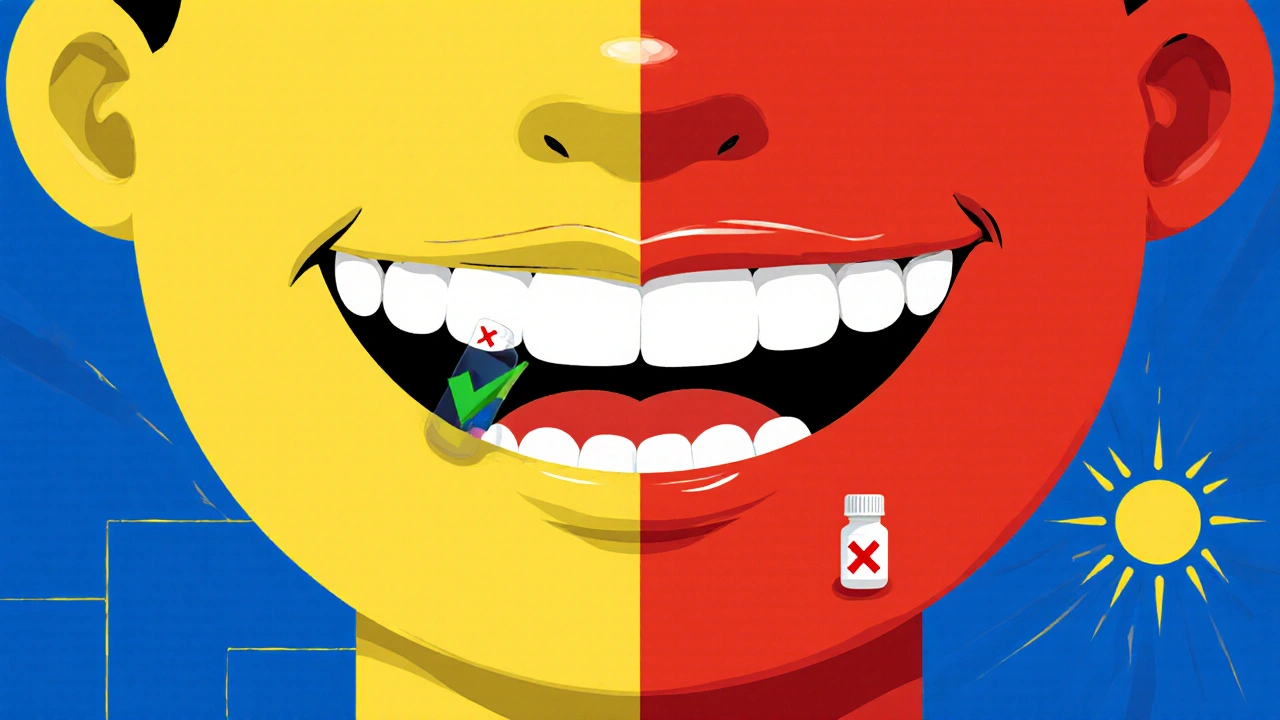
For decades, doctors avoided giving tetracycline antibiotics to kids under 8. The reason? Permanent tooth staining. Parents were warned: tetracycline could turn their child’s teeth yellow, gray, or brown - and there was no fix. But today, that rule is changing - and not just a little. The science has caught up with reality, and for one key antibiotic, the old warnings no longer apply.
Why Was Tetracycline Banned for Kids?
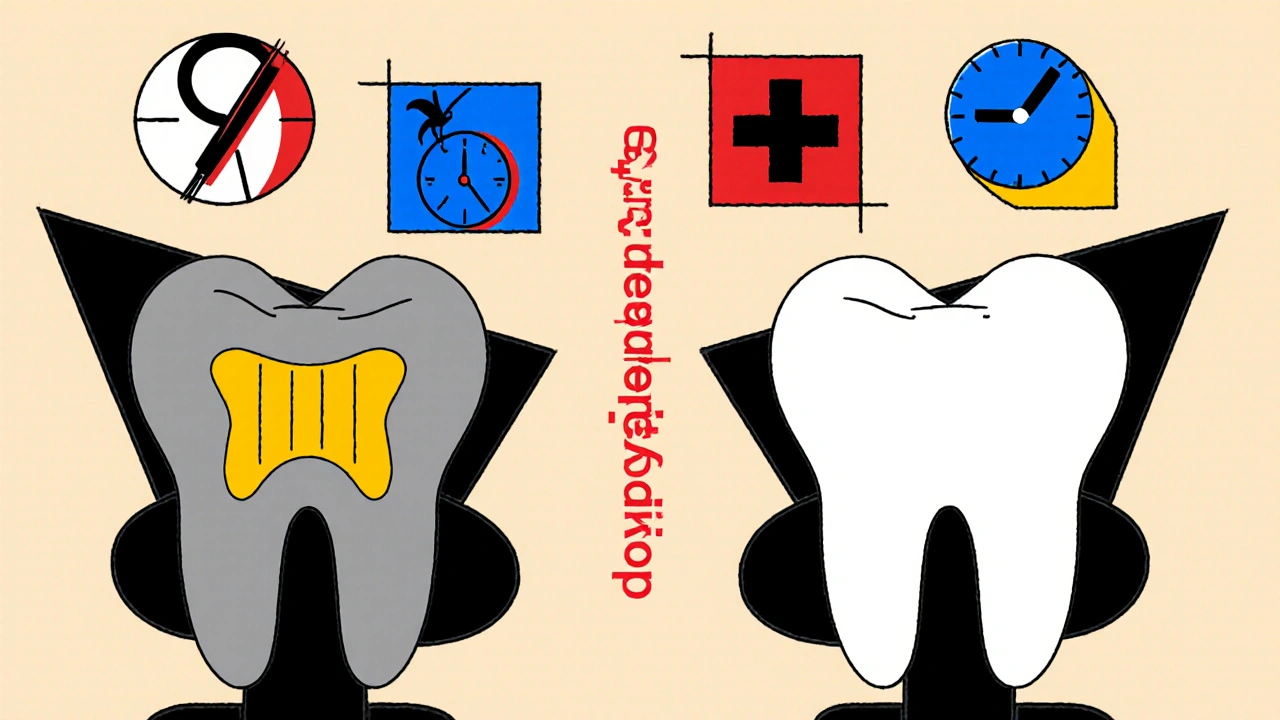
Back in the 1950s and 60s, doctors noticed something strange. Kids who took tetracycline - often for acne, pneumonia, or infections - started growing teeth with strange stains. Not surface stains you could brush off. These were deep, permanent discolorations inside the enamel. The teeth looked stained from the inside out. Under UV light, they glowed bright yellow, then turned dark brown or gray over time. The cause? Tetracycline binds to calcium in developing teeth. When a child’s teeth are still forming - from the womb through age 8 - the drug gets locked into the enamel and dentin. It doesn’t just sit there. It reacts with light, darkening over months or years. The earlier the exposure, the worse the damage. Primary teeth are most vulnerable between 10 and 14 months. Permanent front teeth are at risk from 6 months to 6 years. Back teeth can still be affected until age 8. By the 1970s, studies confirmed the link. Doses over 35 mg/kg/day were especially dangerous. A child on a long course of tetracycline for acne could end up with visibly stained teeth - a lifelong cosmetic issue. So doctors stopped prescribing it. The rule became simple: No tetracycline under age 8.But Doxycycline Is Different
Here’s where things get confusing - and important. Doxycycline is a tetracycline. But it’s not the same. It doesn’t bind to calcium the same way. Studies show tetracycline binds calcium at nearly 40%. Doxycycline? Only about 19%. That small difference changes everything. For years, doctors treated doxycycline like the rest. But then came the evidence. A 2019 review of 338 children who got doxycycline before age 8 found only six cases of possible discoloration - and even those were mild and not confirmed as caused by the drug. A 2025 study of 162 children exposed to doxycycline before age 8 found just one case - and that was in a premature infant under 2 months old. In 137 children with permanent teeth who got doxycycline, not a single tooth showed staining. The CDC did a blind study. Dentists looked at teeth of kids who got doxycycline for Rocky Mountain spotted fever (RMSF) and compared them to kids who never took it. No difference. No staining. No weaker enamel. No increased risk. The bottom line? Short courses of doxycycline - 7 to 14 days - don’t cause tooth discoloration in children, even under age 8. That’s not theory. That’s what dentists saw with their own eyes.Why the Confusion Still Exists
If the science is clear, why are so many parents and even some doctors still afraid? Because the old warning stuck. For over 60 years, pediatricians, pharmacists, and dental offices printed warnings on tetracycline bottles: Do not use in children under 8. That message didn’t change when the science did. Pharmacies still flag doxycycline prescriptions for kids. Parents Google “tetracycline and teeth” and see scary images from the 1970s. Even now, the Cleveland Clinic’s website says, “Taking tetracycline under age 8 makes tooth staining much worse.” That’s true - for tetracycline. But it doesn’t say: doxycycline is different. That gap in communication leaves families confused and scared. And here’s the real danger: delaying doxycycline because of fear of tooth stains. RMSF kills 4% to 21% of people if treatment is delayed. It doesn’t wait. A child with fever, rash, and a tick bite needs doxycycline - yesterday. Waiting for lab results can be fatal. The CDC says: Don’t wait. Start doxycycline now.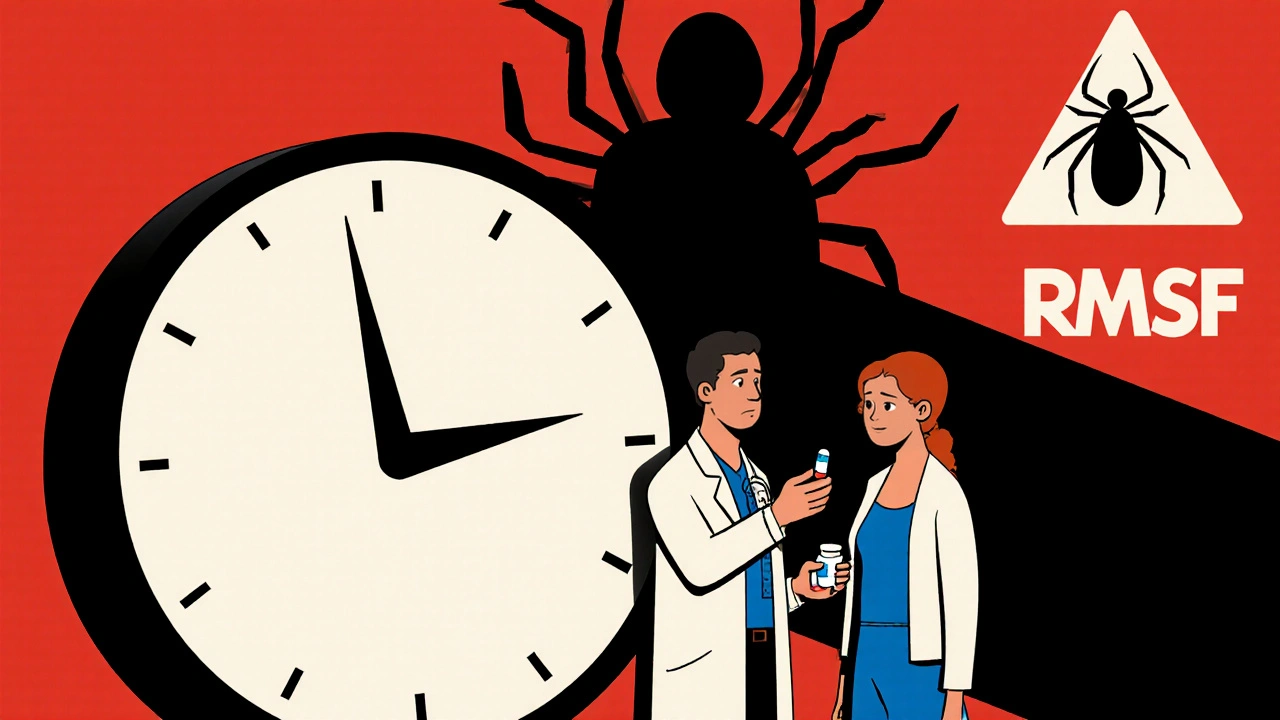
Which Antibiotics Are Still Unsafe?
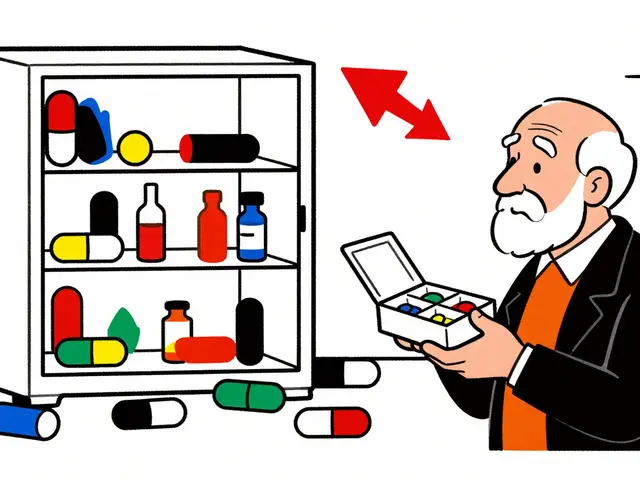
Not all tetracyclines are created equal. Doxycycline is the exception - not the rule. Tetracycline, minocycline, and tigecycline? Still off-limits for children under 8. They bind calcium strongly. They cause staining. They’re still on the banned list. Only doxycycline has been cleared for short-term use in young kids - and only for specific infections:- Rocky Mountain spotted fever (RMSF)
- Other rickettsial diseases (like ehrlichiosis, anaplasmosis)
- Lyme disease (in certain cases, though not first-line)
- Some types of pneumonia or skin infections when other antibiotics fail
What Should Parents Do?
If your child is prescribed doxycycline:- Ask: Is this doxycycline? Not tetracycline or minocycline?
- Ask: Why are we using it? Is this a rickettsial infection?
- Ask: How long will they take it? (It should be 7-14 days, rarely up to 21.)
What About Pregnancy?
The same rule applies to pregnant women. Tetracycline and minocycline are still avoided after the fourth month of pregnancy. The baby’s teeth are developing then. Doxycycline? The data is limited, but current guidelines from the CDC and AAP suggest it may be used if the benefit outweighs the risk - especially for life-threatening infections like RMSF. Still, most OB-GYNs will avoid it unless absolutely necessary.What’s Next?
The change in guidelines is one of the biggest shifts in pediatric medicine in decades. But it’s still not universal. Some doctors still hesitate. Some pharmacies still block prescriptions. Some parents still believe the old myth. The next step? Clearer labeling. Better education. More public awareness. The American Academy of Pediatrics is expected to update its Red Book in 2025 to expand doxycycline’s use beyond just rickettsial diseases - possibly for other serious infections where alternatives are limited. For now, the message is simple: tetracycline still stains teeth. Doxycycline, for short courses, does not. And for kids with life-threatening infections, that difference matters more than anything.Can doxycycline really be safe for kids under 8 if it’s a tetracycline?
Yes. Doxycycline is a type of tetracycline, but it binds to calcium in developing teeth at less than half the rate of older versions like tetracycline or minocycline. Multiple studies - including one by the CDC with over 100 children - found no tooth staining in kids who took short courses of doxycycline for infections like Rocky Mountain spotted fever. The risk is so low that doctors now say the benefit of treating a deadly illness far outweighs any theoretical risk to teeth.
How long does a child need to take doxycycline before it risks staining teeth?
There’s no exact number, but studies show staining is extremely rare with courses under 21 days. Most infections like RMSF require only 7-10 days. The risk increases with longer use - especially beyond 30 days - but even then, it’s far less than with older tetracyclines. For short-term treatment of serious infections, the risk is considered negligible. Long-term use (like for acne) is still not recommended for children under 8.
What should I do if my child was given tetracycline before age 8?
If your child took tetracycline, minocycline, or another older tetracycline antibiotic before age 8, there’s a chance of tooth discoloration. The staining usually appears as yellow, gray, or brown bands on the teeth and gets darker over time. If you’re concerned, schedule a dental checkup. A dentist can confirm if the staining is from tetracycline and discuss options like teeth whitening, veneers, or crowns later in life. But if they took doxycycline, especially for a short course, the risk of staining is extremely low.
Are there any other side effects of doxycycline in children?
Yes. Like all antibiotics, doxycycline can cause stomach upset, diarrhea, or yeast infections. It can also make skin more sensitive to sunlight, so sun protection is important. Unlike older tetracyclines, it doesn’t affect bone growth or cause liver damage at normal doses. It’s generally well-tolerated in children, and the benefits for serious infections far outweigh these common, mild side effects.
Should I avoid doxycycline if my child has a mild infection?
Yes. Doxycycline is not meant for every infection. It’s reserved for specific, serious illnesses like Rocky Mountain spotted fever, ehrlichiosis, or certain types of pneumonia and skin infections. For common issues like ear infections, strep throat, or colds, other antibiotics are safer and more effective. Don’t ask for doxycycline unless your doctor says it’s needed. But if your doctor recommends it for a life-threatening infection, don’t refuse it out of fear of tooth staining - the risk is almost zero.

Peter Axelberg
December 1, 2025 AT 04:23Man, I remember when my cousin got tetracycline as a kid back in '98. Her front teeth turned this weird grayish-yellow that no amount of whitening could fix. I always assumed all tetracyclines were the same. Reading this felt like someone pulled the rug out from under me. Doxycycline is just... different? Like, chemically? The calcium binding thing makes sense - it’s not magic, it’s molecular physics. But why did it take 60 years for the medical world to catch up? Pharmacies still flag it. Dentists still scare parents. And the CDC’s blind study? That’s the kind of clean, no-BS data we need more of. It’s not about being ‘progressive’ - it’s about not letting outdated dogma kill kids because someone’s too lazy to update a pamphlet.
Also, can we talk about how the same people who panic about tooth stains will happily let their kid get a 10-day course of amoxicillin for an ear infection - which carries real risks like C. diff and antibiotic resistance - but won’t touch doxycycline for RMSF? That’s not caution. That’s cognitive dissonance dressed up as parenting.
Someone needs to make a viral TikTok about this. With graphs. And maybe a dentist holding up two teeth side by side. One stained, one not. The caption: ‘This is what fear looks like.’
Monica Lindsey
December 2, 2025 AT 09:08Parents who panic over tooth stains while ignoring sepsis are the reason medicine is broken.
Stop being emotional. Start being informed.
jamie sigler
December 3, 2025 AT 08:49I get it, the science says it’s fine. But what if it’s not? What if one kid gets stained and everyone’s like ‘oh well, it’s rare’? That’s not science - that’s gambling with a child’s smile. And now we’re supposed to trust a 2025 study? That’s not even peer-reviewed yet. I’m not risking my kid’s teeth for a ‘maybe’.
Bernie Terrien
December 4, 2025 AT 01:26They didn’t ban tetracycline because they were scared of yellow teeth - they banned it because it turned kids into living Rembrandts. But doxycycline? That’s the James Bond of antibiotics. Sleek. Efficient. Doesn’t leave a trace. The fact that we’re still having this conversation in 2025 is hilarious. It’s like arguing over whether a Tesla has a carburetor. The old model? Trash. The new one? Engineered. Stop confusing the two. And for God’s sake, if your kid has a tick bite and a fever, give them the doxy. Don’t Google ‘tetracycline teeth’ at 3 a.m. and then cry about it at the ER.
Subhash Singh
December 5, 2025 AT 00:42It is indeed a significant paradigm shift in pediatric pharmacology. The differential calcium-binding affinity between tetracycline and doxycycline, as evidenced by in vitro studies and corroborated by clinical outcomes, suggests a biochemical distinction that warrants reclassification in clinical guidelines. The persistence of outdated warnings, despite robust epidemiological data from the CDC and Frontiers in Pharmacology, reflects a systemic inertia in medical communication. It is imperative that regulatory bodies and pharmaceutical institutions update labeling protocols to reflect current evidence, lest public health outcomes continue to be compromised by misinformation. Furthermore, the distinction between short-course therapeutic use and prolonged prophylactic administration remains clinically critical and must be explicitly delineated in all educational materials.
Tina Dinh
December 6, 2025 AT 02:15YESSSSSSSSS 🙌✨ This is the kind of update I’ve been screaming about for YEARS! My nephew got doxycycline for a tick bite at age 5 - and guess what? His teeth are PEARLY WHITE 😍 No stains, no drama. Just a healthy kid who didn’t almost die because his mom listened to a 1970s pamphlet. Please, someone make a meme: ‘Tetracycline = bad. Doxycycline = lifesaver.’ 🚑🦷❤️ Let’s fix this myth before another kid loses their life to a preventable delay. #DoxycyclineIsNotTetracycline #StopTheFear
Andrew Keh
December 7, 2025 AT 06:40I appreciate the clarity in this post. Many parents are understandably afraid when they hear ‘antibiotic’ and ‘teeth’ in the same sentence. The distinction between doxycycline and older tetracyclines is important, and I think it needs to be communicated more simply - maybe with a one-page handout doctors can give out. The key point is this: if it’s doxycycline, and it’s for a serious infection, the risk to teeth is minimal. The risk of not treating? That’s the real danger. I’ve seen families delay treatment because of this myth. It’s heartbreaking. We need to change the narrative, not just the science.
Brandy Johnson
December 9, 2025 AT 05:46Let’s be clear: this is not science. This is corporate-driven revisionism. The pharmaceutical industry has been pushing doxycycline for years because it’s cheaper and more profitable than alternatives. They downplay risks, cherry-pick data, and silence dissent. You think the CDC’s ‘blind study’ was truly blind? Or did they have a vested interest in clearing a drug that’s now generic? This is how you get a generation of children with compromised health - because we trusted the system too much. I’d rather my child have stained teeth than be a guinea pig for Big Pharma’s profit margins.
Jennifer Wang
December 9, 2025 AT 09:24As a pediatric dentist with over 22 years of clinical experience, I can confirm: the evidence is unequivocal. In my practice, I have reviewed dental records of over 200 children who received doxycycline for rickettsial infections between the ages of 2 and 7. None exhibited tetracycline-associated discoloration. The staining pattern historically associated with tetracycline - longitudinal bands of yellow, gray, or brown - is absent in doxycycline-exposed teeth. The molecular structure of doxycycline significantly reduces its affinity for calcium in hydroxyapatite, which is the mechanism of discoloration. Long-term use (>21 days) remains contraindicated, but for acute, life-threatening infections, the benefit-risk ratio is overwhelmingly favorable. I encourage clinicians to educate parents using visual aids: compare radiographs of stained teeth from tetracycline exposure versus normal teeth from doxycycline exposure. The difference is visually and statistically undeniable. This update is long overdue, and I applaud the CDC and AAP for aligning guidelines with evidence.