
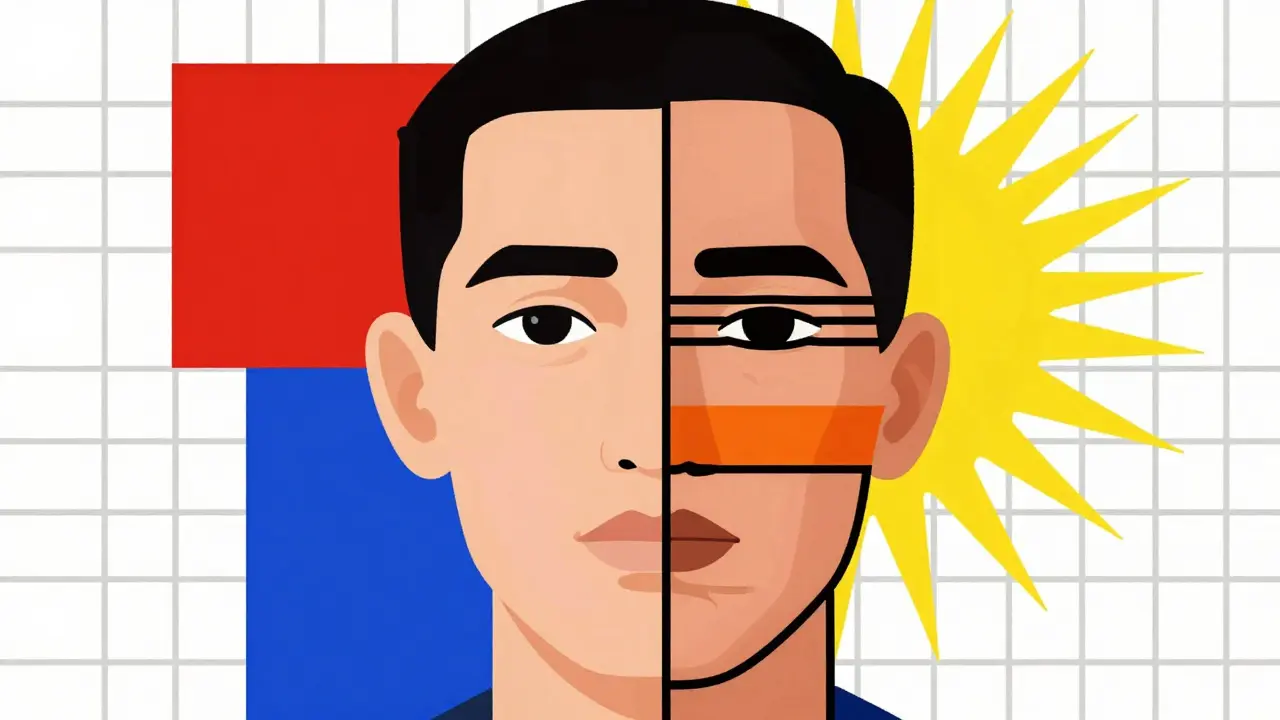
When it comes to clearing acne and reversing sun damage, few topical treatments have stood the test of time like tretinoin and adapalene. These two retinoids aren’t just popular-they’re backed by decades of clinical research, millions of users, and real-world results that don’t fade after a few weeks. But here’s the catch: most people start them wrong. They expect overnight miracles, panic when their skin peels, and quit before the real benefits begin. If you’ve ever felt confused about whether to pick Differin or Retin-A, you’re not alone. Let’s cut through the noise and show you exactly how these two work, who they’re best for, and how to use them without ruining your skin.
What Exactly Are Tretinoin and Adapalene?
Tretinoin and adapalene are both retinoids-chemical cousins of vitamin A. But they’re not the same. Tretinoin is the original prescription retinoid, first developed in the 1950s and approved for acne in 1971. It’s the gold standard for treating fine lines, dark spots, and rough texture. Adapalene, on the other hand, is a newer, synthetic retinoid created in the 1990s. It’s gentler, more stable, and since 2016, you can buy it over the counter as Differin Gel.
Both work the same way at the cellular level: they speed up skin cell turnover. Instead of dead cells piling up and clogging pores, they shed faster. That clears acne. They also boost collagen and even out pigment, which smooths wrinkles and fades sun spots. But here’s where they differ: tretinoin dives deeper into the skin, reaching the dermis where collagen lives. Adapalene mostly works on the surface layer-the epidermis. That’s why adapalene is great for acne and mild aging, but tretinoin wins when you’re fighting deep wrinkles or stubborn hyperpigmentation.
How They Compare: Efficacy and Tolerability
Let’s talk numbers. In clinical trials, adapalene 0.1% reduces acne lesions by 69-74% in 8 weeks. That’s about the same as tretinoin 0.025%. But here’s the kicker: adapalene causes far less irritation. In one study, users on adapalene reported irritation scores of 2.1 out of 10. Those on tretinoin? 3.4. That’s nearly double.
For photoaging, tretinoin pulls ahead. After 24 weeks, 0.05% tretinoin improved fine wrinkles by 42%. Adapalene 0.3%? Only 35%. The same pattern holds for dark spots: tretinoin improved mottled pigmentation by 58% after 48 weeks. Adapalene? 47%. That gap matters if you’re over 35 and trying to undo years of sun exposure.
But it’s not just about what the studies say-it’s about what people experience. On Reddit, 68% of users who tried both said they preferred adapalene to start with. Why? Less purging. Tretinoin often triggers a 10-14 day flare-up of breakouts. Adapalene? Usually 3-7 days. One user wrote: “I stopped tretinoin after two weeks because my face looked like a volcano. Switched to Differin. Clear skin in 8 weeks. Only dry on two nights a week.”
Still, many users who started with adapalene for acne eventually switched to tretinoin. Why? They hit a plateau. “Differin cleared my acne,” one Amazon reviewer said, “but didn’t touch my wrinkles. Retin-A Micro showed real improvement after five months.”
Who Should Use Which?
There’s no one-size-fits-all answer. But dermatologists have clear guidelines.
If you’re new to retinoids and have sensitive, dry, or reactive skin-start with adapalene 0.1%. It’s the safest entry point. It’s stable in light, so you can use it in the morning if you want (though most still apply it at night). It doesn’t break down as easily as tretinoin, so you don’t need fancy packaging. It’s also cheaper: $15 for a tube at the drugstore versus $45+ for a prescription tretinoin tube.
If you’ve used retinoids before and your skin handles them well-or if you’re over 35 and want to target wrinkles, sun spots, or thickened skin-tretinoin is still the top choice. Newer formulations like Altreno (a 0.05% tretinoin lotion) are much gentler than old-school creams. They release the active ingredient slowly, reducing redness and peeling. In one trial, Altreno caused 35% less irritation than standard tretinoin, with the same results.
For moderate to severe acne, combining adapalene with benzoyl peroxide (like in Epiduo) gives better results than either alone. One 2023 study showed 81% acne clearance at 12 weeks with the combo versus 67% with adapalene alone.
And if you have oily, acne-prone skin under 25? Adapalene is your friend. If you’re dealing with deep wrinkles, uneven tone, or skin that looks tired and thin? Tretinoin is your best bet.
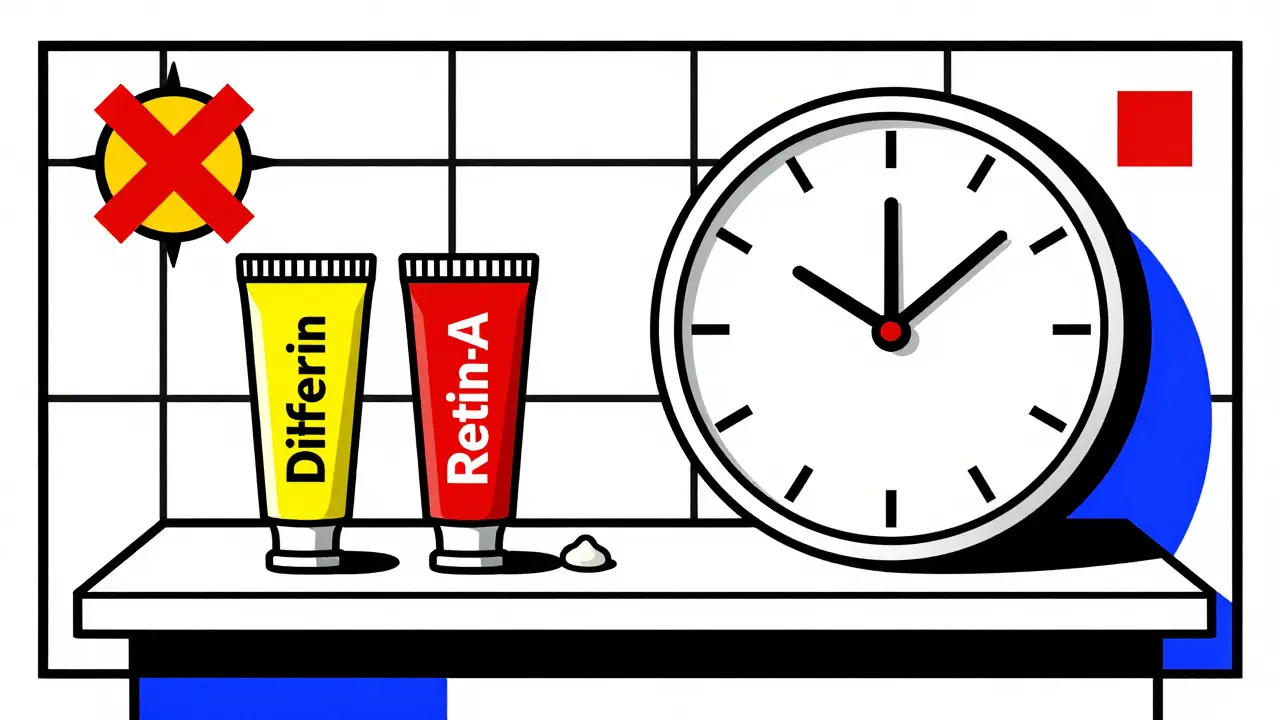
How to Use Them Without Irritating Your Skin
The biggest reason people quit retinoids? They don’t know how to start.
Here’s the routine that works for 87% of users who stick with it:
- Wash your face with a gentle cleanser. Pat dry. Wait 20 minutes. Your skin must be completely dry.
- Use a pea-sized amount for your whole face. More doesn’t mean better-it means more irritation.
- Apply it 2-3 nights a week at first. Don’t go daily. Let your skin adjust.
- Use the “sandwich method”: moisturizer, then retinoid, then moisturizer again. This cuts irritation by nearly half.
- After 2-4 weeks, if your skin feels okay, add a fourth night. By week 8, most can use it nightly.
- Every single day, wear SPF 30+. Retinoids make your skin burn easier. Skip sunscreen, and you’ll get worse sun damage.
Expect some dryness, flaking, and maybe a few more breakouts in the first 2-6 weeks. That’s called “retinization.” It’s not an allergic reaction. It’s your skin remodeling. If you stop now, you’ll never see the results.
Cost, Availability, and What’s New
Adapalene 0.1% (Differin Gel) costs about $15 without insurance. Tretinoin? Around $45. But if you have insurance, tretinoin often drops to $10-20. That’s a big deal for long-term use.
There’s a new player: Altreno, a 0.05% tretinoin lotion. It’s less irritating, easier to apply, and FDA-approved for both acne and aging. It’s not cheap, but it’s changing the game for people who couldn’t tolerate older tretinoin formulas.
And the future? Personalized retinoid therapy. Researchers are studying genetic markers that predict who responds best to adapalene versus tretinoin. In five years, your dermatologist might run a quick test and say, “You’re a tretinoin person,” or “Stick with adapalene.”

Common Mistakes (And How to Avoid Them)
Here’s what goes wrong-and how to fix it:
- Mistake: Using it during the day. Fix: Apply at night. Even adapalene is more effective and safer when used after dark.
- Mistake: Applying too much. Fix: Pea-sized for the whole face. That’s it.
- Mistake: Using with harsh scrubs or acids. Fix: Wait until your skin adjusts. Then add AHAs or BHAs slowly.
- Mistake: Quitting after 4 weeks. Fix: Give it 12 weeks. Real results take time.
- Mistake: Not using sunscreen. Fix: Non-negotiable. Daily SPF 30+.
One study found 43% of OTC adapalene users applied it wrong-either too much, too often, or during the day. That’s why so many quit. You don’t need to be perfect. You just need to be consistent.
Final Thoughts: Start Smart, Stay Patient
Tretinoin and adapalene aren’t magic. But they’re the closest thing we have. Adapalene is the gentle on-ramp. Tretinoin is the highway to visible anti-aging results. You don’t need to pick one forever. Many people start with adapalene, build tolerance, then switch to tretinoin. Others stick with adapalene for years and get excellent results.
The key isn’t which one you choose-it’s that you stick with it. Most people give up before the real transformation begins. If you can push through the first two months, your skin will thank you for years.
Can I use adapalene and tretinoin together?
No. Using both at the same time increases irritation without improving results. Choose one and stick with it. If you want to switch, wait at least 2-4 weeks after stopping one before starting the other.
Is adapalene strong enough for acne scars?
Adapalene helps with red and brown marks left by acne, but it won’t fix deep, pitted scars. For those, you need procedures like microneedling or laser. Adapalene can improve skin texture and prevent new scars, but not repair old ones.
Can I use retinoids if I’m pregnant?
No. Both tretinoin and adapalene are Category C drugs, meaning they could harm a developing fetus. If you’re pregnant, planning to get pregnant, or breastfeeding, avoid these products. Talk to your doctor about safer alternatives like azelaic acid or niacinamide.
How long until I see results?
You’ll notice less oil and fewer new breakouts in 4-6 weeks. But real improvement-clearer skin, faded spots, smoother texture-takes 3-6 months. For wrinkles and deep sun damage, expect 6-12 months of consistent use.
Why does my skin get worse before it gets better?
That’s called purging. Retinoids speed up cell turnover, bringing hidden clogs to the surface faster. It looks like a breakout, but it’s your skin clearing out old debris. It usually lasts 2-6 weeks. If it lasts longer or feels like an allergic reaction (itching, swelling), stop and see a dermatologist.
Can I use adapalene every night right away?
Not if you’re new to retinoids. Start with 2-3 nights a week. Wait until your skin feels comfortable-no redness, peeling, or stinging-before increasing frequency. Rushing leads to irritation and quitting.



Himanshu Singh
January 24, 2026 AT 08:19Husain Atther
January 25, 2026 AT 18:21Don Foster
January 26, 2026 AT 16:22Josh McEvoy
January 26, 2026 AT 23:36Tiffany Wagner
January 28, 2026 AT 14:28Chloe Hadland
January 28, 2026 AT 17:44Amelia Williams
January 29, 2026 AT 11:29Viola Li
January 30, 2026 AT 00:20Jenna Allison
January 31, 2026 AT 03:52Vatsal Patel
February 1, 2026 AT 02:21