
Medication Risk Checker
Medication Risk Checker
Enter the name of your medication to see if it's associated with psychosis symptoms and what to do in an emergency.
Imagine taking a pill for a common condition-maybe steroids for inflammation, an antimalarial for travel, or even an antidepressant-and suddenly, you’re convinced someone is watching you through the walls. You hear voices no one else can hear. Your thoughts race, or worse, they vanish. You can’t tell what’s real anymore. This isn’t science fiction. It’s medication-induced psychosis, and it’s happening more often than most people realize.
Unlike schizophrenia or bipolar disorder, this isn’t a lifelong mental illness. It’s a reaction. A chemical glitch. A side effect gone wrong. And if you or someone you care about is experiencing it, time matters. The sooner you stop the drug and get help, the faster the symptoms fade. But if you mistake it for a mental breakdown and start long-term antipsychotics, you could be making things worse.
What Exactly Is Medication-Induced Psychosis?
Medication-induced psychosis (also called substance-induced psychotic disorder) happens when a drug-prescription, over-the-counter, or even illegal-triggers psychotic symptoms. These include:
- Delusions: False beliefs that don’t match reality, like thinking you’re being followed or that your phone is bugged
- Hallucinations: Seeing, hearing, smelling, or feeling things that aren’t there-most often voices or shadowy figures
- Disorganized speech: Jumping from topic to topic, or saying things that don’t make sense
- Severe confusion or memory loss
- Aggression, paranoia, or extreme anxiety
The DSM-5, the standard guide used by psychiatrists worldwide, says these symptoms must appear during or within one month of taking the drug or withdrawing from it. If they last longer than that, doctors need to check for an underlying condition like schizophrenia.
Here’s the key point: it’s temporary. Most people recover fully once the drug is stopped. But that only happens if someone recognizes it for what it is.
Which Medications Can Trigger This?
You might think only street drugs like meth or cocaine cause psychosis. But prescription meds are the biggest offenders-and they’re everywhere.
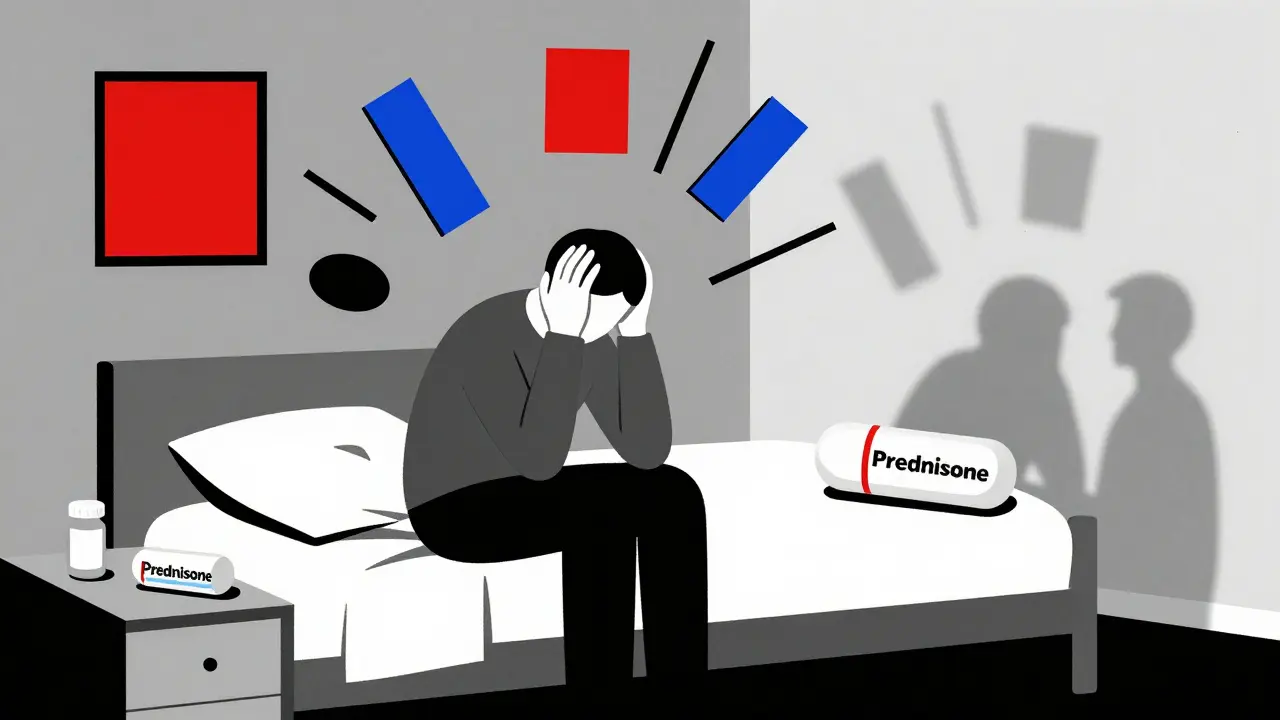
Corticosteroids (like prednisone) are the most common. About 5.7% of people on high doses develop psychosis. That’s nearly 1 in 17. Symptoms often show up as mood swings first-irritability, insomnia-before full-blown hallucinations.
Antimalarials, especially mefloquine, have been linked to over 1,200 documented psychosis cases since the 1980s. Travelers taking it for malaria prevention have reported paranoid delusions and vivid nightmares.
Antiretrovirals like efavirenz (used for HIV) cause psychiatric side effects in about 2.3% of users. The FDA requires warning labels because psychosis can appear weeks after starting the drug.
Antidepressants-yes, even SSRIs like fluoxetine or sertraline-can trigger psychosis in rare cases, especially in people with undiagnosed bipolar disorder.
Other culprits include:
- Antihistamines like diphenhydramine (Benadryl) when taken in high doses
- Beta-blockers and ACE inhibitors (heart meds)
- Levodopa (for Parkinson’s)
- Chemotherapy drugs
- Stimulants like methylphenidate (Ritalin)
- High-dose NSAIDs like ibuprofen
And don’t forget withdrawal. Quitting alcohol, benzodiazepines, or even caffeine too fast can trigger hallucinations and paranoia. Alcohol withdrawal psychosis can turn into delirium tremens-life-threatening if not treated.
Who’s at Risk?
Not everyone who takes these drugs gets psychosis. But some people are far more vulnerable.
- People with a personal or family history of mental illness
- Women (studies show higher rates in females across most drug classes)
- Those with existing substance use disorders-62% of first-episode psychosis cases involve active drug or alcohol abuse
- Older adults, especially those on multiple medications
- People with brain injuries or neurological conditions
One study found that 74% of patients hospitalized for first-time psychosis had a history of substance use. That doesn’t mean they’re “addicts.” It means their brains are more sensitive to chemical changes.

Emergency Management: What to Do Right Now
If someone is experiencing psychosis from medication, here’s what works:
- Stop the drug-immediately. Don’t wait for a doctor’s appointment. Call your prescriber or go to the ER. This is the single most effective step.
- Don’t try to reason with them. If they believe the police are after them, arguing won’t help. Stay calm. Keep the environment quiet. Remove sharp objects. Don’t restrain unless they’re in immediate danger.
- Call emergency services if there’s any risk of harm to self or others. In Australia, dial 000. Paramedics can safely transport the person to hospital.
- At the hospital, doctors will check vital signs, do blood tests (to rule out infection or metabolic issues), and monitor for seizures or heart problems, especially with stimulant overdoses.
- Antipsychotics may be used short-term-drugs like olanzapine or quetiapine. But they’re not a cure. They’re a bridge. The real treatment is removing the trigger.
- For withdrawal cases (alcohol, benzos), doctors use controlled tapering with benzodiazepines to prevent seizures or delirium.
Most patients improve within days. Steroid-induced psychosis usually clears in 4-6 weeks. Cocaine-induced symptoms often vanish in 24-72 hours. But if hallucinations or delusions stick around past a month, it’s a red flag-something else might be going on.
Why This Gets Missed
A 2019 study found that only 38% of primary care doctors felt confident diagnosing medication-induced psychosis. Why?
- It looks like schizophrenia
- Doctors don’t ask about recent medication changes
- Patients don’t mention OTC drugs or supplements
- Psychosis is assumed to be “mental illness,” not a drug side effect
That’s dangerous. If someone is misdiagnosed with schizophrenia and put on lifelong antipsychotics, they’re exposed to weight gain, diabetes, tremors, and emotional numbness-all for a problem that would’ve gone away on its own.

Prevention and What Patients Should Know
Here’s what you can do:
- Always tell your doctor about every medication, supplement, and herbal remedy you take-even if you think it’s harmless
- If you’re starting a new drug with known psychiatric risks (steroids, efavirenz, mefloquine), ask: “Could this cause hallucinations or paranoia?”
- Keep a symptom diary: note mood changes, sleep, confusion, or unusual thoughts in the first 2 weeks
- Never stop a medication suddenly without medical advice-especially benzos or antidepressants
- If a loved one shows sudden personality changes after a new drug, assume it’s drug-induced until proven otherwise
The FDA requires warning labels on drugs like efavirenz and mefloquine. Read them. If the label says “contact your doctor if you feel depressed or paranoid,” don’t ignore it.
What Happens After Recovery?
Most people bounce back completely. But follow-up is critical. Doctors recommend psychiatric check-ins for at least 3 months after symptoms resolve. Why? Because sometimes, the drug didn’t cause psychosis-it revealed it. A hidden condition may have been waiting to surface.
That’s why doctors don’t just say, “You’re fine.” They watch. They monitor. They ask: “Did the symptoms return when you tried a similar drug later?”
If they did, that’s a clue. The person might have a genetic vulnerability. Future treatments can avoid those triggers.
There’s even emerging research into genetic markers that predict who’s at risk. In the next 5 years, we may see blood tests that flag high-risk patients before they even start a drug.
Final Thought: Don’t Panic. Act.
Medication-induced psychosis sounds scary. And it is-if ignored. But it’s also one of the most treatable forms of psychosis. No brain damage. No lifelong diagnosis. Just a drug that didn’t agree with your chemistry.
The biggest mistake? Waiting. Hoping it’ll go away. Blaming stress. Assuming it’s “all in your head.”
The right move? Stop the drug. Get help. Talk to a doctor. And remember: you’re not crazy. Your brain is just reacting to something it shouldn’t have been exposed to.
And that’s fixable.

Stephanie Paluch
March 11, 2026 AT 20:05tynece roberts
March 13, 2026 AT 01:02Hugh Breen
March 13, 2026 AT 07:04Dylan Patrick
March 13, 2026 AT 17:09Kathy Leslie
March 15, 2026 AT 14:35Amisha Patel
March 16, 2026 AT 19:48Elsa Rodriguez
March 18, 2026 AT 06:14Serena Petrie
March 19, 2026 AT 11:36Buddy Nataatmadja
March 20, 2026 AT 14:53Shruti Chaturvedi
March 20, 2026 AT 23:51Scott Smith
March 22, 2026 AT 20:04Sally Lloyd
March 23, 2026 AT 09:36Emma Deasy
March 24, 2026 AT 07:12tamilan Nadar
March 25, 2026 AT 23:02mir yasir
March 27, 2026 AT 04:39