
Slow Titration Schedule Calculator
Calculate Your Titration Schedule
Your Slow Titration Schedule
Starting a new medication can feel overwhelming. You’ve been told it will help, but you’ve also heard about the side effects-nausea, dizziness, fatigue, or worse. What if you didn’t have to suffer through them right away? That’s where slow up-titration comes in. Instead of jumping straight to the full dose, your doctor starts you low and slowly increases the amount over weeks or even months. This isn’t just a cautious approach-it’s a proven strategy to help your body adjust so you can stick with the treatment and actually benefit from it.
Why Slow Up-Titration Works
Your body doesn’t handle sudden changes well, especially when it comes to powerful medications. Take GLP-1 receptor agonists like semaglutide, used for type 2 diabetes and weight loss. At full dose, up to 65% of people experience nausea, vomiting, or stomach cramps. But if you start at 0.25mg once a week for four weeks, then slowly increase over 16 to 20 weeks, those side effects drop to around 18%. That’s not magic-it’s physiology. When you introduce a drug slowly, your receptors have time to adapt. Beta-blockers, for example, work by blocking adrenaline. If you hit the system with a full dose, your heart rate plummets, blood pressure drops too fast, and you feel like you’re going to pass out. But if you start at 6.25mg twice daily and double every two to four weeks, your body learns to compensate. The same principle applies to ACE inhibitors and SGLT2 inhibitors. It’s not about delaying results-it’s about making them sustainable.How Slow Titration Looks in Real Life
Different drugs need different timelines. Here’s what it actually looks like for some common medications:- GLP-1 agonists (semaglutide, tirzepatide): Start at 0.25mg weekly for 4 weeks → 0.5mg weekly for 4 weeks → 1.0mg weekly for 4 weeks → then 2.4mg if needed. For the oral version, you start at 3mg daily for 30 days, then 7mg for 30 days, then 14mg.
- Beta-blockers (metoprolol, carvedilol): Start at 6.25mg once or twice daily, double every 2-4 weeks. Goal: reach 50-100mg daily over 8-12 weeks.
- ACE inhibitors (lisinopril, ramipril): Start at 2.5-5mg daily, increase every 1-2 weeks to target dose (10-40mg).
What Happens When You Skip the Slow Start?
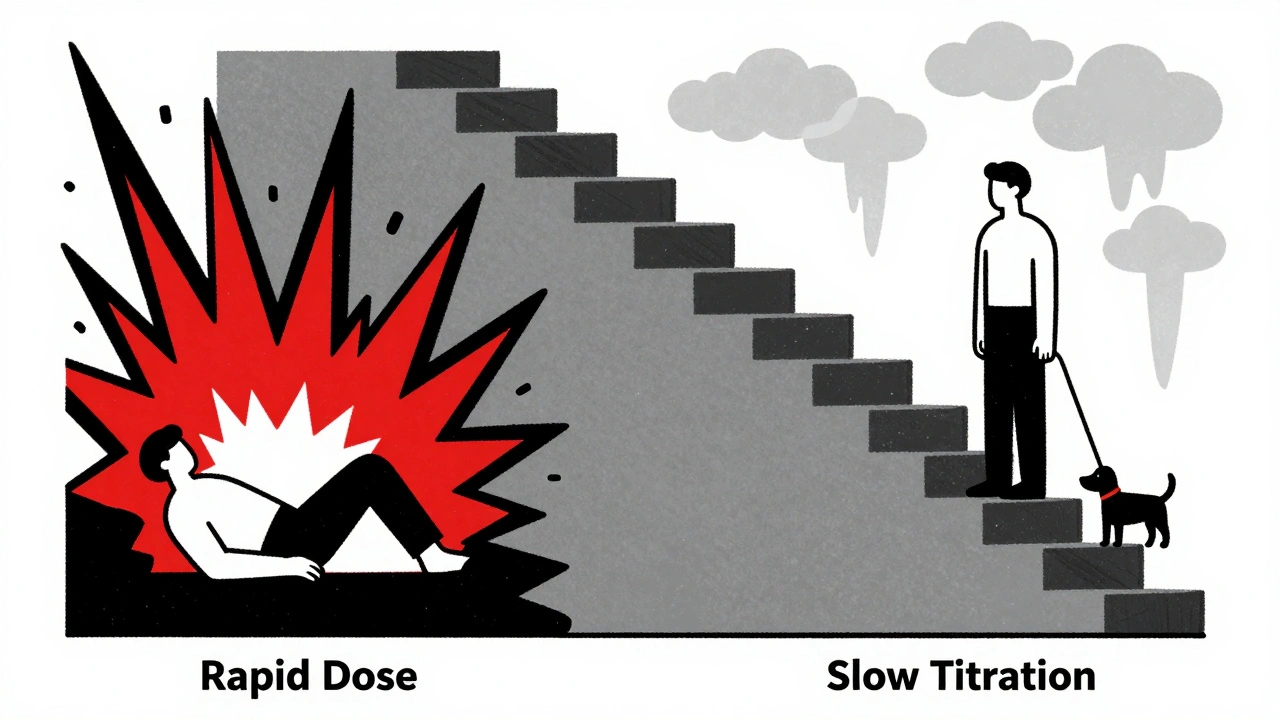
Some people think, “I’ll just jump to the full dose and get it over with.” That’s a common mistake-and it often leads to quitting. A Reddit user named u/GLP1Survivor shared their story: they tried skipping the titration on their first GLP-1 and threw up for three days straight. They stopped the medication. Later, when they followed the slow schedule, they didn’t just tolerate it-they lost 28 pounds and felt better than they had in years. Data backs this up. A 2023 analysis of over 3,700 patient reviews found that 68% of those who followed slow titration reported manageable side effects. Only 32% of those who rushed the dose did. The difference isn’t just about feeling better-it’s about staying alive. In heart failure patients, slow titration reduced severe adverse events by 52% compared to rapid escalation.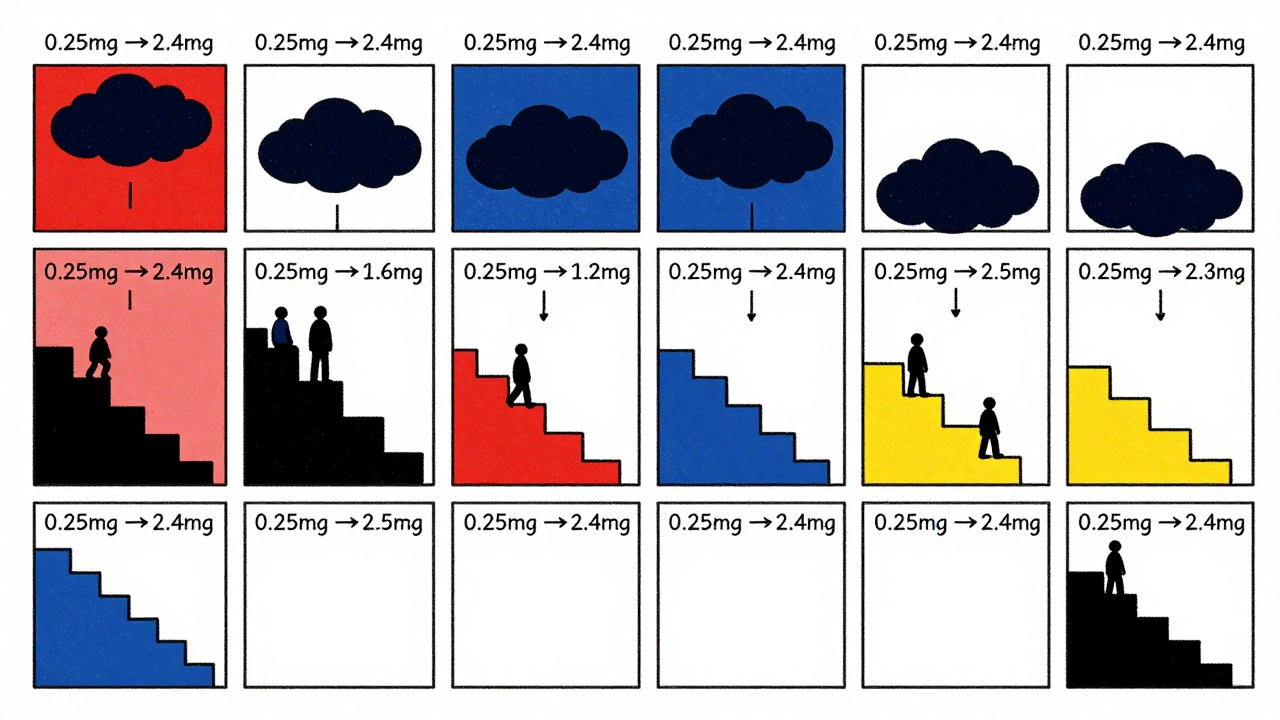
Who Benefits Most?
Slow titration isn’t for every drug or every person. It’s most critical when:- The drug has strong initial side effects (like GLP-1s causing nausea or beta-blockers causing fatigue).
- The therapeutic window is narrow (small difference between effective and toxic dose).
- The condition is chronic, not acute (like heart failure, diabetes, or high blood pressure).
The Hidden Costs: Time, Effort, and Monitoring
Slow titration isn’t easy. It requires:- Regular check-ins with your doctor (every 1-2 weeks during the first few months).
- Keeping track of multiple dose changes.
- Recognizing when side effects are normal vs. warning signs.
What to Do If Side Effects Don’t Go Away
Not all side effects fade. If nausea, dizziness, or fatigue lasts longer than two weeks at a given dose, don’t just push through. Contact your provider. That’s the 2-week rule-a simple guideline used by most cardiologists and endocrinologists. Some side effects need a different fix:- Nausea from GLP-1s: Eat smaller meals, avoid greasy food, stay hydrated.
- Dizziness from beta-blockers: Stand up slowly, check your blood pressure.
- Low energy: Give it time-your body is adjusting. If it lasts beyond 4 weeks, talk to your doctor about adjusting the dose or timing.
What’s Changing in 2025?
The field is evolving. In June 2023, the American College of Cardiology rolled out TARGET-HF, a new standardized protocol for heart failure titration that includes biweekly telehealth visits. Digital tools are getting smarter. Verily and Novo Nordisk are testing AI models that predict your tolerance based on your genetics, age, and baseline symptoms. Early results show they can predict side effect risk 28% better than standard methods. Meanwhile, some trials are challenging old assumptions. The 2023 DIAMOND trial found that for SGLT2 inhibitors like empagliflozin, starting at full dose was just as safe as slow titration. That could mean fewer patients will need long titration schedules for these drugs in the future. But for GLP-1 agonists, beta-blockers, and ACE inhibitors? Slow titration remains the gold standard. It’s not about being slow-it’s about being smart.Real Success Story
A 68-year-old man in Sydney with advanced heart failure was in NYHA Class III-he couldn’t walk to the mailbox without getting winded. He started on four medications: an ACE inhibitor, a beta-blocker, an SGLT2 inhibitor, and a mineralocorticoid receptor antagonist. Each one was started at the lowest possible dose and increased every 2-4 weeks. He had weekly telehealth check-ins. He tracked his symptoms in a notebook. After five months, he was at full dose. His energy returned. He could walk his dog again. His doctor called it a Class I recovery. He didn’t get there by rushing. He got there by sticking with the plan.Final Thoughts
Slow up-titration isn’t a delay tactic. It’s a survival strategy. It’s how you turn a medication that feels like a burden into one that transforms your life. The goal isn’t to get to the highest dose as fast as possible-it’s to get to the right dose and stay on it for life. If you’re starting a new medication and your doctor suggests a slow titration, don’t see it as a hurdle. See it as your best chance to actually stick with it-and finally feel better.Why can’t I just start at the full dose to get results faster?
Starting at full dose might seem faster, but it often leads to severe side effects that make you quit the medication entirely. For drugs like GLP-1 agonists or beta-blockers, the body needs time to adapt. Studies show that slow titration increases adherence by 37% and reduces severe side effects by over 50%. Getting to the right dose slowly means you’re more likely to stay on the medication long-term-and that’s what actually improves your health.
How long does slow titration usually take?
It depends on the drug. GLP-1 agonists like semaglutide take 16-20 weeks to reach the highest dose. Beta-blockers and ACE inhibitors usually take 8-12 weeks. Some medications, like metformin, can be started at full dose. The timeline is designed based on how your body processes the drug and how strong the side effects are. Patience is key-rushing can backfire.
What if I miss a dose during titration?
If you miss one dose, don’t double up. Just take your next dose at the regular time. If you miss several doses in a row, contact your doctor before restarting. Going back to a higher dose too soon can trigger side effects. Your provider may recommend restarting at the previous dose to give your body time to readjust.
Are there medications that don’t need slow titration?
Yes. Some drugs, like SGLT2 inhibitors (e.g., empagliflozin) and metformin, are safe to start at full dose because they have a wide safety margin and mild side effects. For others-like GLP-1 agonists, beta-blockers, and ACE inhibitors-slow titration is essential. Always follow your provider’s guidance, even if another drug you’ve taken didn’t require it.
Can I use apps to help with titration schedules?
Absolutely. Apps like Medisafe, MyTherapy, and Omada Health’s titration programs send reminders, track your doses, and let you log symptoms. One study showed patients using these tools had 18% higher adherence. They’re especially helpful if you’re managing multiple medications or have trouble remembering dose changes.
How do I know if my side effects are normal or a red flag?
Mild nausea, fatigue, or dizziness in the first 1-2 weeks at a new dose is usually normal. But if symptoms are severe, last longer than two weeks, or include chest pain, fainting, swelling in your legs, or trouble breathing, contact your doctor immediately. The 2-week rule is a good guide: if it hasn’t improved by then, don’t wait-call your provider.



Taya Rtichsheva
December 8, 2025 AT 04:50Christian Landry
December 10, 2025 AT 00:49Katie Harrison
December 10, 2025 AT 17:24Mona Schmidt
December 12, 2025 AT 14:51Arun Kumar Raut
December 13, 2025 AT 01:21Lisa Whitesel
December 14, 2025 AT 05:10Angela R. Cartes
December 16, 2025 AT 04:57precious amzy
December 17, 2025 AT 16:57Andrea Beilstein
December 18, 2025 AT 00:09Guylaine Lapointe
December 19, 2025 AT 15:59Carina M
December 20, 2025 AT 05:26