

Switching from a brand-name drug to a generic version seems simple-same active ingredient, lower cost, right? But for some medications, that switch isn’t as straightforward as it looks. For patients taking drugs with a narrow therapeutic index (NTI), even tiny differences in how the body absorbs the generic version can mean the difference between control and crisis. That’s when doctors don’t just refill the prescription-they adjust the dose.
What Makes a Drug "Narrow Therapeutic Index"?
NTI drugs are the high-stakes ones. A little too much, and you risk toxicity. A little too little, and the treatment fails. There’s almost no room for error. Common examples include warfarin (a blood thinner), levothyroxine (for thyroid function), phenytoin and carbamazepine (for seizures), tacrolimus and cyclosporine (for transplant patients), and digoxin (for heart rhythm).
These drugs aren’t just sensitive-they’re finicky. Their therapeutic window is so tight that a 10-20% change in blood levels can trigger serious side effects. For instance, warfarin’s target INR range is usually 2.0-3.0. Go above 4.0? Risk of dangerous bleeding. Drop below 1.5? Clots can form. That’s why doctors don’t just trust the label when switching generics-they watch the numbers.
Why Do Generics Sometimes Need Dose Changes?
By law, generic drugs must be bioequivalent to the brand version. That means their absorption rate must fall within 80-125% of the original. Sounds fair? For most drugs, yes. But for NTI drugs, that range is too wide. A 25% difference in absorption might be statistically acceptable, but clinically, it’s a problem.
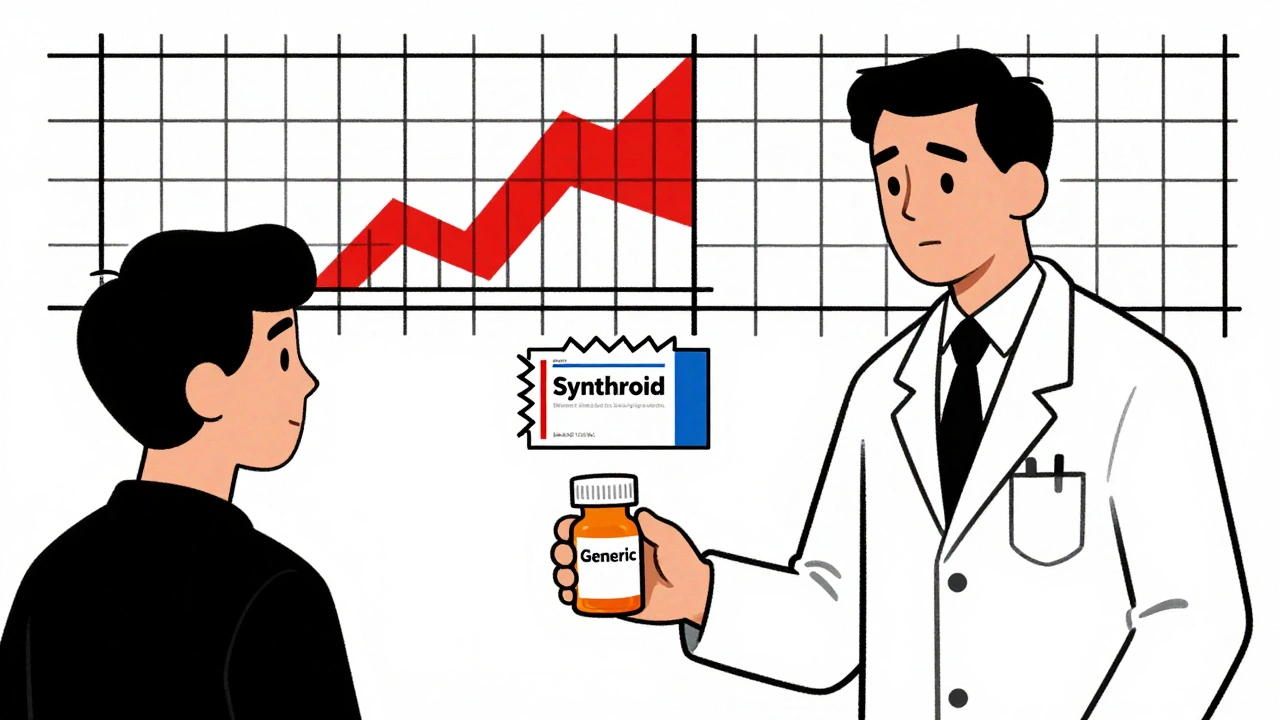
Take levothyroxine. A patient stabilized on 75 mcg of Synthroid might switch to a generic version. Their TSH level stays normal for a while-then slowly creeps up. Fatigue returns. Weight gain follows. The doctor increases the dose by 12.5 mcg. Why? Because even though both are labeled "75 mcg," the generic formulation may have slightly different fillers, coatings, or manufacturing processes that affect how quickly it dissolves in the gut. For thyroid hormones, that small delay can throw off the whole system.
Studies back this up. One 2017 study found that 23% of patients switching between different generic warfarin products needed a dose adjustment within 30 days. Another showed 18.7% of transplant patients on generic tacrolimus required dose changes within two weeks, compared to just 5.2% who stayed on the same brand.
Real Stories from the Clinic
Dr. Lisa Chen, an epilepsy specialist in Texas, shared a case on a medical forum: a patient had been seizure-free for two years on brand Keppra. After a pharmacy switch to a generic levetiracetam, breakthrough seizures returned within two weeks. The dose had to be increased by 15% to regain control.
On Reddit’s r/Pharmacy, a pharmacist wrote about their clinic’s data: 30-40% of patients switching warfarin generics had unstable INR levels. One elderly man had a near-fatal bleed after his pharmacy switched him to a cheaper generic without telling his doctor. He hadn’t had his INR checked in six weeks-until he ended up in the ER.
But it’s not always dramatic. Some patients switch with zero issues. One woman on a health forum said her doctor switched her from Synthroid to generic levothyroxine, and her TSH stayed perfectly normal. No symptoms. No dose change. That’s the problem-it’s unpredictable. You can’t know until you watch.
When Should Doses Be Adjusted?
There’s no universal rule. But here’s what most experts agree on:
- For warfarin: Check INR within 7-14 days after switching. Adjust if INR changes by more than 10% from baseline.
- For levothyroxine: Check TSH at 6-8 weeks. If it’s outside the target range, adjust dose in 12.5-25 mcg increments.
- For antiepileptics: Monitor serum levels within 2 weeks. Adjust if levels drop more than 20% from pre-switch steady state.
- For tacrolimus or cyclosporine: Check blood levels at day 3, day 7, and day 14 after switch. Even small changes can trigger organ rejection.
These aren’t guesses. They’re based on hospital protocols. The University of Florida Health System, for example, requires INR checks within two weeks of any warfarin switch. Many academic medical centers now have automated alerts in their electronic systems that pop up when a patient on an NTI drug gets a generic refill.
Why Don’t All Doctors Adjust Doses?
Because not all patients need it. And because the system pushes for cost savings.
The FDA maintains that generics are safe and effective. Most patients do fine. A 2021 survey by the Generic Pharmaceutical Association found only 12.7% of prescribers reported frequently needing dose adjustments. But that number doesn’t reflect the patients who slipped through the cracks.
Insurance companies often force switches to the cheapest generic available-even if the patient was stable. Pharmacists may change the product without telling the doctor. A 2022 survey found 43.7% of hospital pharmacists had trouble keeping patients on the same generic brand because payers kept changing preferred products.
Doctors are caught in the middle. They know the risks, but they’re pressured to keep costs down. Many assume the generic is identical-until something goes wrong.

What Can Patients Do?
If you’re on an NTI drug, here’s what you can do:
- Ask your doctor: "Is this a narrow therapeutic index drug?" If yes, ask to stay on the same formulation unless there’s a strong reason to switch.
- Check your prescription label. Is the manufacturer name listed? Keep track of it. If it changes, notify your doctor.
- Don’t skip follow-up blood tests. Even if you feel fine, levels can drift.
- Keep a symptom journal. Fatigue, headaches, dizziness, mood swings-these can be early signs your dose needs tweaking.
- Ask your pharmacist: "Is this the same generic I’ve been taking?" If not, ask if they can hold the original one.
Some pharmacies now offer "medication synchronization" programs where they keep you on the same generic version each refill. Ask if yours does.
The Future: Tighter Standards and Better Generics
The FDA is starting to listen. In 2023, they proposed new guidelines requiring stricter bioequivalence standards for NTI drugs-tightening the acceptable range from 80-125% to 90-111%. That’s a big deal. It means future generics for warfarin, levothyroxine, and others will have to be much more consistent.
Some manufacturers are already ahead of the curve. Teva’s "TacroBell" tacrolimus, for example, shows 32% less variability between doses than standard generics. These "supergenerics" are more expensive, but they’re worth it for high-risk patients.
By 2028, experts predict a 17% annual growth in these higher-quality NTI generics. The goal? To make switching safe enough that dose adjustments become the exception, not the rule.
For now, though, the message is clear: don’t assume. If you’re on a critical medication, stay involved. Your dose isn’t just a number-it’s your safety.
Do all generic drugs need dose adjustments after switching?
No. Only drugs with a narrow therapeutic index (NTI) require close monitoring. Most medications-like statins, antibiotics, or blood pressure pills-can be switched without issue. But for drugs like warfarin, levothyroxine, phenytoin, and tacrolimus, even small changes in absorption can affect safety and effectiveness.
Can I ask my doctor to keep me on the same generic brand?
Yes. You have the right to request a specific formulation, especially if you’ve been stable on it. Some insurance plans may require prior authorization, but many will approve it if your doctor documents that switching caused problems in the past. Keep records of any symptoms or lab changes after a switch to support your request.
Why does my pharmacy keep changing my generic medication?
Insurance companies often switch the preferred generic to the cheapest option available each month. This is done to cut costs, but it can lead to multiple switches in a short time. Ask your pharmacist if they can request a "non-substitutable" designation from your insurer, or if they can fill your prescription with the same manufacturer each time.
How long should I wait before checking blood levels after switching generics?
It depends on the drug. For warfarin, check INR within 7-14 days. For levothyroxine, wait 6-8 weeks for TSH to stabilize. For antiseizure drugs and immunosuppressants, check serum levels within 1-2 weeks. Always follow your doctor’s specific instructions, but don’t wait longer than two weeks if you feel off.
Are brand-name drugs safer than generics for NTI drugs?
Not necessarily. The active ingredient is identical. But brand-name versions often have more consistent manufacturing, which can mean less variability in absorption. Some newer generics are now designed to match this consistency. The key isn’t the brand-it’s staying on the same formulation. Switching between generics can be just as risky as switching from brand to generic.
What to Do Next
If you’re on an NTI drug, don’t wait for a problem to happen. Talk to your doctor now. Ask if your medication is on the NTI list. Find out what your last lab result was. Schedule your next test. Write down the name of your current generic manufacturer. Keep a copy of your prescription label.
Small steps now can prevent big problems later. Your health isn’t a cost-saving experiment. It’s your life-and you deserve consistency.



olive ashley
December 6, 2025 AT 16:35They don't want you to know this but generics are just lab failures the FDA let through. I know a guy whose cousin's neighbor took generic warfarin and ended up in a coma. The pills look different. That's not a coincidence. Big Pharma owns the FDA. They're letting poison into your medicine cabinet because it's cheaper. Wake up.
Saketh Sai Rachapudi
December 7, 2025 AT 17:17India makes best generics in world. USA always complain. Our pharma is world class. You people dont know quality. We export to US and Europe. Why you think we cant make good medicine? You are just scared of cheap stuff. India proud of generics.
joanne humphreys
December 7, 2025 AT 17:24I switched my levothyroxine from Synthroid to a generic last year. My TSH went from 2.1 to 4.8 over three months. I didn't feel anything until I got tested. Now I stick with the same generic brand and check every 8 weeks. It's not about brand vs generic-it's about consistency. If your doctor doesn't monitor you, ask them to.
Priya Ranjan
December 9, 2025 AT 10:35People who say generics are fine are either naive or paid by Big Pharma. You think a pill made in a factory with no quality control is the same as one made under sterile conditions? Please. The fillers alone can change absorption. I've seen patients crash after switches. This isn't theory-it's daily practice in my clinic. And no, insurance doesn't care if you bleed out.
Gwyneth Agnes
December 10, 2025 AT 08:02Just check your labs. Done.
Katie O'Connell
December 10, 2025 AT 15:44It is profoundly regressive to conflate cost-efficiency with clinical equivalence in pharmacokinetic parameters. The bioequivalence threshold of 80–125% was established for non-critical therapeutics and is patently inadequate for medications governed by narrow therapeutic indices. The regulatory framework is archaic and fails to account for inter-individual variability in gastrointestinal absorption dynamics, which are demonstrably exacerbated by excipient heterogeneity in generic formulations.
One must therefore advocate for the adoption of pharmacokinetic bioequivalence models calibrated to population variance, rather than the current blunt statistical approximations that permit dangerous deviations under the guise of fiscal prudence.
Inna Borovik
December 12, 2025 AT 13:27I used to work at a hospital pharmacy. We had this one guy on tacrolimus after a kidney transplant. Switched generics twice in three months. His levels dropped 40%. He almost lost the organ. The pharmacy didn't tell the doctor. No one flagged it. The system is broken. And now they want to make it worse by forcing switches every time the price drops $0.02. This isn't healthcare. It's a casino.
Rashmi Gupta
December 14, 2025 AT 13:12Actually, most studies show no difference. The whole thing is overblown. People panic because they don't understand statistics. If your doctor says it's fine, trust them. Why do you think generics are approved at all? The FDA isn't stupid. You're just scared of saving money.
Kumar Shubhranshu
December 15, 2025 AT 03:17My uncle on phenytoin switched generics and had a seizure in his sleep. His wife found him blue. He survived. Now he only takes the brand. Insurance refused to cover it. He pays $200 a month out of pocket. You think that's fair? This isn't about money. It's about survival.
Mayur Panchamia
December 15, 2025 AT 08:20Whoa!! Wait!! Hold up!! You mean to tell me that some generic pills might not be 100% identical?!?!?!?!?!!?!!? That's... that's... UNAMERICAN!! I mean... UN-INDIAN!! I mean... UN-SCIENTIFIC!! I mean... I'M SO ANGRY I'M ABOUT TO SCREAM INTO A PILLOW!!
But seriously-this is why we need to ban ALL generics. Or at least make them glow in the dark so we know which ones are the "good ones"!!
Karen Mitchell
December 16, 2025 AT 13:20This is precisely why we need to eliminate all pharmaceutical innovation. If we simply returned to 1950s medicine, we wouldn't have these "complexities." People survived on aspirin and willow bark. Why can't they now? The obsession with precision is a modern delusion.
Nava Jothy
December 17, 2025 AT 15:51I cried when I found out my generic cyclosporine was different. I've been on it for 7 years. I felt like my body betrayed me. My hair started falling out. My hands shook. I thought I was dying. I called my doctor at 2 a.m. She said "check your levels." I did. They were half of what they should be. I'm still mad. I'm still scared. And I'm still paying $150 for the brand because I can't risk it again.
😭
brenda olvera
December 18, 2025 AT 05:59My mom switched to generic levothyroxine and felt amazing. No fatigue. No weight gain. Her TSH was perfect. I think this whole thing is being blown out of proportion. Not everyone reacts the same. Maybe the problem isn't the drug-it's the fear around change.
Myles White
December 19, 2025 AT 08:38I've been researching this for months because my sister is on carbamazepine. I looked at every study, contacted three pharmacists, and even got a copy of the FDA's bioequivalence guidelines. Turns out, the variability isn't just about the pill-it's about how it's stored, how long it sits on the shelf, the humidity in the warehouse, even the temperature during shipping. And that's before it even hits your gut. So yeah, dose adjustments aren't just about the generic vs brand-they're about the entire supply chain being a crapshoot. And no one's talking about that. We need systemic reform, not just individual vigilance.
Ibrahim Yakubu
December 20, 2025 AT 13:56In Nigeria, we don't have this problem. Our generics are made by real doctors, not corporations. We don't have insurance pushing switches. We just get what works. If it causes problems, we go to the pharmacy and say, "give me the one that worked last time." Simple. You Americans overthink everything. Your medicine is too expensive because you have too many middlemen. Cut the crap. Let people choose.