
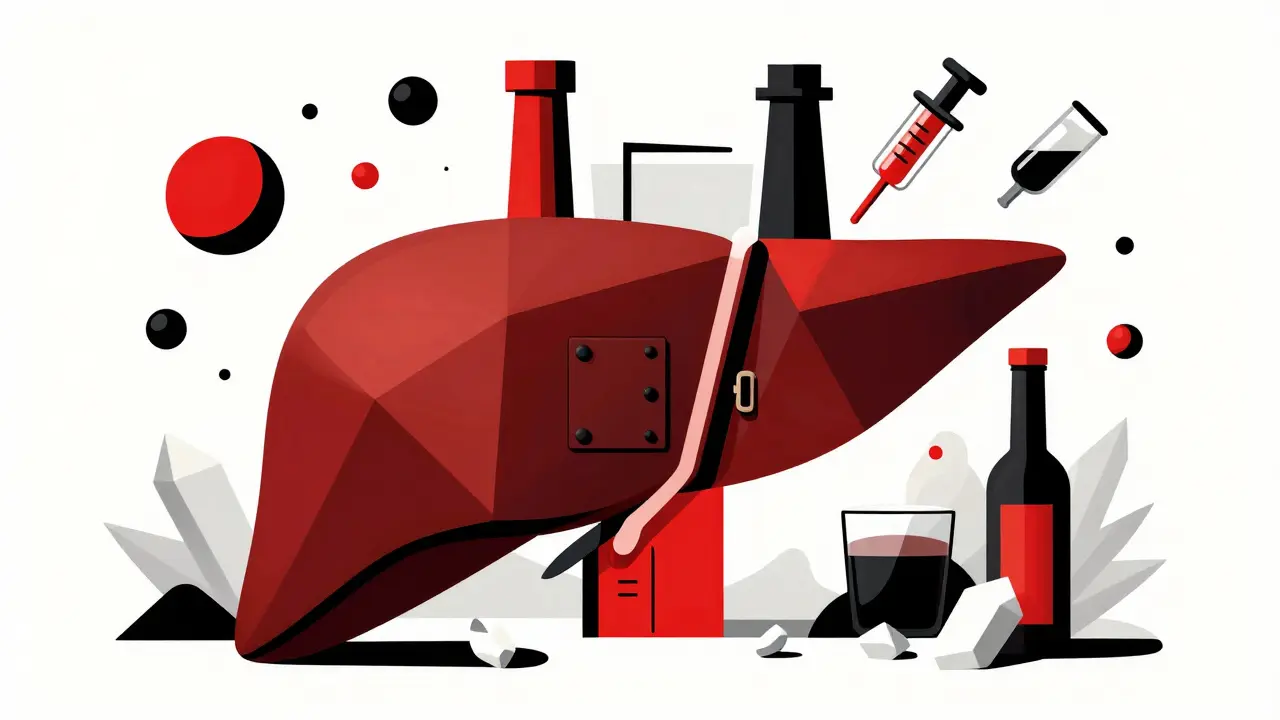
Drinking alcohol with diabetes isn’t just about counting carbs-it’s about staying alive. If you’re on insulin, sulfonylureas, or even metformin, alcohol can drop your blood sugar so low you pass out-sometimes hours after your last sip. This isn’t a myth. It’s a medical reality backed by decades of research and real hospital visits. And it’s happening to people who think they’re being careful.
Why Alcohol and Diabetes Medications Don’t Mix
Your liver is your body’s glucose factory. When your blood sugar drops, it steps in and makes more from stored glycogen or from proteins and fats. Alcohol shuts that factory down. It doesn’t just slow it down-it locks the doors. And if you’re already taking a medication that lowers blood sugar, you’re basically removing the backup generator while the power goes out.
Studies show alcohol can reduce the liver’s ability to make glucose by up to 37% for up to eight hours after drinking. That’s why someone who had a glass of wine with dinner can wake up at 3 a.m. with a blood sugar of 40 mg/dL-no warning, no sweating, no shaking. Their body can’t respond because alcohol blocked the signal.
The problem gets worse with certain medications. Sulfonylureas like glipizide and glyburide force your pancreas to pump out more insulin. Alcohol doesn’t just add to that-it multiplies it. Research shows these combinations increase hypoglycemia risk by 2.3 times. Insulin users aren’t safe either. A single drink can trigger a low that lasts 12 to 24 hours, especially if you’re active or skipped a meal.
The Hidden Danger: You Won’t Know It’s Happening
One of the scariest parts? Alcohol masks the symptoms of low blood sugar. Shaking, sweating, rapid heartbeat-those are your body’s alarms. But alcohol makes you feel shaky, sweaty, and dizzy too. So when your blood sugar crashes, you think you’re just drunk.
A 2021 study found that alcohol reduces the body’s epinephrine response to low blood sugar by 42%. That’s your body’s main defense. Without it, you don’t feel the warning. You just feel worse. And if you’re out with friends, they’ll assume you’ve had too much to drink. That’s exactly what happened to a Reddit user who passed out after tequila shots. His friends called it intoxication. His blood sugar? 42 mg/dL. He woke up in the ER.
This isn’t rare. A 2021 study in Diabetes Spectrum found that 68% of emergency visits for hypoglycemia in people under 45 involved alcohol. And 82% of those happened between midnight and 6 a.m.-when your body’s natural defenses are already low.
Which Medications Are the Riskiest?
Not all diabetes meds react the same way with alcohol. Here’s what you need to know:
- Insulin and sulfonylureas: Highest risk. These drugs push your blood sugar down. Alcohol stops your liver from bouncing it back. The combo is a recipe for a dangerous low.
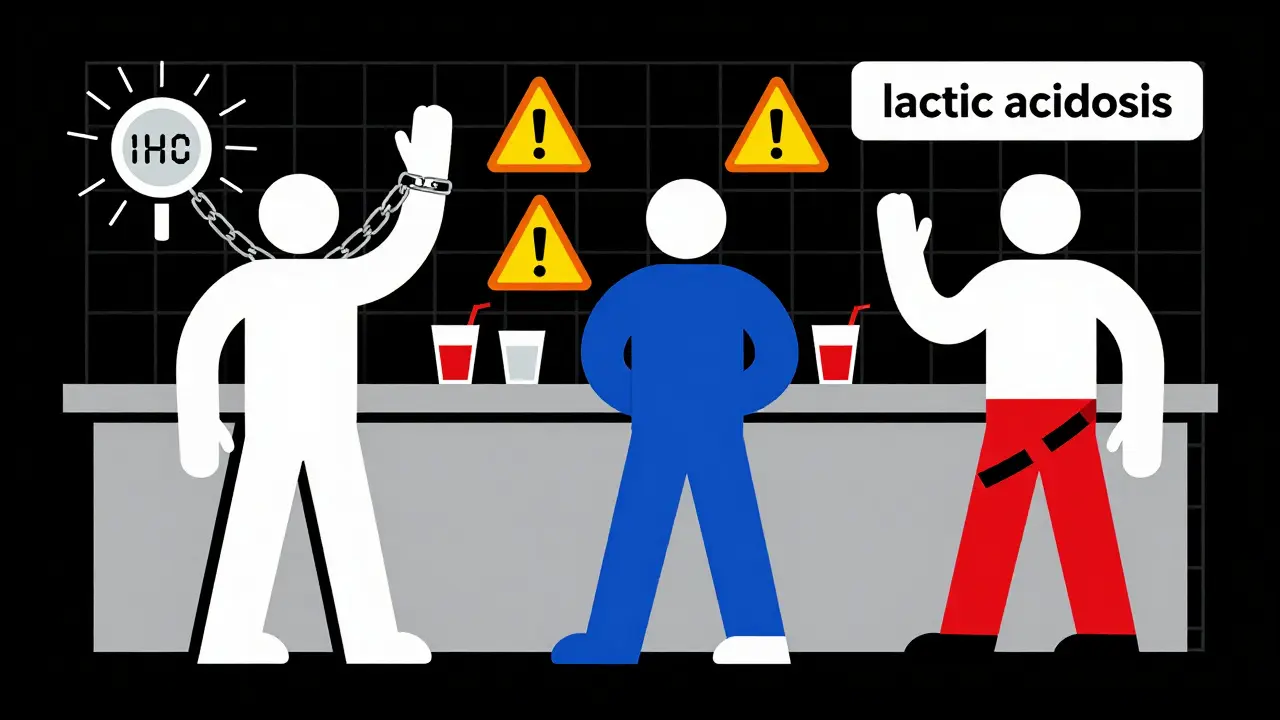
- Metformin: Less likely to cause low blood sugar on its own, but alcohol increases the risk of lactic acidosis-a rare but life-threatening condition. The FDA requires a boxed warning on metformin labels. Symptoms include nausea, muscle pain, fast heartbeat, and confusion. If you’ve had even one drink and feel this way, go to the ER.
- Chlorpropamide: An older sulfonylurea. It can cause a severe reaction with alcohol-flushing, vomiting, rapid heartbeat-even with just one drink. Many doctors don’t prescribe it anymore, but if you’re still on it, avoid alcohol completely.
- GLP-1 agonists (like Ozempic): No direct interaction with alcohol, but they can cause nausea. Alcohol makes that worse. Also, if you’re losing weight on these drugs, you might be eating less-which means less food to buffer alcohol’s effect.
What Counts as a “Safe” Drink?
There’s no such thing as a completely safe drink with diabetes meds-but there are safer choices.
Here’s what you should avoid:
- Sweet wines (like port or dessert wines): 8-14 grams of sugar per 5 oz glass
- Mixed drinks: Mojitos, margaritas, piña coladas-these can have 20-30 grams of sugar from syrups and juices
- Beer: Even light beer has 3-5 grams of carbs per 12 oz. It’s not just the alcohol-it’s the carbs too.
Here’s what’s better:
- Distilled spirits (vodka, gin, whiskey) with soda water and lime: 0 grams of sugar
- Dry wines (like Sauvignon Blanc or Pinot Noir): Under 1 gram of sugar per 5 oz
- Light beers (under 5 grams carbs): Only if you’re watching your total intake
And remember: one drink means 12 oz beer, 5 oz wine, or 1.5 oz spirits. Not a giant cocktail from a bar.
How to Drink Safely (If You Choose To)
If you’re going to drink, treat it like a medical procedure. Here’s your checklist:
- Never drink on an empty stomach. Always eat food with carbs-like whole grains, beans, or fruit. A mojito on an empty stomach is 10 times riskier than wine with dinner.
- Check your blood sugar before you start. If it’s below 100 mg/dL, eat something first.
- Check again 2 hours after drinking. And again before bed.
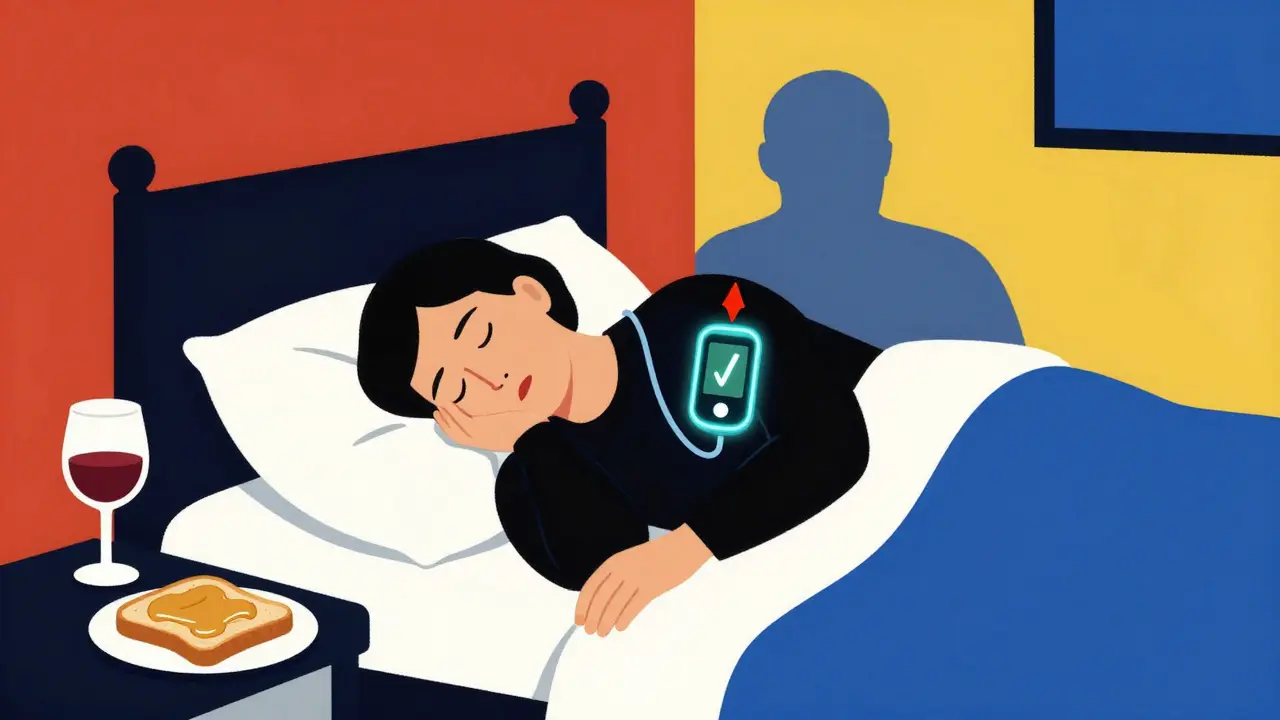
- If your blood sugar is below 100 mg/dL before bed, eat a snack. A slice of whole-grain toast with peanut butter or a small apple with cheese. This gives your liver slow-burning fuel to keep your blood sugar stable overnight.
- Wear your medical ID. If you pass out, someone needs to know you have diabetes-not that you’re just drunk.
- Tell someone you’re with. Make sure at least one person knows you have diabetes and what to do if you act confused or unresponsive.
And here’s a hard truth: Even if you follow all this, your body’s reaction to alcohol changes over time. A drink that was fine last year might drop your sugar dangerously low this year. That’s why continuous glucose monitors (CGMs) are game-changers. New models like Dexcom G7 now let you log alcohol intake, and they’ll alert you to delayed lows.
What Happens If You Ignore This?
Every year, alcohol-related hypoglycemia costs the U.S. healthcare system over $400 million. That’s emergency rides, hospital stays, glucagon kits, and ICU time. But the real cost is personal.
One user on the American Diabetes Association’s forum described three episodes where he needed glucagon because his blood sugar crashed 8 hours after two beers. He was asleep. His partner didn’t know what to do. He woke up confused, weak, and terrified.
Another survey found that 73% of people with diabetes had at least one alcohol-related low in the past year. Nearly a third needed help from someone else to treat it.
And here’s the worst part: 38% of people who had these lows didn’t recognize the symptoms because alcohol made them feel normal. They thought they were fine-until they weren’t.
What About Non-Alcoholic Drinks?
Non-alcoholic beer and wine still contain trace alcohol-usually less than 0.5%. For most people, that’s not a problem. But if you’re on insulin or sulfonylureas, even that tiny amount can add up if you’re drinking multiple servings. It’s safer to stick with sparkling water, herbal tea, or soda water with lime.
And watch out for “zero sugar” drinks that still have carbs. Some non-alcoholic beers have 10-15 grams of carbs per serving. That’s like drinking a small banana.
Final Reality Check
You don’t have to quit alcohol forever. But you do have to treat it like a medication-with rules, timing, and consequences. The American Diabetes Association says moderate drinking (one drink a day for women, two for men) can be okay-if you’re careful.
But if you’ve ever passed out, needed glucagon, or been rushed to the ER because your blood sugar crashed after a drink-you already know the stakes. No one wants to wake up in a hospital because they thought a cocktail was harmless.
Alcohol doesn’t care if you’re trying to be healthy. It doesn’t care if you’ve been managing your diabetes for 20 years. It just does one thing: blocks your liver from saving you. And if you’re on the wrong meds, that’s all it takes.
Know your meds. Know your limits. And never drink without food.
Can I drink alcohol if I have type 2 diabetes and take metformin?
You can, but with serious caution. Metformin doesn’t usually cause low blood sugar on its own, but alcohol increases the risk of lactic acidosis-a rare but dangerous condition. Symptoms include nausea, muscle pain, fast heartbeat, and confusion. The FDA requires a boxed warning on metformin labels for this reason. If you drink, limit it to one drink occasionally, always with food, and never if you’re sick, dehydrated, or have liver problems.
How long after drinking alcohol can I get low blood sugar?
It can happen anytime within 2 to 24 hours after drinking. The biggest risk is 6 to 12 hours later-often while you’re asleep. That’s why checking your blood sugar before bed and eating a snack if it’s below 100 mg/dL is critical. Alcohol’s effect on the liver can last all night, even if you feel fine.
Is red wine safer than beer for people with diabetes?
Dry red wine (like Pinot Noir) is generally safer than beer because it has fewer carbs and no added sugar-under 1 gram per 5 oz glass. Beer, even light beer, has 3-5 grams of carbs per serving and can spike blood sugar initially, then cause a delayed low. Sweet wines, however, are just as risky as cocktails due to their high sugar content.
Can I use a continuous glucose monitor (CGM) to track alcohol’s effects?
Yes. Modern CGMs like Dexcom G7 now let you log alcohol intake, and they’ll show delayed drops in your glucose trend. This is especially helpful because alcohol often causes lows hours later, when you’re not checking your blood sugar. Use the trend arrows and alerts to catch drops before they become dangerous.
Why do I feel fine after drinking but still have a low blood sugar?
Alcohol blunts your body’s natural warning signs for low blood sugar-like shaking, sweating, and a fast heartbeat. So you feel dizzy or tired, but you think it’s just the alcohol. In reality, your blood sugar may be at 50 mg/dL or lower. This is why checking your numbers is non-negotiable. Feeling fine doesn’t mean you’re safe.
Should I avoid alcohol completely if I use insulin?
You don’t have to avoid it completely, but you must be extremely careful. Insulin lowers blood sugar, and alcohol stops your liver from correcting it. That’s a dangerous combo. If you drink, always eat carbs, check your blood sugar before bed, and have a snack ready. Never drink alone. And consider talking to your doctor about adjusting your insulin dose on drinking days.

rajaneesh s rajan
January 30, 2026 AT 06:39So let me get this straight - alcohol shuts down your liver’s glucose factory like a drunk bouncer kicking out the night shift? That’s either a brilliant metaphor or the most terrifying cocktail recipe I’ve ever heard. I’ve had two beers after dinner for 15 years and never thought about my liver being locked out like it’s in a 2 a.m. club with a no-refund policy. Thanks for the wake-up call. Or should I say, the wake-up *glucagon*.
paul walker
January 31, 2026 AT 07:51OMG this is so important!! I had no idea alcohol could mess with my sugar for like 24 hours?? I thought if i didnt feel drunk then i was fine but nooo my cgm just screamed at me last week after one glass of wine. i always eat food but now im checking before bed too!! thanks for sharing!!
Frank Declemij
January 31, 2026 AT 15:38The data here is solid. Alcohol inhibits gluconeogenesis by up to 37% for up to eight hours. That’s not anecdotal. That’s pharmacokinetics. The masking of hypoglycemic symptoms is equally well documented in endocrine literature. The real issue is that most patients are never warned. Doctors assume they’ll read the pamphlet. They don’t. This post should be mandatory reading for anyone on sulfonylureas or insulin.
Pawan Kumar
February 1, 2026 AT 18:49Of course the FDA doesn’t warn you properly - they’re in bed with Big Pharma and Big Alcohol. You think they want you to know that your metformin turns your liver into a passive bystander while your whiskey burns the emergency exits? The real danger is the silence. The cover-up. The pharmaceutical-industrial complex letting you die quietly so they keep selling you pills and cocktails.
DHARMAN CHELLANI
February 3, 2026 AT 00:29Stop drinking. Just stop. You think you’re smart? You’re not. You’re just a walking hypoglycemia waiting to happen. One drink = one trip to the ER. Done.
kabir das
February 4, 2026 AT 16:27Oh my god, oh my god, oh my god… I just realized… I had a glass of wine last night… and I didn’t check my glucose before bed… and I woke up at 3 a.m. feeling dizzy… and I thought it was just stress… but what if… what if… what if… I almost died?!!?!?!!? I need to call my doctor right now… I’m shaking… I’m sweating… I think I’m going into a low right now… HELP!!
Laia Freeman
February 5, 2026 AT 23:09YESSSS this is the truth!! I use a dexcom and i log every drink now - it’s wild how the graph drops 6 hours later like a rollercoaster going off the rails. I used to think i was being responsible with dry wine but now i eat peanut butter toast before bed like it’s my job. Also - wear your medical id. i did once and a stranger saved me. you never know.
Alex Flores Gomez
February 7, 2026 AT 08:34Look, if you're gonna drink, at least do it right. You think you're being cool sipping a mojito on an empty stomach? That's not lifestyle, that's negligence. I've seen three people in the ER because they thought 'zero sugar' meant 'zero risk.' Spoiler: it doesn't. Your liver doesn't care about marketing. It cares about survival. And if you're not treating alcohol like a controlled substance, you're not managing your diabetes - you're gambling with it.