
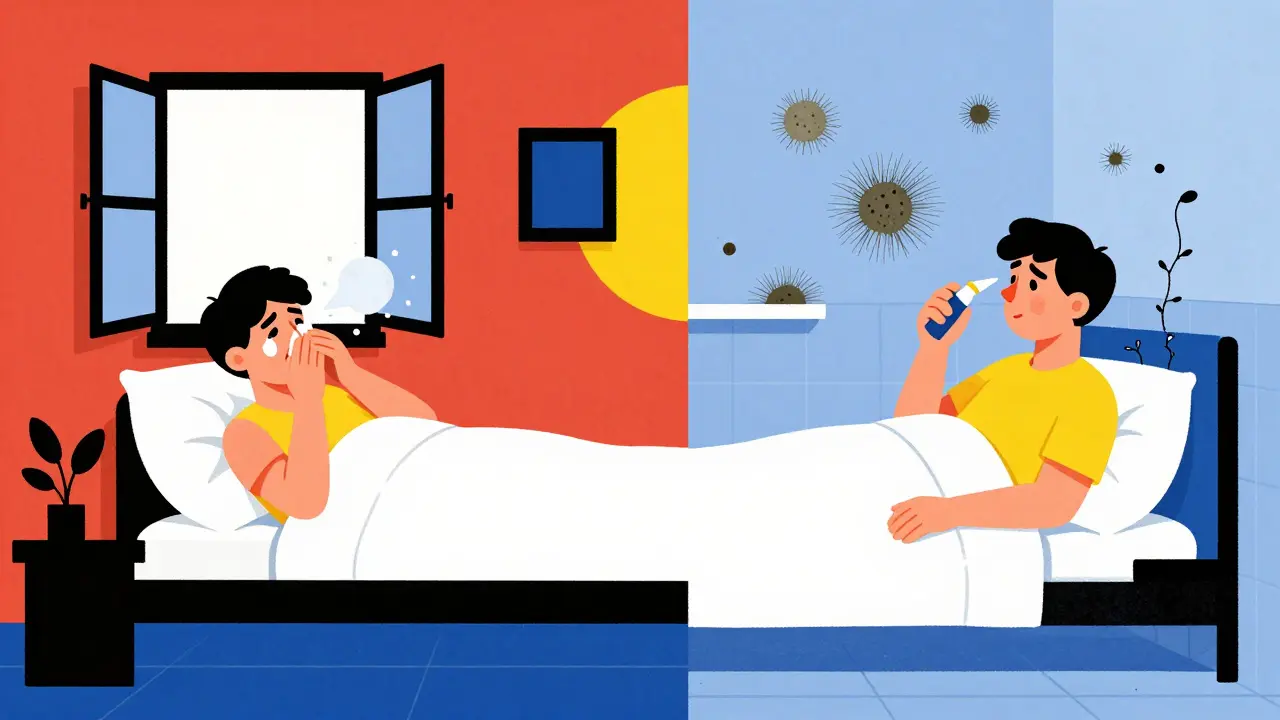
If you’ve ever woken up with a runny nose, itchy eyes, and constant sneezing - especially during spring or fall - you’re not alone. Allergic rhinitis, commonly called hay fever, affects millions of people worldwide. In the U.S., nearly 1 in 10 adults and nearly 1 in 10 children have been diagnosed with it. And while many think it’s just a nuisance, untreated allergic rhinitis can mess with your sleep, focus, and even lead to asthma over time. The good news? There are clear, proven ways to manage it - whether your symptoms show up only in spring or every single day of the year.
What’s the Difference Between Seasonal and Perennial Allergies?
Not all allergic rhinitis is the same. The trigger makes all the difference.
Seasonal allergic rhinitis happens at the same time every year. In Australia, that’s mostly spring (September to November) and early autumn (March to April), when tree, grass, and weed pollens are everywhere. If you notice your nose acts up when the jacarandas bloom or after mowing the lawn, that’s likely pollen-driven. The National Allergy Bureau tracks pollen counts - if they hit above 9.7 grains per cubic meter, it’s time to take precautions.
Perennial allergic rhinitis sticks around all year. It’s not weather-related - it’s home-related. Dust mites hiding in your mattress, pet dander from your cat or dog, mold growing in damp bathrooms, or even cockroach particles in older buildings can keep your symptoms going nonstop. You might not realize it, but if you’re constantly congested, even in winter, indoor allergens are probably to blame.
What Do the Symptoms Actually Feel Like?
Symptoms aren’t just "a stuffy nose." They’re a full-body annoyance:
- Clear, watery runny nose (not yellow or green - that’s infection)
- Constant sneezing, sometimes in bursts of five or more
- Nasal itching - you’ll want to rub or scratch inside your nose
- Congestion that makes breathing through your nose feel impossible
- Itchy, red, watery eyes
- Post-nasal drip that gives you a sore throat or cough
- Fatigue from poor sleep due to blocked airways
These aren’t minor inconveniences. A 2022 survey of 1,200 patients found that 68% struggled to maintain daily routines because of their symptoms. Kids miss school. Adults lose productivity at work. And if you’re constantly mouth-breathing, you might even develop dry mouth or snoring.
The Gold Standard: Intranasal Corticosteroids
If you have moderate to severe symptoms - especially congestion - intranasal corticosteroids (INS) are the most effective first-line treatment. That’s a fancy term for nasal sprays like fluticasone (Flonase), mometasone (Nasonex), or budesonide (Rhinocort).
They work by calming inflammation deep in the nasal lining. Unlike antihistamines, they don’t just block one part of the allergic reaction - they hit multiple pathways. Clinical trials show they reduce symptoms by 30-50% more than oral antihistamines alone.
But here’s the catch: they don’t work right away. You need to use them every day for at least a week before you notice real improvement. That’s why so many people stop using them. A study found only 30-50% of users stick with INS after 12 months.
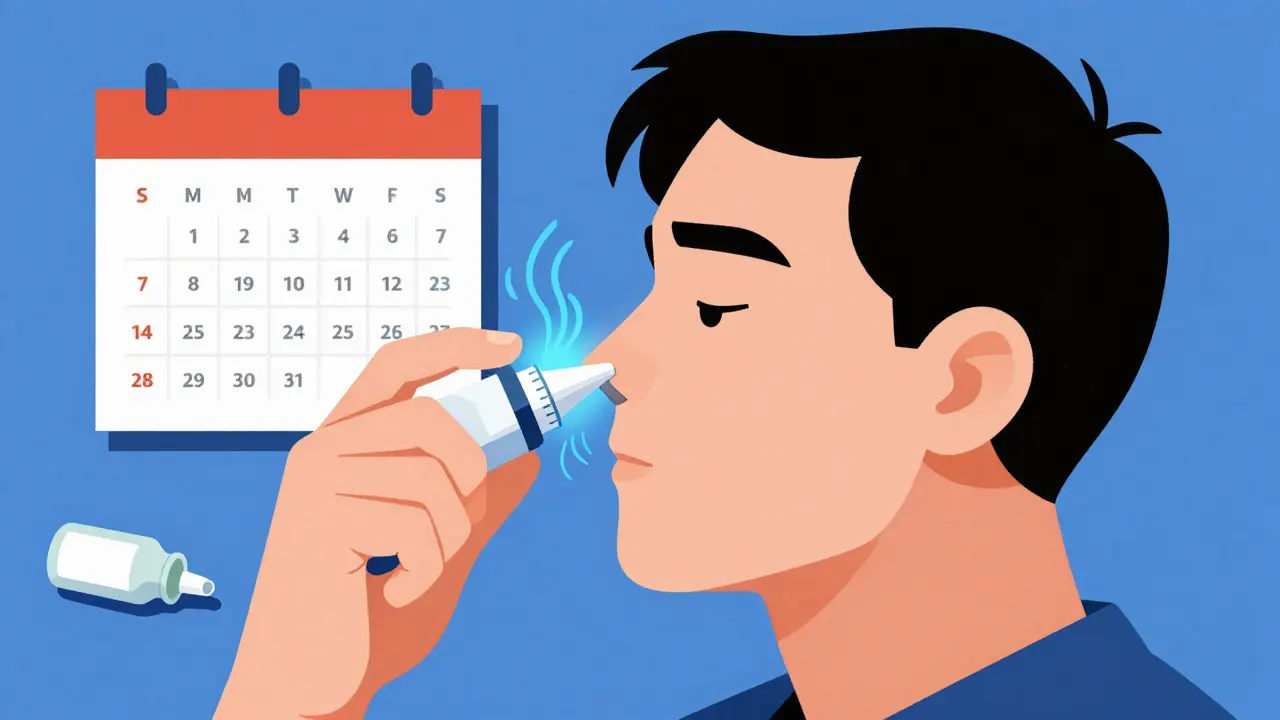
Proper technique matters more than you think. If you point the spray straight up toward the septum (the middle wall of your nose), you risk nosebleeds. Instead:
- Aim the nozzle toward the outer side of your nostril - toward your ear.
- Breathe in gently as you spray - don’t sniff hard.
- Don’t blow your nose for at least 15 minutes after spraying.
When used correctly, these sprays have almost no systemic side effects. The steroid stays mostly in your nose. You’re not getting the same risks as with oral steroids.
Oral Antihistamines: Fast Relief for Itching and Sneezing
For itching, sneezing, and runny nose - especially if congestion isn’t your main issue - second-generation oral antihistamines are your best bet. These include:
- Cetirizine (Zyrtec) - 10 mg once daily
- Loratadine (Claritin) - 10 mg once daily
- Fexofenadine (Allegra) - 180 mg once daily
They start working within 1-2 hours and last all day. And unlike older antihistamines (like diphenhydramine/Benadryl), they rarely make you drowsy - only 5-10% of users report sleepiness.
But they’re not great for congestion. That’s why many people use them alongside nasal sprays. A 2021 study showed combining an oral antihistamine with an intranasal corticosteroid gave better results than either alone.
When You Need Faster Relief: Intranasal Antihistamines
There’s a newer option: azelastine nasal spray. It’s an antihistamine you spray directly into your nose. Unlike oral antihistamines, it works within 30 minutes. It’s especially helpful for sudden flare-ups or if you can’t tolerate oral meds.
It’s not as strong as corticosteroids for congestion, but it’s faster. Many people use it as a "rescue" spray while waiting for their daily corticosteroid to kick in.
Decongestants: Use With Caution
Oral decongestants like pseudoephedrine (Sudafed) can help with severe congestion. But they’re not for daily use. They can raise your blood pressure, make you jittery, or interfere with sleep.
And nasal decongestant sprays? Even riskier. Products like oxymetazoline (Afrin) give instant relief - but if you use them for more than 3 days straight, you can get rebound congestion. Your nose becomes dependent. You start spraying more and more, and the problem gets worse. That’s called rhinitis medicamentosa. Avoid these unless it’s a short-term emergency.
Immunotherapy: The Only Treatment That Changes the Course
If you’re tired of treating symptoms and want to actually change how your body reacts to allergens, immunotherapy is the only option that does that.
There are two types:
- Subcutaneous immunotherapy (SCIT) - traditional allergy shots. Given weekly at first, then monthly. They’re 35-45% effective at reducing symptoms long-term.
- Sublingual immunotherapy (SLIT) - tablets or drops you hold under your tongue. FDA-approved since 2014. Grass pollen tablets (like Grastek) are common. You take them daily, year-round, starting 4 months before pollen season.
SLIT is becoming more popular. A 2021 study found 85% of patients preferred it over shots because it’s easier. But 32% quit within a year because of mouth itching or the need to avoid food and drink for 5 minutes after taking it.
Both require a commitment. You need to take them for 3-5 years to see lasting results. But if you stick with it, you might not need meds at all after a few years. The PAT study showed kids who got 3 years of immunotherapy had a 67% lower chance of developing asthma later.
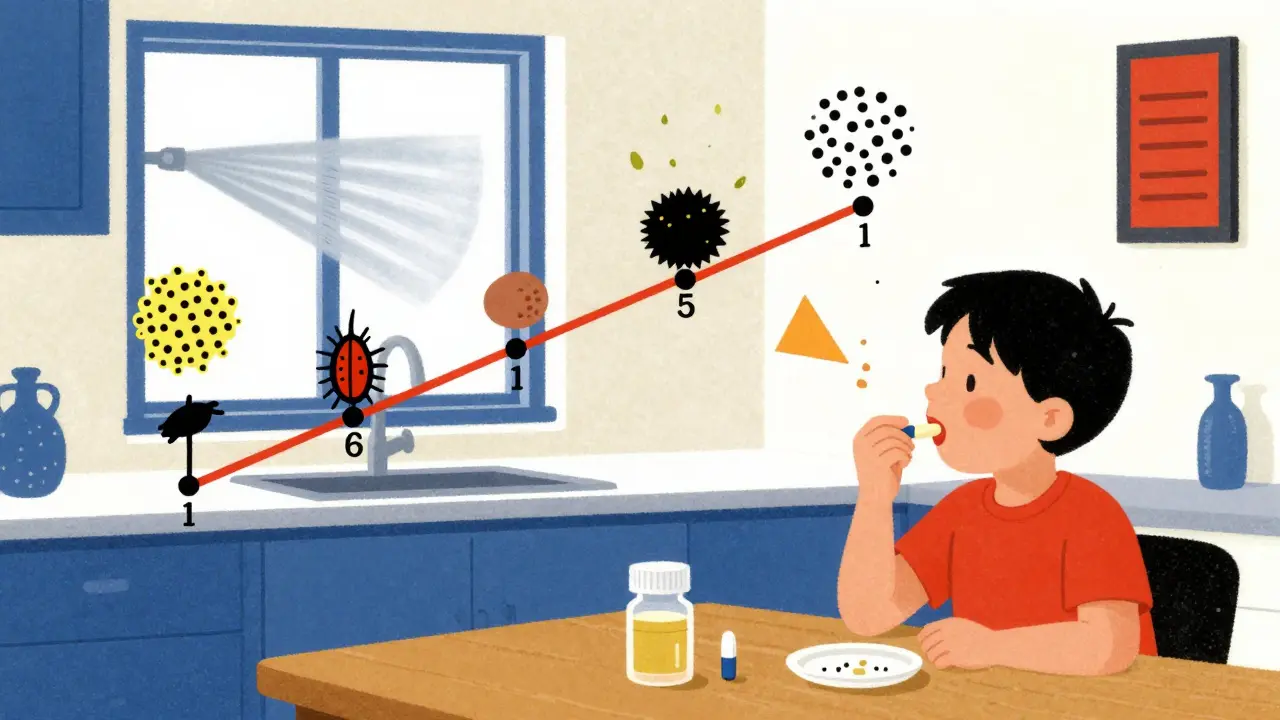
Environmental Control: Reduce Exposure at Home
Medicines help - but if you’re still exposed to allergens, you’ll keep reacting. Control your environment.
For dust mites:
- Wash bedding weekly in hot water (over 130°F / 54°C)
- Use allergen-proof covers on pillows and mattresses
- Keep indoor humidity below 50% with a dehumidifier
- Replace carpets with hard floors if possible
These steps can reduce dust mite exposure by up to 83%.
For pet dander:
- Keep pets out of the bedroom
- Bathe pets weekly
- Use a HEPA air purifier in main living areas
For mold:
- Fix leaks immediately
- Use exhaust fans in bathrooms and kitchens
- Clean shower curtains and grout with vinegar or bleach
For pollen:
- Keep windows closed during high pollen counts
- Wear wraparound sunglasses outside - they reduce eye symptoms by 35%
- Shower and change clothes after being outdoors
- Use apps like Pollen Sense to track local counts
Saline Irrigation: A Simple, Safe Helper
Many people swear by nasal rinses. Using a neti pot or squeeze bottle with sterile saline (salt water) can flush out allergens and mucus. A Reddit survey of 1,247 users found 62% felt better using it twice daily.
It’s not a replacement for meds, but it’s a great addition. Just use distilled or boiled water. Tap water can carry dangerous microbes. Rinse the device after each use and let it air dry.
What About New Treatments?
There’s exciting progress. In October 2023, the FDA approved tezepelumab - a biologic drug that blocks a key inflammation trigger (TSLP). Early trials showed a 42% reduction in symptoms. It’s not yet widely available for rhinitis, but it’s a sign of where things are headed.
Dual-action sprays - like azelastine/fluticasone - are already on the market. They combine an antihistamine and corticosteroid in one spray. They work fast (within 30 minutes) and are more effective than either drug alone.
By 2030, personalized allergy testing using molecular allergology (pinpointing exact proteins you react to) will likely become standard. That means treatments tailored to your specific triggers, not just "pollen" or "dust mites."
When to See a Specialist
If you’ve tried OTC meds for 4-6 weeks and still feel awful, it’s time to see an allergist. Most people wait 3.2 years before seeking help - and that’s too long. Delayed care means worse symptoms, more sleep loss, and higher risk of asthma.
An allergist can:
- Do skin or blood tests to confirm what you’re allergic to
- Recommend immunotherapy if appropriate
- Adjust your treatment plan based on severity
- Rule out other conditions like sinusitis or non-allergic rhinitis
Don’t suffer in silence. Allergic rhinitis is treatable - and you don’t have to live with it.
Can allergic rhinitis turn into asthma?
Yes, especially in children. Studies show that up to 40% of people with allergic rhinitis go on to develop asthma. The inflammation in the nose can spread to the lungs over time. This is why early, consistent treatment - including immunotherapy - is so important. The PAT study found that children who received 3 years of allergy immunotherapy had a 67% lower chance of developing asthma.
Are nasal steroids safe for long-term use?
Yes, when used as directed. Intranasal corticosteroids are designed to act locally in the nose. Very little enters the bloodstream - far less than what you’d get from oral steroids. Side effects like nosebleeds or dryness are rare and usually mild. Long-term studies show no significant impact on growth in children or bone density in adults at standard doses. The risk of serious side effects is extremely low compared to the benefits of controlling symptoms.
Why do antihistamines sometimes stop working?
They don’t usually lose effectiveness over time. More often, your allergies get worse, or you’re exposed to more allergens. You might also be using them alone when you need a combination approach - like adding a nasal spray for congestion. Or, you might be using a first-generation antihistamine (like Benadryl) that causes drowsiness and leads to inconsistent use. Switching to a second-generation option (like cetirizine or fexofenadine) and combining it with a corticosteroid often restores control.
Can I take allergy meds every day?
Yes, for most people. Second-generation oral antihistamines (like loratadine or cetirizine) are safe for daily use. Intranasal corticosteroids are also designed for daily, long-term use. The key is using the right one for your symptoms. Daily use prevents inflammation from building up - it’s better than taking meds only when symptoms flare. Think of it like brushing your teeth: consistent care prevents bigger problems.
Is immunotherapy worth the time and cost?
For many, yes. While it takes 3-5 years and costs more upfront, it can reduce or eliminate your need for daily medications. One study showed that after completing immunotherapy, patients saved an average of $1,200 per year on allergy meds. It also improves quality of life - better sleep, fewer sick days, less anxiety about triggers. If you’re allergic to things you can’t avoid (like dust mites or pets), and meds aren’t enough, immunotherapy is the most effective long-term solution.




Rachidi Toupé GAGNON
February 12, 2026 AT 23:14Just started using Flonase last week and my life is UNRECOGNIZABLE. 🥹 No more 3am sneezing fits, no more red, itchy eyes like I cried in a pepper field. This stuff is magic. Don’t listen to the ‘it takes weeks’ hype - I felt better by day 4. Just aim it sideways like they said. 🙌
Vamsi Krishna
February 13, 2026 AT 07:05Wow, this is so basic. You're all missing the real issue - EMF radiation from smart meters is making allergic rhinitis worse. I had chronic congestion until I installed a Faraday cage around my bedroom. Also, your 'dust mites' are just government drones disguised as arthropods. They're collecting your biometric data. 🤔
Brad Ralph
February 14, 2026 AT 22:01So we’re paying $150/month for nasal spray so we can keep breathing… while the same system that sold us the allergens is now selling us the cure? Classic capitalism. 🤷♂️ I just use a neti pot and pretend I’m a Viking. Works better than most meds. Also, why is no one talking about how pollen counts are artificially inflated to sell more spray? Just saying.
christian jon
February 15, 2026 AT 11:57OMG. I can't believe you're all just accepting this! You're all using OTC meds like sheep! I went to an allergist after 11 YEARS of suffering - turns out I'm allergic to silicone, parabens, AND my neighbor's cat named Gary. I switched to a 100% organic, hand-washed wool blanket, started drinking distilled water with lemon, and now I don't even sneeze when I see a dandelion. My cousin’s dog in Nebraska had the same issue - she cured it with acupuncture and a crystal grid. You're all doing it wrong. 💯
Craig Staszak
February 17, 2026 AT 09:18Saline rinse changed my life. No meds. Just warm salt water and a little patience. I do it before bed and wake up like a new person. Seriously. Try it. It’s cheap, safe, and doesn’t need a prescription. You don’t need to overcomplicate this. Just breathe clean. 🌿
Joanne Tan
February 18, 2026 AT 17:07i used to think i was just tired all the time but then i realized my nose was blocked 24/7 and i was basically sleepwalking through life. now i use flonase + zyrtec + neti pot and im basically a different person. like i started reading books again?? who knew??
Jack Havard
February 20, 2026 AT 06:38I’ve had this since I was 12. Tried everything. The only thing that worked? Moving to a desert. You can’t be allergic to dust if there’s no dust. All this advice is just corporate fluff. The real solution is avoidance. Or moving. Or becoming a hermit. But hey, keep spraying.
Autumn Frankart
February 21, 2026 AT 00:09They don’t want you to know this - but pollen counts are manipulated by Big Pharma. The government and the WHO are in on it. They want you dependent on nasal sprays so they can sell you more. That’s why they say ‘use daily’ - it’s a trap. I stopped all meds and started eating raw garlic and wearing a copper hat. My symptoms vanished. You’re being lied to.