
Every year, millions of people take antibiotics without realizing they might not need them. And every year, thousands suffer side effects that could have been avoided-not because the medicine failed, but because it was used the wrong way.
Why Antibiotics Can Hurt You Even When They Work
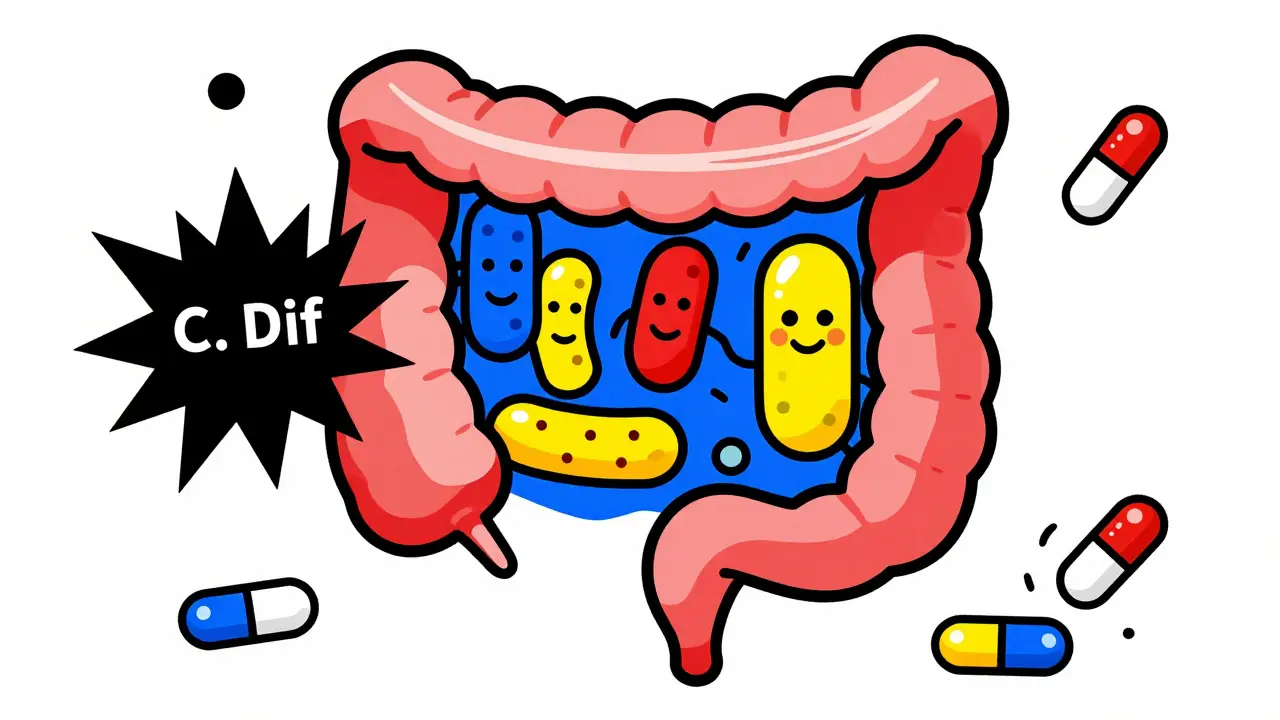
Antibiotics are powerful tools. They save lives when used correctly. But when they’re given for viral infections like colds or flu, or when they’re taken too long, or in the wrong dose, they start working against you. The biggest danger? Killing off the good bacteria in your gut. These friendly microbes help digest food, support your immune system, and keep harmful bugs in check. When antibiotics wipe them out, dangerous bacteria like Clostridioides difficile (C. diff) can take over. The result? Severe diarrhea, stomach cramps, and in worst cases, life-threatening colon damage. Studies show that people who get unnecessary antibiotics are 7 to 10 times more likely to develop C. diff infections. And once it hits, treatment becomes harder, longer, and more expensive. Hospitals see it all the time: patients admitted for pneumonia, given broad-spectrum antibiotics, then readmitted weeks later with C. diff because their gut flora never recovered.What Is Antibiotic Stewardship-and Why It Matters
Antibiotic stewardship isn’t a new buzzword. It’s a proven, science-backed approach to using antibiotics only when they’re truly needed, and then using them the right way. The CDC defines it simply: giving the right drug, at the right dose, for the right bug, for the right amount of time. That’s it. No more, no less. This isn’t about limiting access to antibiotics. It’s about making sure they work when they’re needed most. When used properly, stewardship reduces side effects, lowers resistance, and saves lives. In hospitals, programs that follow stewardship guidelines have cut C. diff infections by 25-30%. In outpatient clinics, they’ve reduced unnecessary prescriptions by up to 30%. The evidence is clear: when doctors and pharmacists work together to review each antibiotic prescription, patients get safer care.How Stewardship Programs Actually Work in Practice
You won’t always see it happening, but if you’re in a hospital, chances are a stewardship program is already at work. Here’s how it looks on the ground:- A pharmacist reviews your antibiotic order and asks: Is this really needed? Can we switch to a narrower-spectrum drug?
- A doctor uses a blood test called procalcitonin to tell if your infection is bacterial or viral-before prescribing anything.
- An electronic alert pops up in the system: “Patient has been on antibiotics for 7 days. Consider stopping.”
- A nurse checks in: “Are you still having a fever? Any diarrhea?”

The Hidden Cost of Overprescribing
It’s easy to think, “What’s the harm in giving an antibiotic just in case?” But the cost isn’t just financial-it’s personal. Every unnecessary antibiotic increases your risk of:- Severe diarrhea from C. diff
- Allergic reactions, including life-threatening anaphylaxis
- Yeast infections, especially in women
- Long-term changes to your gut microbiome, linked to obesity, diabetes, and even depression
- Future infections that don’t respond to any antibiotic
Who’s Leading the Change?
Stewardship doesn’t happen by accident. It needs leadership. In hospitals, the best programs are led by infectious disease doctors and clinical pharmacists. These aren’t just specialists-they’re antibiotic experts trained to balance risk and benefit. The CDC recommends at least one full-time pharmacist and half a doctor dedicated to stewardship in every medium-to-large hospital. But it’s not just hospitals. Primary care clinics are catching up. With tools like peer prescribing comparisons and clinical decision support apps, doctors are learning how their antibiotic use stacks up against their colleagues. When they see they’re prescribing more than others for similar cases, they change. In Australia, where I’m based, the national antibiotic guidelines have helped reduce unnecessary prescriptions by nearly 20% since 2020. It’s not perfect-but it’s moving in the right direction.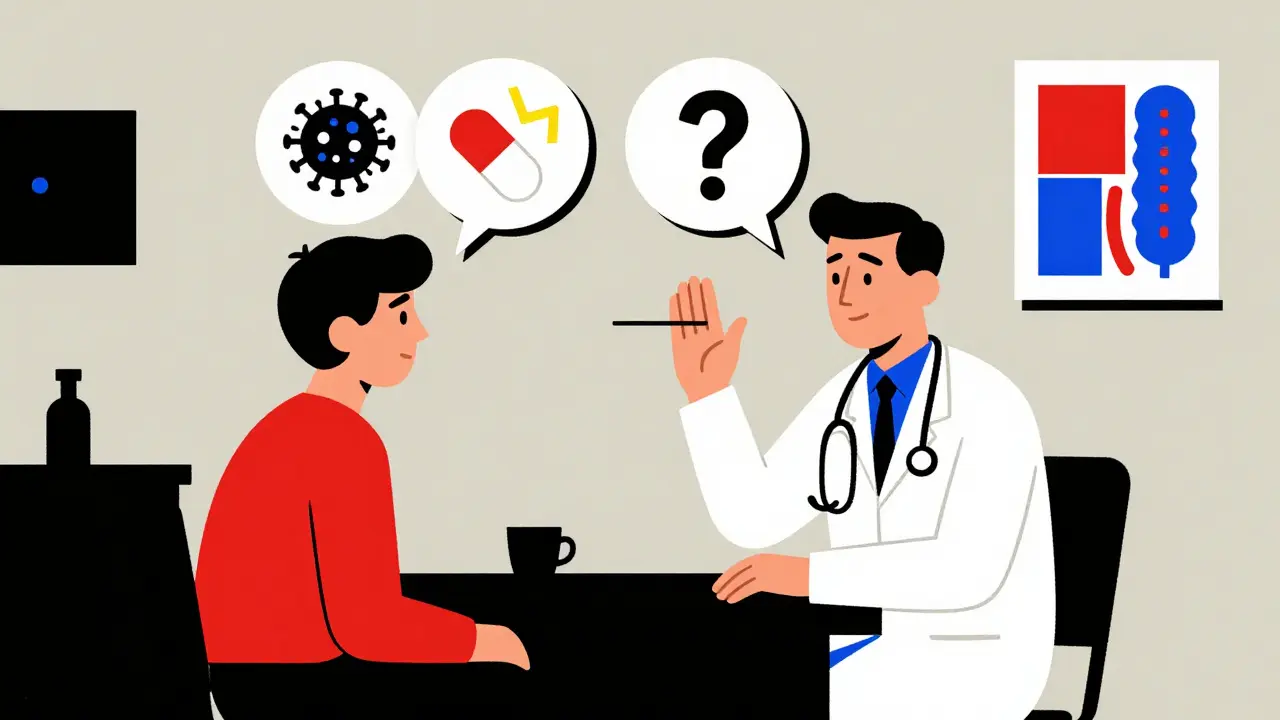
What You Can Do as a Patient
You’re not just a passive recipient of care. You have power too. Here’s what to ask your doctor:- “Is this infection definitely bacterial?” Antibiotics don’t work on viruses.
- “What’s the shortest course that will work?” Many infections clear in 5 days-not 10.
- “Are there side effects I should watch for?” Especially diarrhea, rash, or yeast symptoms.
- “Can we wait a day or two to see if I get better on my own?” Many sinus and ear infections improve without antibiotics.
- Take it exactly as directed-no skipping doses, no saving leftovers.
- Don’t share antibiotics with others.
- Don’t pressure your doctor for a script if they say no.
The Bigger Picture: Why This Isn’t Just About You
Antibiotic resistance isn’t a future threat. It’s here. Right now. The World Health Organization says that without action, antimicrobial resistance could cause 10 million deaths a year by 2050. That’s more than cancer. Every time we use an antibiotic unnecessarily, we’re accelerating that timeline. Every time we use it correctly, we’re buying time-for ourselves, our kids, and future generations. Stewardship isn’t about restricting doctors. It’s about empowering them to do better. It’s about giving them the tools, data, and support to make the safest choice. And it’s working. In the U.S., 88% of hospitals with over 200 beds now have formal stewardship programs-up from just 40% in 2014. That’s real progress. But the real win? Fewer people getting sick from the very drugs meant to heal them.What’s Next?
The future of stewardship is smarter, faster, and more connected. Artificial intelligence is being tested to predict which patients are most likely to benefit from antibiotics-or who should avoid them. New rapid tests can identify bacteria and their resistance patterns in under an hour. And more clinics are adopting “antibiotic time-outs”-a pause after 48 hours to ask: Is this still needed? The goal isn’t to stop using antibiotics. It’s to use them wisely. Because when antibiotics are used right, they’re one of the greatest medical advances in history. When they’re used wrong? They become a threat. The choice isn’t between using antibiotics or not. It’s between using them well-or risking the consequences.What are the most common side effects of unnecessary antibiotic use?
The most common side effects include severe diarrhea caused by Clostridioides difficile (C. diff) infection, yeast infections (especially vaginal), allergic reactions like rashes or anaphylaxis, and long-term disruption of gut bacteria linked to chronic conditions like obesity and autoimmune disorders. Up to 30% of outpatient antibiotic prescriptions contribute to these risks.
Can antibiotic stewardship help prevent antibiotic resistance?
Yes. Antibiotic stewardship directly reduces resistance by minimizing unnecessary exposure. When antibiotics are used only when needed and for the shortest effective time, bacteria have fewer chances to adapt and become resistant. Studies show stewardship programs can reduce antibiotic resistance rates by 10-20% in hospitals within two years.
How do I know if I really need an antibiotic?
Most colds, flu, and sore throats are caused by viruses and won’t respond to antibiotics. Ask your doctor if your symptoms suggest a bacterial infection-like persistent high fever, pus, or worsening symptoms after 5-7 days. Blood tests like procalcitonin or rapid strep tests can help confirm if antibiotics are needed.
Is it safe to stop antibiotics early if I feel better?
In many cases, yes-but only if your doctor agrees. Recent research shows that for many common infections (like urinary tract or sinus infections), shorter courses (5-7 days) are just as effective as longer ones (10-14 days). Stopping early without guidance can increase the risk of relapse. Always talk to your provider before stopping.
Why are hospitals better at stewardship than outpatient clinics?
Hospitals have dedicated teams-pharmacists, infectious disease doctors, and data systems-that review every antibiotic order. Outpatient clinics often lack the staff, time, and tools to do this consistently. But that’s changing. New digital tools and peer comparison reports are helping doctors in clinics make smarter choices too.
What’s the role of pharmacists in antibiotic stewardship?
Pharmacists are frontline defenders. They review prescriptions for correct dose, duration, and drug choice. They flag unnecessary antibiotics, suggest alternatives, and educate patients. In hospitals, a clinical pharmacist is a required part of any effective stewardship team. Their expertise saves lives and prevents side effects daily.



evelyn wellding
January 17, 2026 AT 08:12OMG this is so important!! I had C. diff after a stupid antibiotic for a cold last year-felt like my insides were being eaten alive 😭
Never taking them again unless it's a full-on emergency. Thanks for sharing this!!
Bianca Leonhardt
January 18, 2026 AT 08:11People still don’t get it. You think your ‘sore throat’ needs antibiotics? Newsflash: 90% of them are viral. You’re not special. You’re just lazy.
Stop demanding prescriptions like they’re free candy. Your microbiome isn’t a suggestion-it’s your immune system’s best friend.
Travis Craw
January 18, 2026 AT 08:54my doc actually asked me if i wanted to wait a few days before starting antibiotics for my sinus thing
was kinda surprised but honestly it felt good to be treated like a person not a ticket
took 4 days and i was fine without it. weird how that works huh
Riya Katyal
January 18, 2026 AT 16:42Oh wow, so now we’re supposed to trust doctors who prescribe antibiotics like they’re giving out lollipops?
And let me guess-this ‘stewardship’ is just a fancy word for ‘we don’t want to spend 5 minutes thinking’?
Meanwhile, my cousin’s kid got sepsis from a UTI because the clinic ‘waited and watched.’ Thanks, science.
Henry Ip
January 18, 2026 AT 17:25Biggest win I’ve seen? When my pharmacist called me after my prescription was filled
asked if I’d been feeling better after 3 days
turned out I didn’t need the full 10-day course
she saved me from a yeast infection and a gut meltdown
we need more of these heroes
not just in hospitals but in every pharmacy
Corey Chrisinger
January 19, 2026 AT 03:06It’s funny how we treat antibiotics like magic bullets-like they’re not part of an ancient evolutionary arms race we’re losing.
Every pill we pop carelessly is a vote for the bacteria’s future.
They’re not evil. They’re just better at surviving than we are at thinking.
Maybe the real problem isn’t overprescribing-it’s our arrogance.
We think we control nature. We just borrow time from it.
And one day, the bill comes due.
And it’s not in dollars.
It’s in lives.
And it’s not just ours.
It’s our kids’. Their kids’. The whole damn species.
So yeah-use them wisely.
Or don’t.
But don’t pretend you’re not choosing.
Christina Bilotti
January 20, 2026 AT 05:20Oh look, another ‘educational’ post from someone who clearly never had a real infection.
You know what helps more than ‘stewardship’? A doctor who actually listens and has access to rapid diagnostics.
But sure, let’s blame patients for wanting to feel better.
Meanwhile, the real culprits? Pharma reps handing out free samples and insurance companies that won’t pay for tests.
But hey, let’s just shame the patient. Much easier.
brooke wright
January 22, 2026 AT 05:18I’m a nurse. I’ve seen C. diff in 80-year-olds. I’ve seen it in toddlers.
One guy came in with a 104 fever from a sinus infection. Got amoxicillin. Three weeks later, he was back in ICU with colitis.
His wife said he ‘just wanted to get back to work.’
He’s on a feeding tube now.
And yeah, I know this is all ‘common knowledge.’
But nobody listens until it’s their mom.
Or their kid.
Or themselves.
vivek kumar
January 22, 2026 AT 18:15Excellent breakdown. I work in a rural clinic in India where antibiotics are sold over the counter without prescription.
Patients demand them for fever, cough, even headaches.
We’ve started using rapid strep and CRP tests-cost is low, turnaround is 15 minutes.
Prescription rates dropped 40% in six months.
Diarrhea cases? Down 50%.
It’s not about restriction. It’s about evidence.
And patience.
And listening.
That’s what stewardship really is.