
Urine Specific Gravity Assessment Tool
Check Your Hydration Status
Urine specific gravity is a key indicator of hydration. Values below 1.020 indicate adequate hydration. This tool helps interpret your measurements based on medical guidelines.
Adequate Hydration
Your urine specific gravity is within the healthy range (below 1.020). This indicates you're staying adequately hydrated.
For elderly patients on diuretics: Maintain your current fluid intake pattern and monitor for symptoms of dehydration.
Borderline Hydration
Your urine specific gravity is at the upper limit of normal (1.020-1.030). This indicates mild dehydration risk, especially for elderly patients on diuretics.
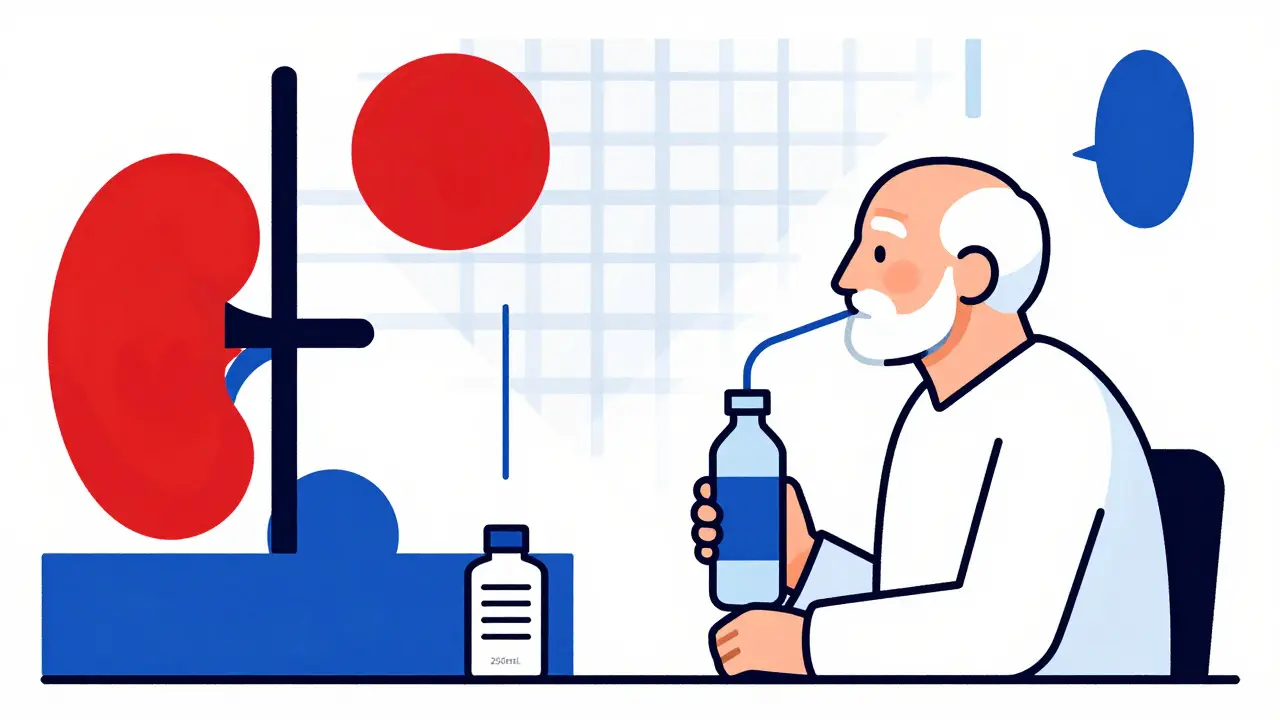
For elderly patients on diuretics: Increase fluid intake by 250-500mL today. Monitor urine color and specific gravity in 24 hours. Consider using a marked water bottle.
Dehydration Risk
Your urine specific gravity is above 1.030. This indicates significant dehydration risk, especially for elderly patients on diuretics.
For elderly patients on diuretics: Increase fluid intake immediately. Contact your healthcare provider within 24 hours. Watch for symptoms like confusion, dizziness, or reduced urine output.
Important Notes
For elderly diuretic users: A specific gravity under 1.020 is ideal. Values above 1.020 may indicate dehydration risk, especially with diuretics.
Medical guidance: Always consult your healthcare provider before changing fluid intake or medications. This tool is for informational purposes only.
When older adults take diuretics for heart failure or high blood pressure, they’re not just managing a condition-they’re walking a tightrope. One wrong step, and dehydration can crash their kidneys in under 48 hours. It’s not rare. In fact, diuretics are the third most prescribed medication class for Americans over 65, and nearly 1 in 5 hospital stays for seniors involve dehydration as a key reason. The problem isn’t that they’re drinking too little-it’s that their bodies can’t hold onto water like they used to, and the drugs make it worse.
Why Older Adults Are at Higher Risk
Your kidneys change as you age. By 65, the ability to concentrate urine drops by more than half. A young adult’s kidneys can squeeze out urine as dense as 1,200 mOsm/kg. An 80-year-old’s? More like 500-700 mOsm/kg. That means even if they drink the same amount, their body loses more water through urine. Diuretics like furosemide or hydrochlorothiazide push this further by blocking sodium reabsorption, forcing even more fluid out. Add to that: thirst perception declines by about 40% after age 65. Many seniors don’t feel thirsty until they’re already dehydrated. A 2023 study found 68% of elderly diuretic users couldn’t name dry mouth as a warning sign. They might sip tea with breakfast, forget lunch, and not touch water again until dinner. That’s not enough. And it’s not just about water. Nearly 75% of seniors take two or more medications that affect fluid balance-blood pressure pills, painkillers, antidepressants. NSAIDs like ibuprofen can spike kidney injury risk by 300% when mixed with diuretics. Diabetes, which affects over 26% of people over 65, makes it worse. High blood sugar pulls water out of cells, and diuretics just speed it up.How Diuretics Affect the Kidneys
Not all diuretics are the same. Loop diuretics like furosemide are powerful-they remove 20-25% of filtered sodium. That’s why they’re used in heart failure. But they’re also the biggest dehydration risk. A 2021 JAMA study showed that while only 8% of elderly loop diuretic users develop hyponatremia, 15-20% of those who become dehydrated suffer acute kidney injury (AKI). That’s when creatinine jumps by 0.3 mg/dL or more in just two days. Thiazides like hydrochlorothiazide are milder, removing only 5-10% of sodium. They’re common for high blood pressure. But they’re sneaky. They cause long-term electrolyte imbalances. Hyponatremia hits 14% of elderly thiazide users. That means low sodium levels, which can cause confusion, falls, and seizures. Potassium-sparing diuretics like spironolactone seem safer-but they’re not. They raise potassium levels, which is dangerous for the 37% of elderly diuretic users who already have stage 3 or worse chronic kidney disease. Too much potassium can stop the heart. Even alternatives aren’t perfect. ACE inhibitors like lisinopril lower dehydration risk by 18%, but during dehydration, they can trigger AKI by cutting off blood flow to the kidneys. SGLT2 inhibitors like empagliflozin reduce dehydration risk by 24%, but they cost $550 a month-far beyond what most seniors can afford.The Perfect Storm: When Dehydration Turns to Kidney Failure
It doesn’t take much. A hot day. A missed dose of water. A few hours of walking. A trip to the beach. One caregiver on AgingCare.com described how her 82-year-old mother, on furosemide for heart failure, developed AKI after a beach outing. Her creatinine jumped from 1.2 to 2.8 in 48 hours-even though she drank what seemed like enough. Why? Because her kidneys couldn’t hold onto water. The diuretic kept pushing fluid out. The heat made it worse. Her body had no reserve. Within hours, her kidneys shut down. She was hospitalized. Her care cost over $11,000. This isn’t unusual. The 2022 Journal of the American Geriatrics Society found that structured hydration protocols cut emergency visits by 27%. That’s not just about comfort-it’s about saving lives and money. Avoidable hospitalizations for dehydration cost Medicare $1.87 billion last year.
How to Prevent It: Simple, Proven Strategies
You don’t need complex solutions. You need consistency.- Drink 1.5 to 2 liters daily. That’s 6-8 cups. Not more. Not less. A 2022 CKD-REIN study showed that both less than 1 liter and more than 3 liters accelerated kidney decline. The sweet spot? 1.5-2 liters.
- Use marked water bottles. A 2023 Home Instead survey found 45% of caregivers who used bottles with ounce markings saw better hydration. Try a 1-liter bottle with lines at 250mL intervals. Sip one every two hours while awake.
- Set phone reminders. A 63% adherence rate was reported when caregivers used hourly alerts. Set them for 8am, 10am, 12pm, 2pm, 4pm, 6pm.
- Include hydrating foods. Watermelon, cucumbers, strawberries, and broth-based soups add fluid without forcing drinks. One study found 57% of successful cases included these.
- Check weight daily. A drop of more than 2kg in a week means fluid loss. Call the doctor.
- Monitor urine color and specific gravity. Light yellow? Good. Dark amber? Too concentrated. A urine specific gravity under 1.020 is ideal. Many clinics now test this during routine visits.
What to Avoid
Don’t try to “catch up” after a dry day. Drinking 2 liters in one sitting can cause hyponatremia-dangerously low sodium. The NHS warns that rapid fluid replacement in elderly diuretic users can drop sodium by more than 10mmol/L in 24 hours. That’s a medical emergency. Avoid NSAIDs. Even occasional ibuprofen for a headache can trigger kidney failure. Use acetaminophen instead. Don’t restrict fluids unless your doctor says so. Some families think “less fluid = less peeing,” so they cut water. That’s the opposite of what’s needed. Fluid restriction only applies to stage 4-5 CKD patients with fluid overload-and even then, it’s tightly controlled.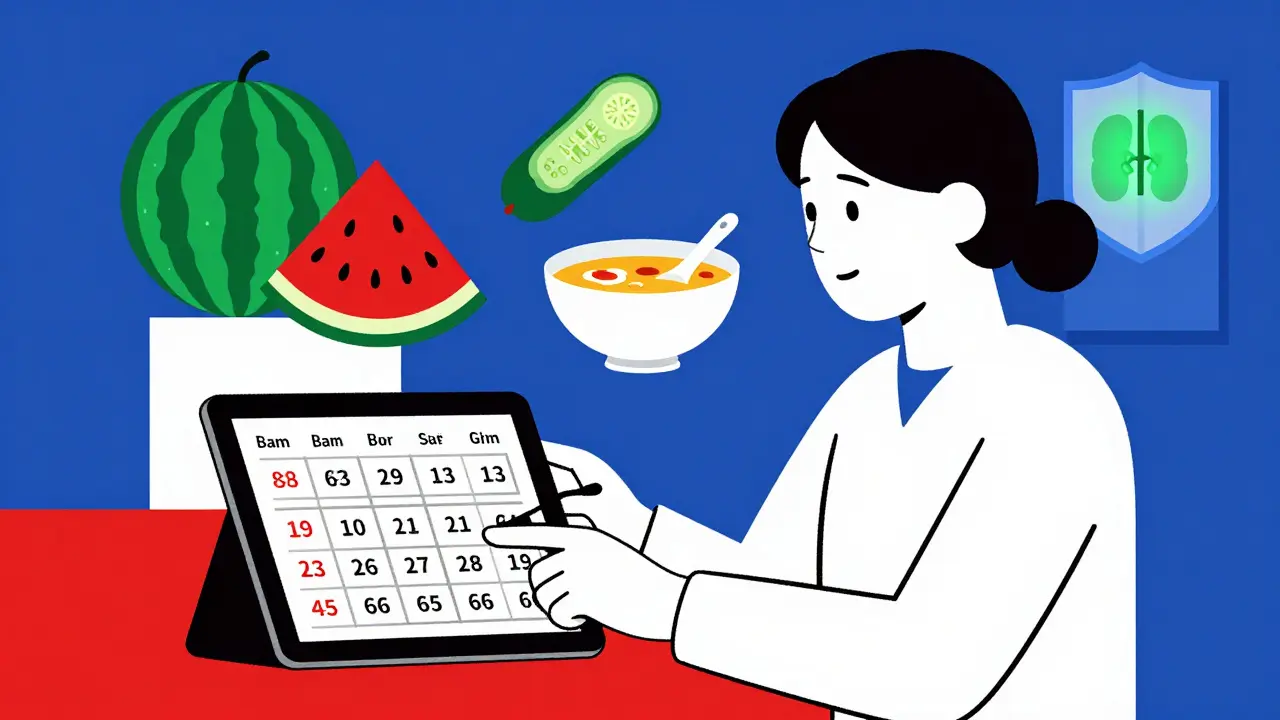
When to Call the Doctor
These signs mean act now:- Urine output under 400mL per day (oliguria)
- Systolic blood pressure drops more than 20mmHg when standing
- Confusion, dizziness, or sudden weakness
- Swelling in legs or ankles that worsens quickly
- Heart palpitations or irregular pulse

Margaret Khaemba
January 21, 2026 AT 14:52I’ve been caring for my 84-year-old dad on furosemide for years, and this hit home. We started using those marked water bottles - the ones with 250mL lines - and it made a world of difference. He still forgets sometimes, but now I just point to the bottle and he gets it. No more confusing ‘drink more’ with ‘drink enough.’
Also, we switched to acetaminophen for headaches. I didn’t realize ibuprofen could tank his kidneys like that. Scary stuff.
Alec Amiri
January 23, 2026 AT 08:54Ugh, another ‘drink more water’ article. Like that’s the problem? My aunt drinks a gallon a day and still ends up in the ER. It’s not hydration - it’s the damn meds. Why don’t doctors just stop prescribing these diuretics to grandmas who barely move?
Also, 1.5L? My 80-year-old neighbor drinks tea all day and never touches plain water. She’s fine. Maybe stop scaring people with stats?
Lana Kabulova
January 23, 2026 AT 13:06Let me just say this - if you’re on a loop diuretic and you’re over 70, you’re not just at risk - you’re on borrowed time. And no, ‘drinking more’ doesn’t fix it. The body isn’t a garden you can just water. It’s a failing machine, and the drugs are the leaky pipes.
They don’t test cystatin C enough. Creatinine is garbage for seniors. I’ve seen creatinine stay ‘normal’ while kidneys were dying. And now they want us to use wearable gadgets? That’s not prevention - that’s surveillance with a price tag.
Also, why is no one talking about how spironolactone turns people into walking potassium bombs? My uncle had a cardiac arrest because his doctor didn’t check his levels for three months. Three months.
Chiraghuddin Qureshi
January 23, 2026 AT 13:25So true 🙏 I live in India and we see this all the time - elders on BP meds, not drinking enough because they’re scared of peeing all night. But then they get dizzy, fall, and end up in hospital. I tell my grandma: ‘Water is your friend, not your enemy.’ 😊
And yes, watermelon helps! We eat it every day in summer. No need to force water if you’re eating hydrating food.
Lauren Wall
January 23, 2026 AT 16:46Stop giving diuretics to the elderly. That’s the solution. Not water bottles. Not reminders. Just stop.
shivani acharya
January 25, 2026 AT 14:10Oh wow, so now it’s our fault we’re dehydrated? My mom’s on hydrochlorothiazide and they told her to drink 2 liters. But her legs swell if she does. So she drinks 800ml. And now the doctors say she’s ‘non-compliant.’
Meanwhile, the pharma reps are in every clinic pushing these drugs. Who benefits? Not the old lady. Not her daughter. The hospital. The lab. The pill company. They’re making billions off our parents’ kidneys.
And don’t get me started on that $550 SGLT2 inhibitor. You think Grandma on Social Security is paying that? Nah. She’s getting a $5 generic and praying. This isn’t medicine. It’s capitalism with a stethoscope.
And now they want us to buy a $200 gadget that tracks her water intake? Like she’s a pet? I’m not surprised. We’ve turned caregiving into a corporate product. Wake up.
Sarvesh CK
January 26, 2026 AT 19:55This piece raises profound questions about the intersection of medical intervention and physiological decline. We treat aging as a pathology to be corrected rather than a natural process to be honored. Diuretics extend life, yes - but at what cost to dignity? The body’s diminished capacity to retain water is not a failure - it is an adaptation.
Perhaps the real issue lies not in the quantity of fluid intake, but in our societal neglect of holistic elder care. Is it truly acceptable that we rely on phone reminders and marked bottles to sustain life, rather than on consistent human presence, attentive observation, and compassionate adaptation?
The NIH’s WATER-AGE trial is promising, but we must not mistake technological innovation for moral progress. A sensor cannot replace a hand on the shoulder, a voice saying, ‘Here, drink this.’
Let us not confuse monitoring with care. Let us not mistake compliance with compassion.
Hilary Miller
January 28, 2026 AT 02:36This is gold. Saved it. Sharing with my book club. 👏
arun mehta
January 29, 2026 AT 20:38As a healthcare professional with over two decades of experience in geriatric medicine, I can affirm that the strategies outlined here are not merely advisable - they are essential. The data presented is robust, the recommendations evidence-based, and the urgency palpable.
It is imperative that caregivers, clinicians, and families recognize that hydration in the elderly is not a lifestyle choice but a clinical imperative. The consequences of inaction are not hypothetical - they are documented, preventable, and tragically common.
I encourage all readers to implement these protocols with diligence, and to advocate for institutional adoption of cystatin C testing and structured hydration programs within their local healthcare systems.
Thank you for this vital contribution to elder care.
Oren Prettyman
January 30, 2026 AT 03:51Let’s be honest - this entire article reads like a pharmaceutical industry whitepaper disguised as public health advice. Who funded this? Who benefits from promoting wearable hydration trackers and expensive SGLT2 inhibitors? The answer is obvious.
And the ‘1.5–2 liters’ recommendation? Arbitrary. Based on what study? Who decided that’s the magic number for every 80-year-old, regardless of activity, climate, or comorbidities? There’s no individualization here - just blanket directives wrapped in pseudoscientific jargon.
Meanwhile, the real issue - polypharmacy, inadequate geriatric training, and systemic underfunding of elder care - is ignored. This is not prevention. It’s distraction.
Liberty C
January 30, 2026 AT 09:55Oh please. You want us to give up ibuprofen? Use acetaminophen? Like that’s safer? It’s liver toxicity waiting to happen. And now we’re supposed to buy fancy water bottles and wearables? This is the kind of performative, overpriced wellness nonsense that preys on guilt-ridden children who can’t afford to be with their parents.
My grandmother drank whiskey with her tea and lived to 92. She didn’t need a schedule. She didn’t need a tracker. She needed someone to sit with her, not sell her a product.
This isn’t medicine. It’s a marketing campaign dressed in lab coats.
Malik Ronquillo
January 30, 2026 AT 11:25My dad’s on furosemide. We started the water reminders. He hates them. But he drinks now. No more hospital trips. Simple. Done.
Brenda King
January 30, 2026 AT 22:57This is exactly what my mom’s nurse practitioner recommended - the urine color chart, the daily weigh-ins, the hydrating snacks. We’ve been doing it for six months. No ER visits. No confusion. She sleeps better. I wish every family had access to this info. Thank you for writing this.